
Lorne Victoria Australia
The Mountjoy family built the first dwelling in Lorne consisting of just two rooms. As interest in Lorne grew, the Mountjoys extended their premises to cater for visitors whose numbers continued to increase as the word spread about the beautiful scenery and abundance of fish and game. They called their first building The Temperance Hotel as no alcohol was sold. Eventually the Mountjoy family renamed their hotel Erskine House.
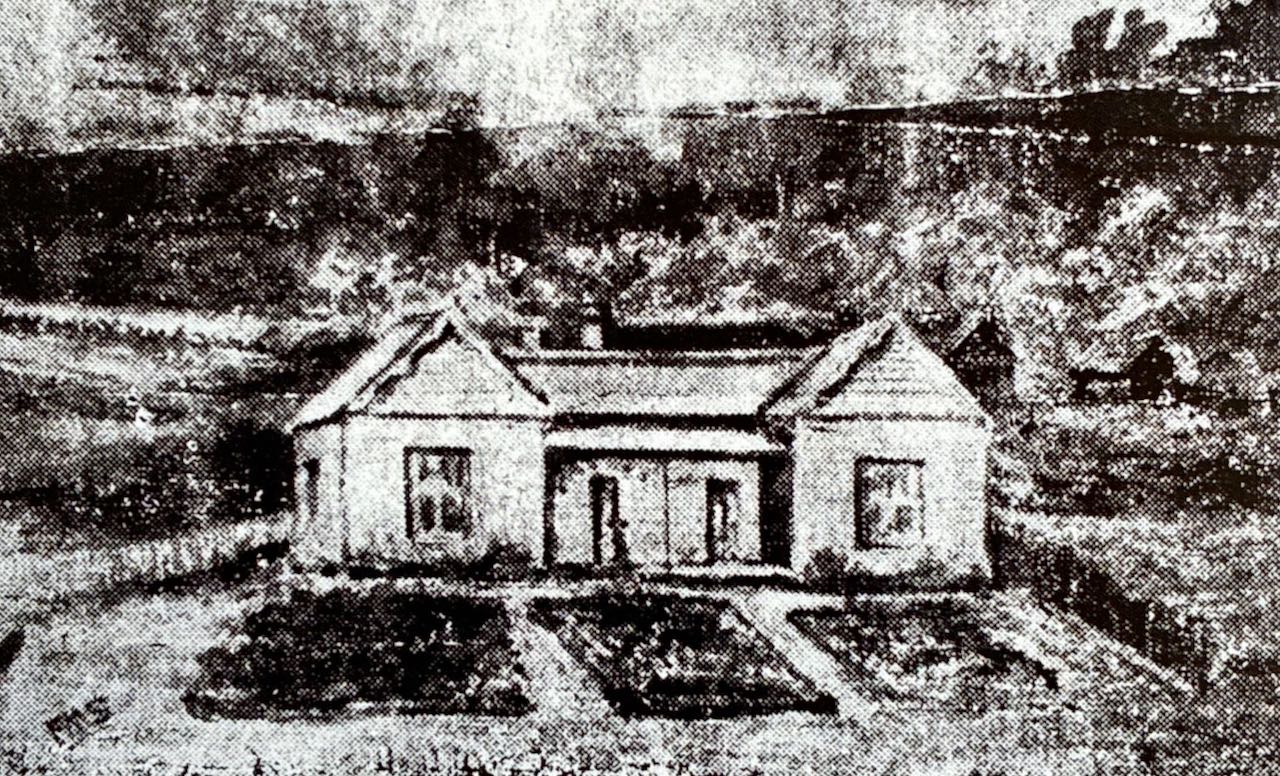
1870, Mountjoy house
In 1864 the Mountjoy brothers settled on the Louttit Bay run. They built a two roomed house, grew crops and cultivated the land. This tiny house was to become the core of the Temperance Hotel, then Erskine House which over 150 years later became Mantra Resort, the oldest and largest guesthouse in Victoria in continuous operation.
Erskine House is reflective of the early association of the need for a holiday for one’s health and the association of health with the taking in of healthy ozone and sea air.
By 1868 Caleb and Thomas Mountjoy started to take paying guests housed in a low building with three gable ends separated by verandah onto which forty small bedrooms opened by French doors.
In 1869 Mountjoys bought 44 acres of land on which Erskine House was established. They developed their investment quickly and by 1871 it was described as a “large house”. It continued to grow and by 1873 it could sleep 50 people, being described as a boarding house, with the name Erskine House being used used for the first time in 1877.
Business grew from strength to strength despite the arduous route which guests were obliged to undertake in order to reach the resort, involving hours of coach travel over the Otway ranges. Masochistically for most, this was part of the attraction of Lorne; only those with an excess of time and money could afford to travel to Lorne, assuring the exclusive nature of the resort. In 1876 the journey was made somewhat easier by the opening of the extension of the Melbourne to Geelong Railway to Winchelsea.
In 1877 it was estimated 3,000 pleasure seekers would go to Lorne that season, and in preparation for this the Mountjoy’s made extensions to Erskine House, erecting another dinning room and a long suite of bedrooms. By 1879 it could accommodate 120 people. To facilitate the journey, the Mountjoys began a coach business in 1878. The coach would meet the 9:30 train at Winchelsea and carry passengers to Lorne taking six hours. In 1891 the trip was reduced to four hours when the railway was extended to Deans Marsh. In 1883 the Mountjoy’s began the Lorne Sea Bathing Establishment which consisted of two bathing houses and a boat shed.
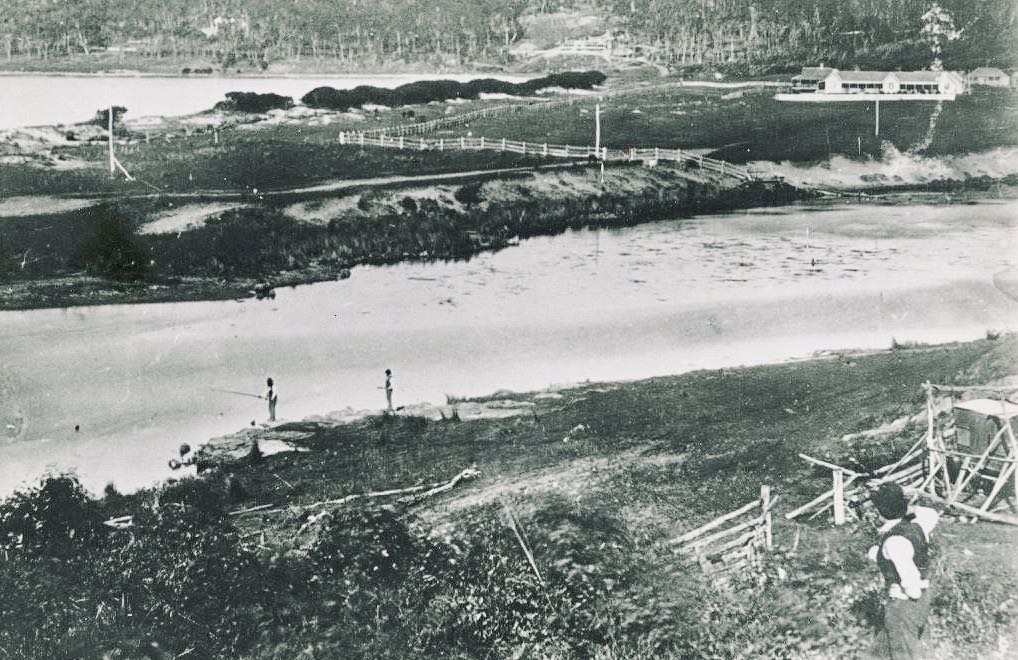
Temperance Hotel

Temperance Hotel

Erskine House note two-storey building added, (Lindt photo)
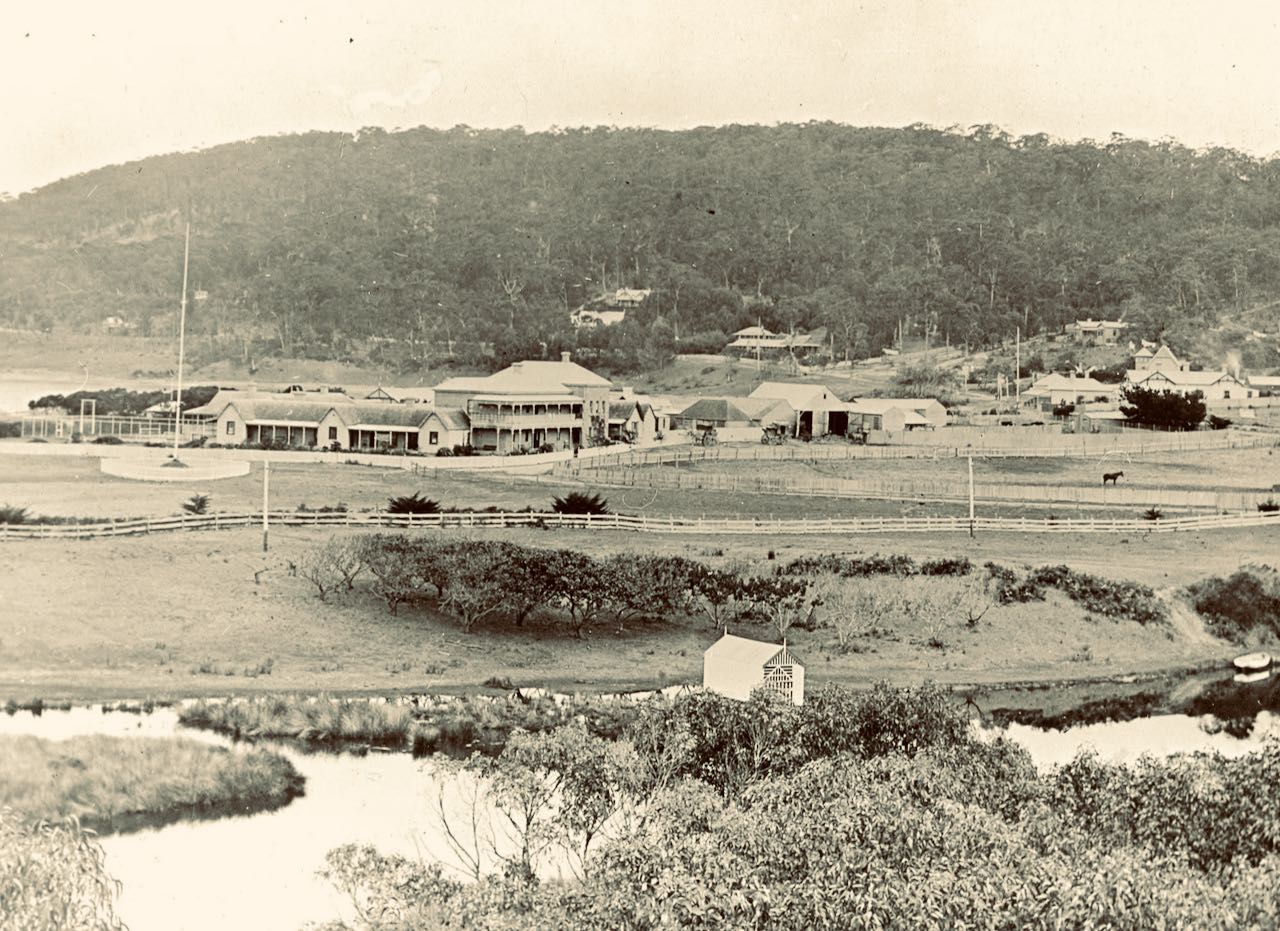

Erskine House, original single storey Temperance Hotel on left.
Mountjoy Coaches

Lorne, Oscar Mountjoy at Mountjoy Stables (LHS photo 8543)
Mountjoy brothers had coaches to transport holiday-makers over the Otway Mountains from Deans Marsh and Winchelsea. The Mountjoy Family had their own stables in Smith Street, near the current location of The Chalet. The huge building, clad with corrugated iron consisted of ten horse stalls, a large feed loft above and room for several coaches. A four-roomed residence for the caretaker was also incorporated into the complex¹.
-

- Coach at Erskine House, Bert Mountjoy driver. (Photo LHS 1512)

-

- Coach entering Lorne, Frank Mountjoy driver. (LHS photo 1620)

-

- Frank Mountoy, son of Thomas Mountjoy, photo taken 21/1/1909 from Mountjoy stables, near location of The Chalet. (LHS photo 5548)

The Mountjoys extended their house to cater for visitors. They called their first building The Temperance Hotel as no alcohol was sold. The first registered guests were Dan and Sam Roberts of Hardcastle in England who reportedly said, “we enjoyed the fishing, shooting and sight seeing by mountain and stream.” In 1872 it was described as being a, “large and substantial wooden building, (there is a fine cellar underneath), in which Mountjoy can provide 40 beds.”
By 1873 it could sleep 50 and was described as ,”three gables and broad verandas between each and in front a beautiful garden, as fresh and gay as though it was the first month of Spring instead of a hot windy day”. The first Lorne Post Office was opened at Erskine House in 1874, and in this same year, the gardens were laid out by Jesse Allen.
Erskine House was sold for £40,000 in 1888 to the Mountjoy Lorne Estate Company Ltd with William Mountjoy staying on as a salaried manager. In 1891 Rudyard Kipling stayed there. Alterations and improvements continued to be made. By 1895 the ballroom was completed to become the focus of many social activities for the whole area during ‘the season’
The Great Ocean Road from Eastern View to Lorne was opened in 1922. Erskine House had added a motor garage to house 20 automobiles in 1916. So tourists could travel by automobile, rather than the arduous coach journey.
Erskine House could accommodate 268 people in 1926, By 1939 it was essentially a resort in itself, it had everything for the holiday maker, refreshment and dining rooms, billiard and smoking rooms, ballroom, tennis courts, croquet green, bathing boxes, boat shed and a motor garage. It even had septic sewerage. In 1941 Erskine House was taking 300 guests and had become increasingly easy to access Lorne when the Great Ocean Road opened in 1932.
Business declined during World War Two, partly due to the shortage of petrol and the resulting difficulty of travelling long distances. By 1950, Erskine House lists a capacity of 140 people, by 1956 the Stribling family acquired a controlling interest in Mountjoy Lorne Estate Company Ltd and took over ownership of the property. By 1961 business improved with capacity being advertised at 210.
Erskine House Guests

1898, Coach at Erskine House (Photo LHS 840)

Erskine House. W. Anderson photo from Melbourne Museum collection
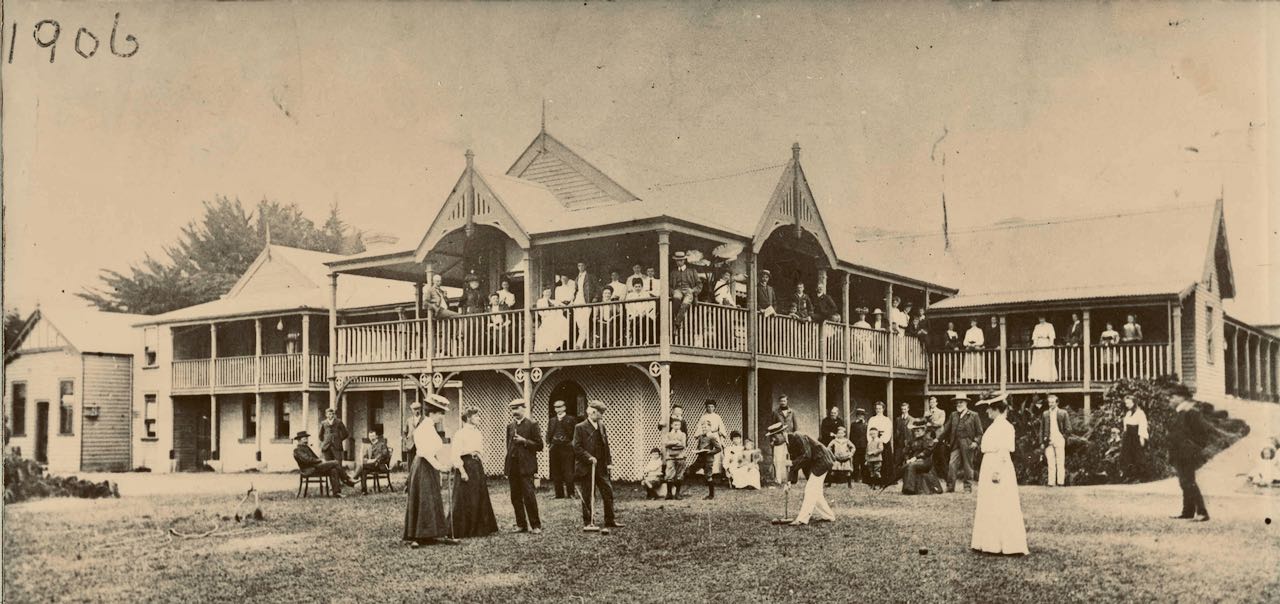
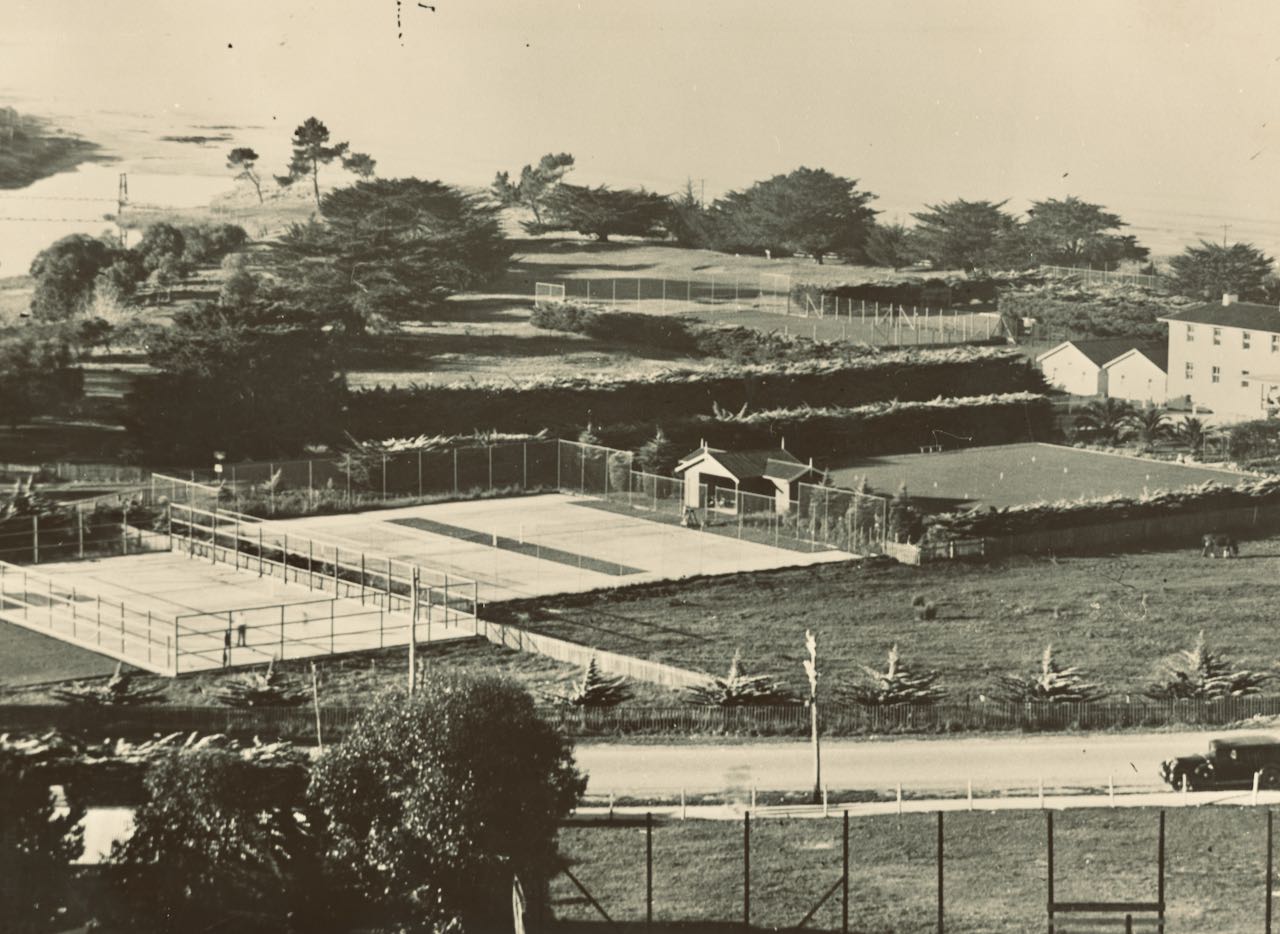
Erskine House recreation facilities. (LHS photo 1559)

Bowls at Erskine House c1910

c1920, Fancy Dress Ball

Erskine House c1940
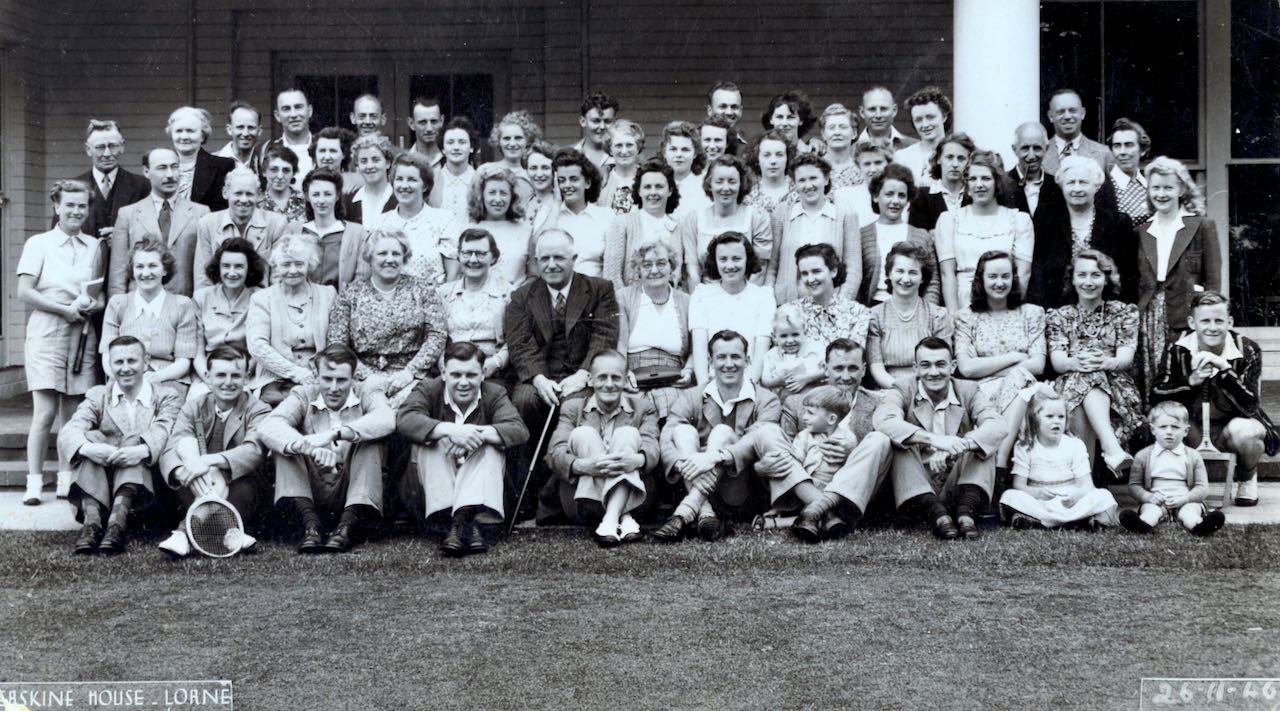
1946, Guests at Erskine House.

Erskine House, showing gardens. (LHS photo 153L)
In 1939 there were major renovations, designed by Geelong architects Laird and Buchan, with a “Victorian type” of modern architecture that can be seen to the north side of the Mantra entrance. It was sold to the Stribling Family in 1957 as a publicly listed company.
In 1974, the Rupert Hamer Victorian State government purchased Erskine House for $470,000 from Hector Stribling. It continued to operate as a guesthouse over the summer but was used for conferences the rest of the year.
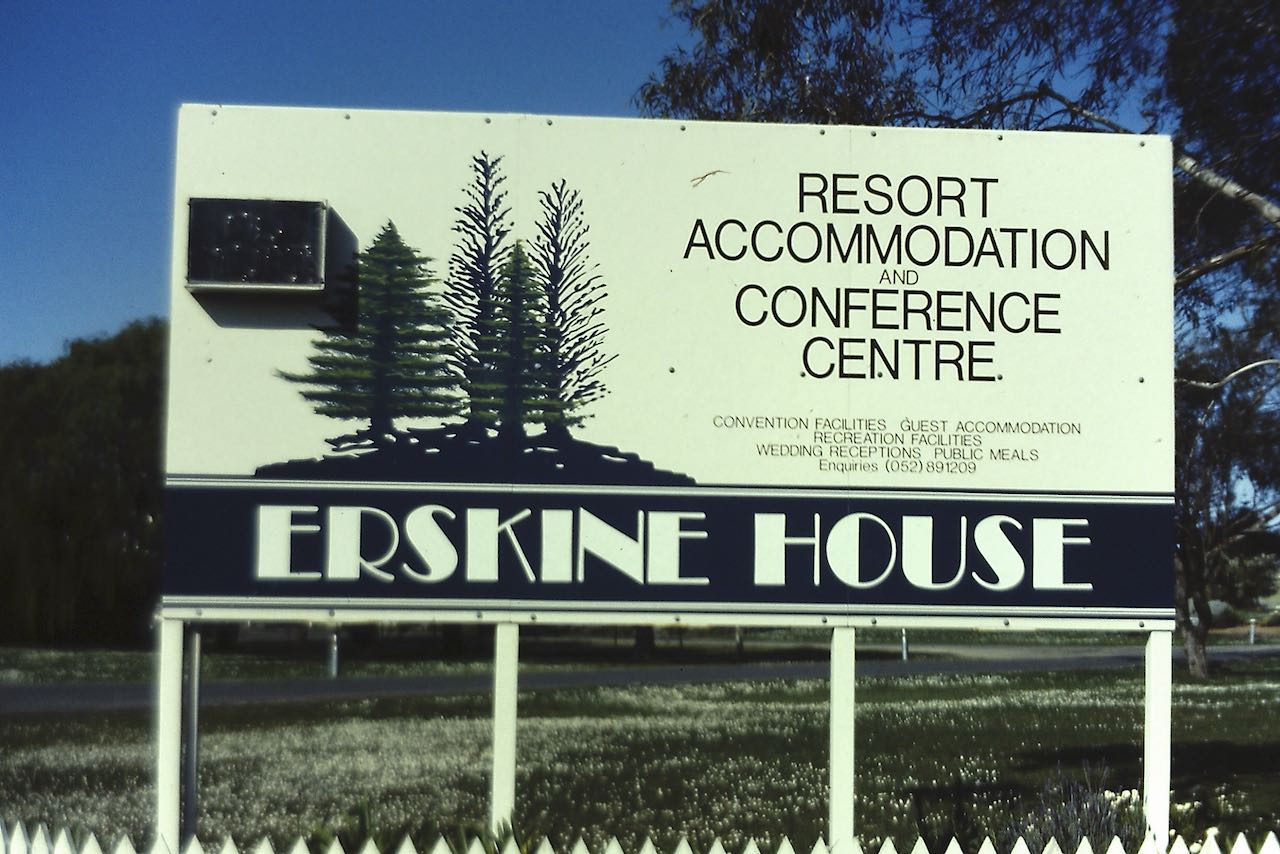
The redevelopment of Erskine House by the developer to become Mantra, proposed 126 three storey units, a 600 seat auditorium, 2 restaurants and 57 room hotel. Ex-Premier Rupert Hamer was reported as saying this “would ruin the historic foreshore and surrounding parkland”. Hundreds of townspeople agreed.
Some changes were made to the plan, but the final plan exhibited by the Shire Council in 2000 attracted 142 submission, only 2 of which were in support. Surf Coast Shire councillors were spilt 4-4 on wether to proceed, with the casting vote of the mayor ensuring the approval of the development. Mantra now incorporates the original guesthouse building and employs 180 people in peak season.
In 2000 a fifty year lease was granted to BCR Asset Management and it was further developed into what is now the Mantra Resort.

Lorne aerial view, Mantra in middle of photo, Erskine House with olive coloured roof, new Mantra buildings with green roof, c2015

Mantra, Erskine House, photo 2025
Source:
- Lorne A Living History by Doug Stirling
- Lorne Historical Society Collection, Photos
- Moylan & Watt 1994