
Lorne, Victoria, Australia
There are currently three churches in Lorne.
- All Saints Anglican Church, 188 Mountjoy Parade, Lorne
- Our Lady of Fatima Catholic Church, 33-37 Smith Street, Lorne
- St Cuthberts Uniting Church, 86 Mountjoy Parade, Lorne
Early Church Services
Edward Hall a temperance missionary from Birregurra, an Englishman, was affectionately called The Bishop because he fancied himself as a preacher and often conducted services at Erskine House and The Sanctuary above the Rapids on the Erskine River. It was said that he rarely stopped talking and had a large stock of doubtful stories that some said were as tall as the surrounding blue gums. He was a natural philosopher and used his communication skills to earn a living as a tourist guide in Lorne. Edward had a close affinity with nature and was often seen standing on top of a hill wearing his red hairpiece, admiring the view and praying to God. An accomplished artist, whose method was to use a twisted cloth on a stick, he left a beautiful collection of his work for future generations to enjoy: The Lorne Historical Society has twenty copies of these important, historical paintings of Lorne c.1880.
-
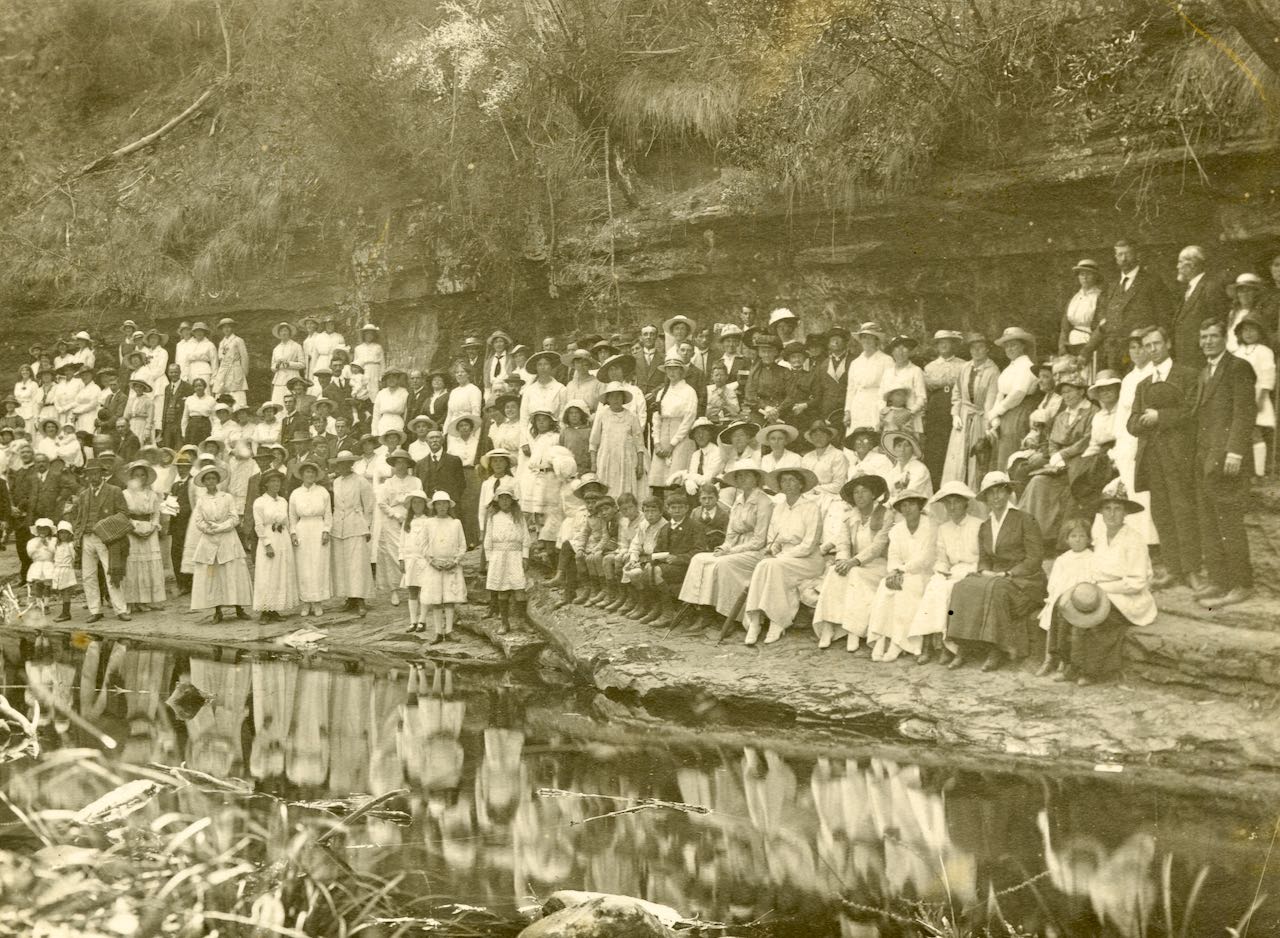
- c1850 Combined church service at Sancturay on Erskine River. (LHS photo B487)
-
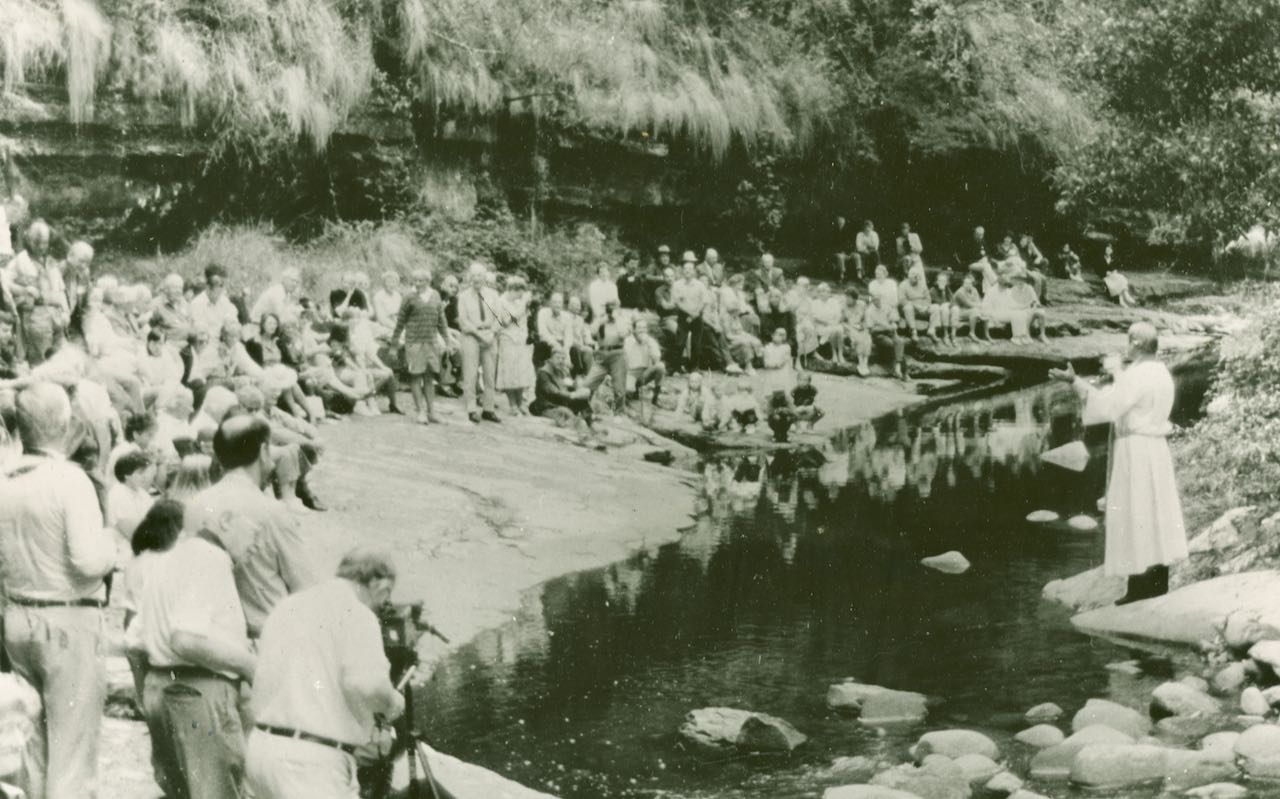
- Centenary church service for Uniting Church at The Sancturary, 8 March 1992, Rev. Duncan Spiers (LHS photo 9165)
-
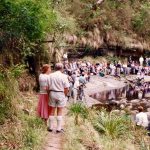
- 100th anniversary service at The Sanctuary Erskine River 1992. (LHS photo B531)
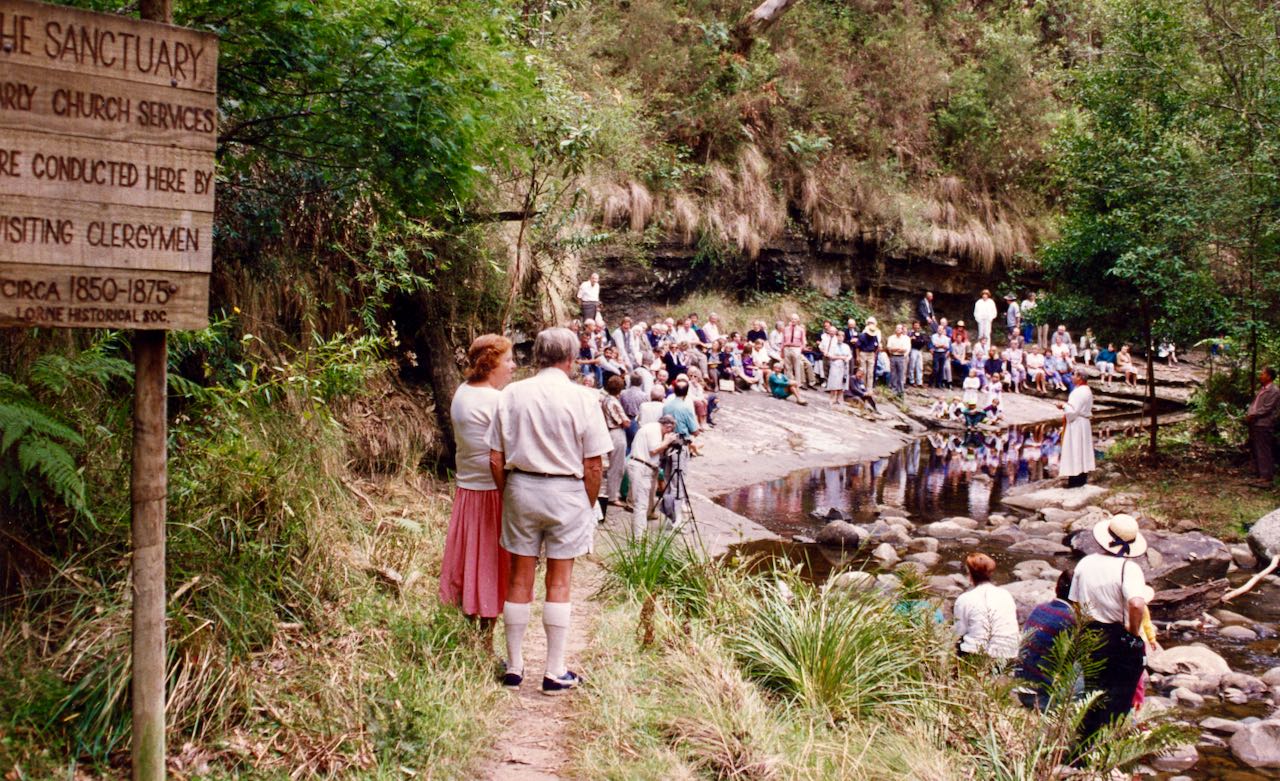
The sanctuary is located about five minutes up a walking track from the rapids a beautiful place so sacred and geologically unique that religious ministers used it as a place of worship, before churches were established in Lorne. The rocks form a natural seating area, for a natural church service to be held.
Sources:
- Lorne Historical Society Collections
- Lorne A Living History by Doug Stirling
All Saints Anglican Church
In the early 1870’s visiting clergy held Divine Service at the Sanctuary, a glen beside the Erskine River, and later at Erskine House. In November 1880 All Saints was opened, the first church to be built in Lorne. Four years later, with the aid of a team of bullocks and eleven horses, the church was...Read more
Catholic Church
Our Lady of Fatima Catholic Church In the year 1916 Lorne is first mentioned in the Archives of the Ballarat Diocese and from then on until 1956 it is listed as a Station. Mass was celebrated on Sunday Morning in the old Library Hall by Priests from Birregurra, Beech Forest and Colac, these included:- Father...Read more
St Cuthbert’s Uniting Church
St Cuthberts Church was built in 1892 by Andrew Sanger, uncle of Doug Stirling. It was built with baltic pine that arrived in Lorne in Australia as ballast on ships coming from Europe. It also used red pine that was sent out from America for architrave and skirting boards, all hand-planed on the spot. 2026,...Read more

