
Lorne Victoria Australia
First Hospital (1919)
Spanish Flu leads to the first hospital to be established in Lorne in 1919. The Geelong Advertiser of February 1919, reported that the Lorne Hotel was quarantined, when five Melbourne visitors contracted influenza and Dr Kirkpatrick of Birregurra, health officer for the district, 0rdered it to be quarantined. Two constables were sent from Geelong to enforce the law.
In order to be prepared for a further outbreak, the Winchelsea Shire Council took over a house owned by Mrs Potts and equipped it as a hospital. The house, built for Judge Topp, was at 16 Armitage Street.
Arrangements were made for a trained nurse, a local lady and the first district nurse ‘Hepsy’, grandmother of Elise Murnane, was to be ready for duty should further cases occur. Some men working on the construction of the Great Ocean Road were treated for the flu at Lorne’s first hospital.

Lorne’s first hospital at 16 Armytage Street
Lorne Community Hospital (1959)
In August 1945 a Public Meeting convened by the Lorne Progress Association formed a Committee to raise funds for the establishment of a Hospital for Lorne
A Grant from the Hospital and Charities Board was made of 1 pound Sterling for each pound raised by the Committee. The aim was to provide a 10 to 12 bed unit and three sites were favoured: Queens Park; Cherry Tree Street; Deans Marsh Road.
In 1947 the Deans Marsh Road property, owned by Mrs Hilary Frazer-Philips, was purchased in 1947 by the Committee of the Lorne Community Hospital for £3,650. However, the then Minister for Health decided the site did not have the amount of land required for the project. If adjoining land could be obtained then permission would be given for the building of a six bed Hospital. The land was acquired, but the Hospital never eventuated there – this finally being considered not a practical solution.
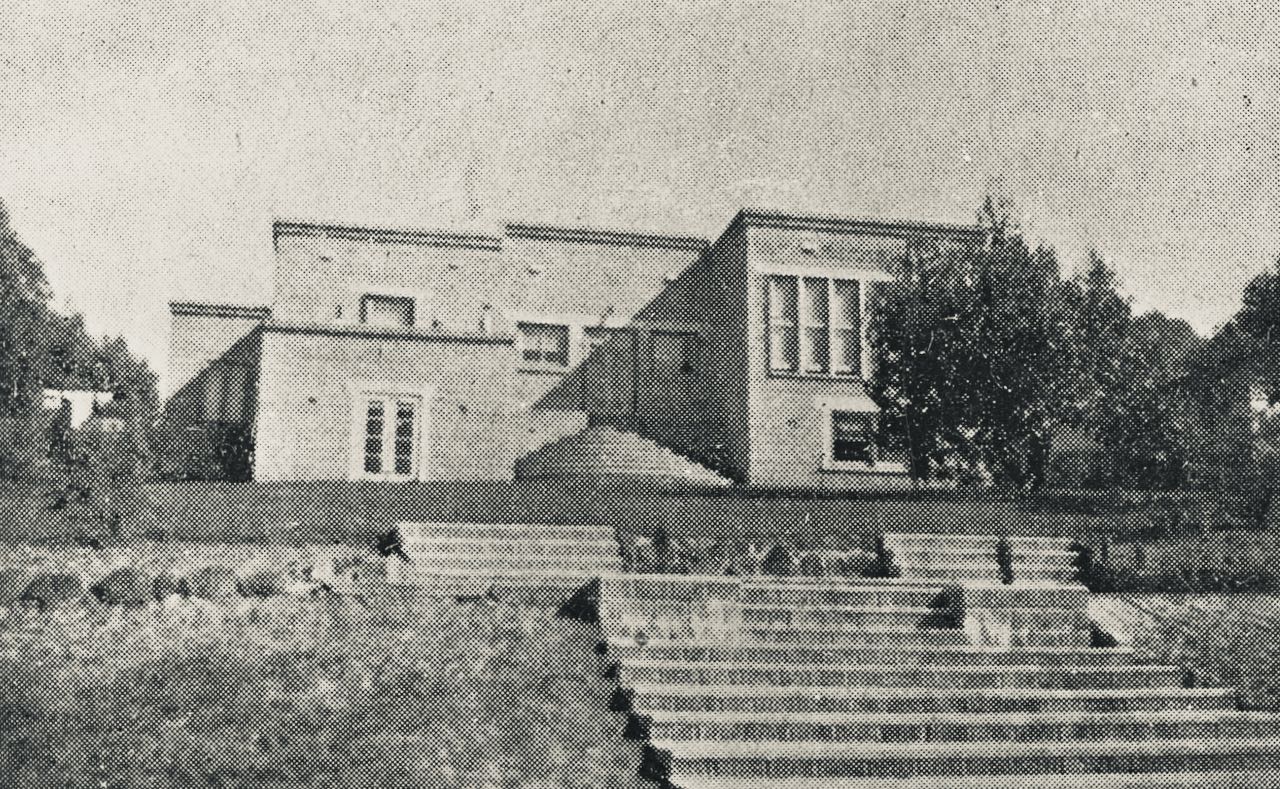
‘Little Fishes’, Deans Marsh Road. (LHS photo 8679)
The building itself was not suitable for a Hospital as it was built of cement bricks and second hand material. The land size was still not big enough. Powers that be, wanted it around the main part of town so finally in 1952 the building was pulled down. It was sold when the present Hospital in Albert Street was established.
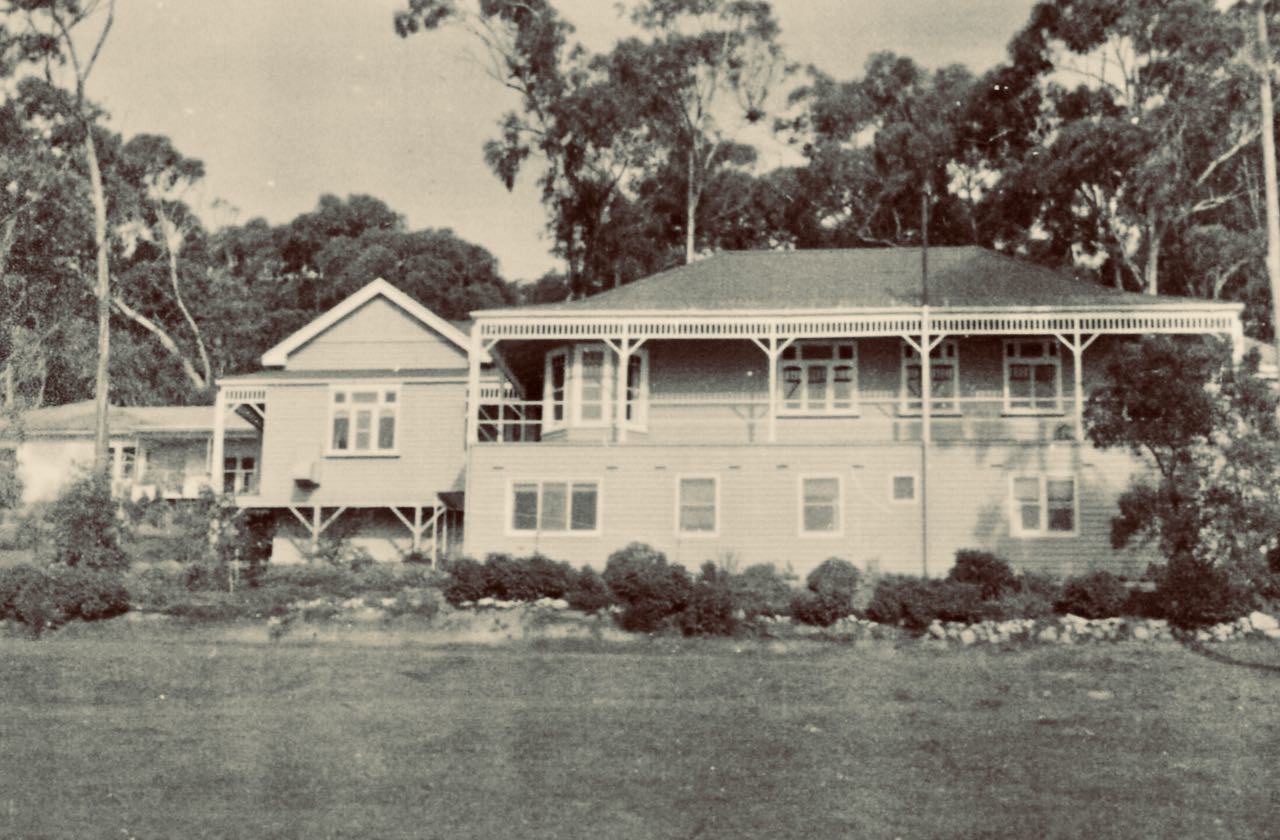
‘Pentlands’, Lorne’s first Community Hospital. (LHS photo 147L)
An approved property in Smith Street named Pentlands was purchased from Mrs E. Manifold. The house had been given to her as a wedding present by her husband around 1900. A rough track down from Smith St. was used as the entrance until a carriageway was bulldozed from Albert St. to the rear of the house. Builders Cook and Fawcett won the contract to convert the building into a hospital with nurse’s quarters on a lower level. There were two nurses and a matron at first, matron Henthorn, sisters McKenzie and Stuart. The hospital consisted of two single and two double wards, an operating theatre, sterilizing room, delivery and nursery rooms, outpatients area, plus kitchen and staff dining room.
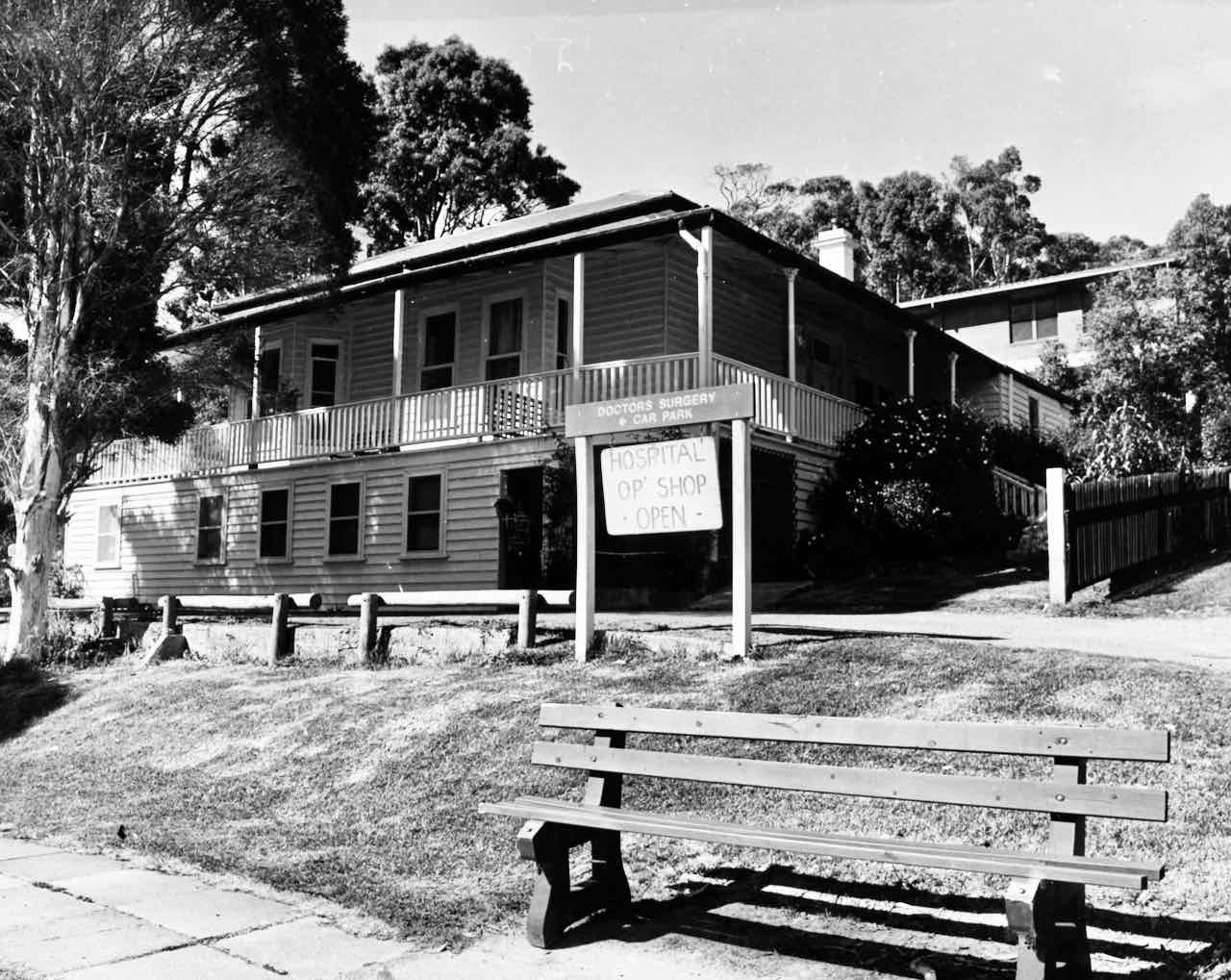
Lorne Hospital Op Shop. (LHS photo B641)
On going fundraising by the Ladies Hospital Auxiliary mainly through their Opportunity Shop, has funded the purchase of much needed equipment for the Hospital.
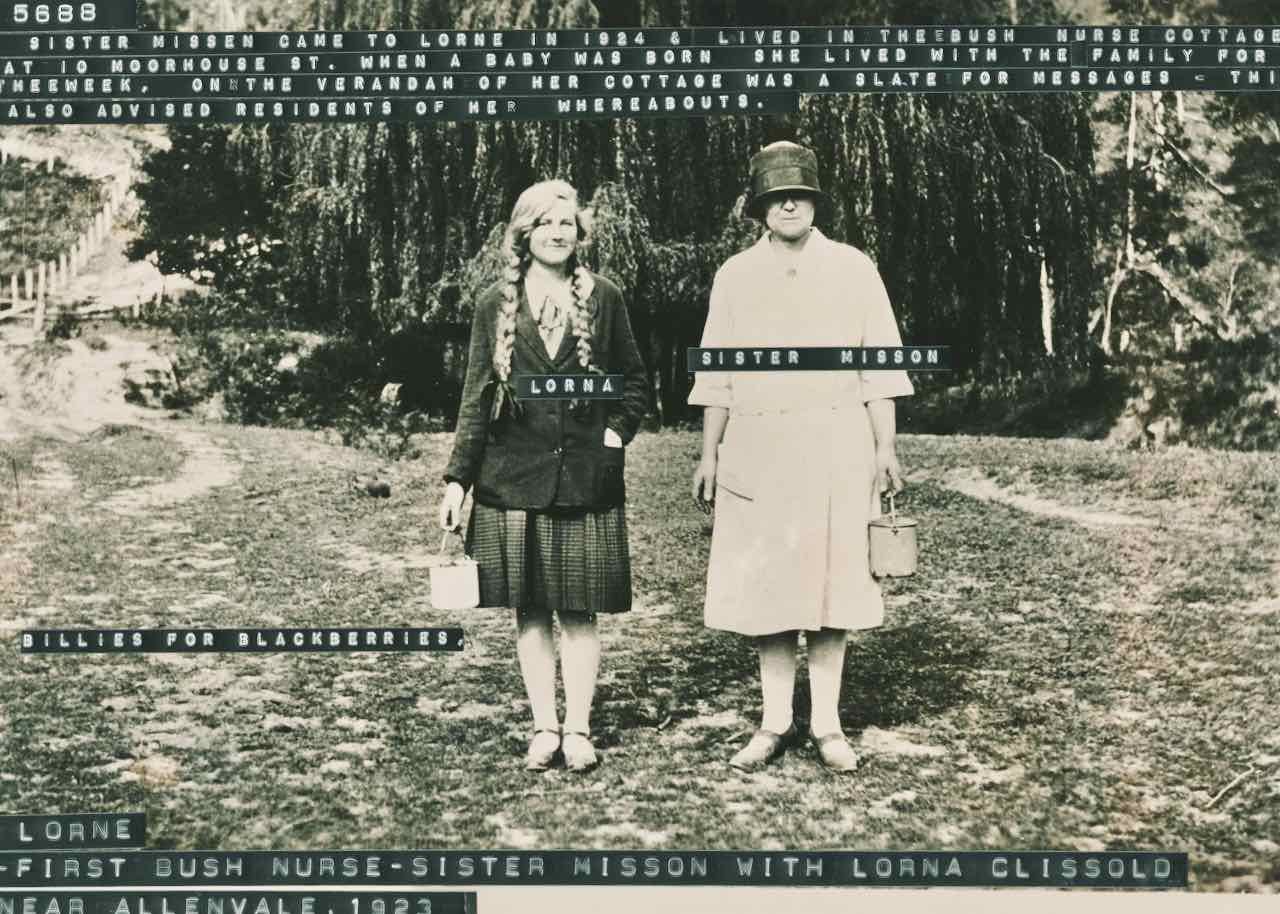
Lorne has been trying to get a Hospital for some 14 to 15 years. The purchase price was £9,000. Renovations and additions cost £20,000 and equipment £5,000. Previously, patients from Lorne were taken to Colac or Geelong and for many years there was a Bush Nursing Centre in Lorne. This was a wonderful asset during the days when Lorne had no permanent Doctor or Baby Health Centre.
The Community Hospital was established, and the Official Opening Ceremony took place on Sunday 8th March 1959 in the presence of a large assemblage.
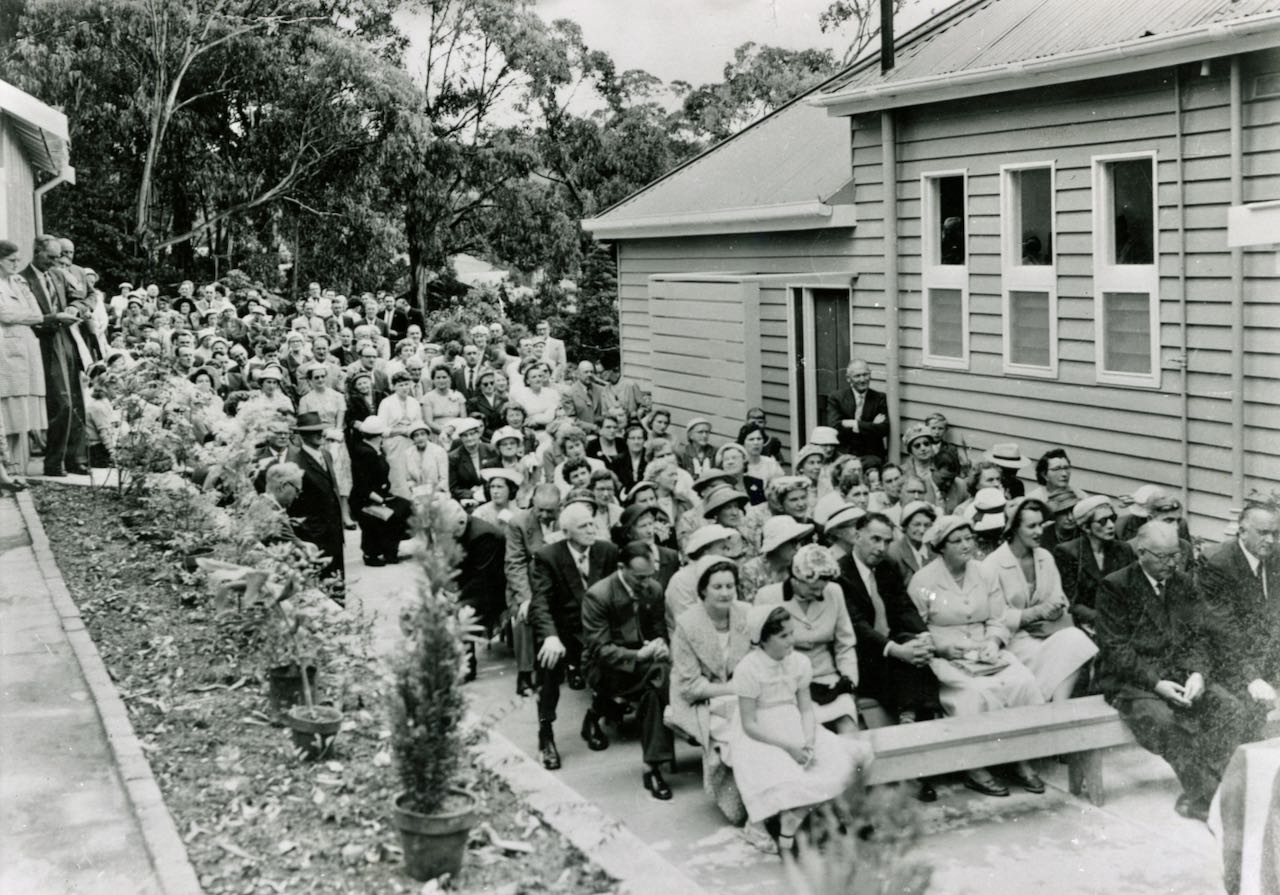
Opening of Lorne Hospital. (LHS photo B642)
The Hospital was a splendid acquisition for Lorne, and those who toiled so zealously for such a long period are to be congratulated upon their great achievement. The Opening Ceremony was performed by the Minister for Health (The Hon E P Cameron). He was accompanied by Messrs Forbes and Fraser, of the Hospital and Charities Commission.
Community Hospital Redevelopment
By 1999 it was thought the hospital needed an upgrade. A new $6 million Community Hospital and Nursing Home was planned. They wanted a flat area of land and room for a helicopter to land. Erskine paddock, Erskine House land near Mountjoy Parade and the Kia Ora Caravan park were under consideration.
The hospital board thought that renovating the current site was too expensive. There was great community concern about using the Kia Ora caravan park area. Councillor Henry Love was very active in objecting to developing the new hospital at the at Kia Ora caravan park. Terry Muller, Liberal Party member of the Victorian Legislative Assembly won the Polwarth State Government seat and said it should be developed on the Erskine House land. Local councillor, Henry Love, continued to favour redevelopment of the hospital on its current site.
Lorne Nursing Home (1985)
In July 1982 Matron Margaret Boyd stressed the necessity for a Nursing Home. This was achieved by her insistence and persistence then for what finally became a 13 bed unit. Total cost was to bc $500,000 with $21,000 to bc raised locally. A Committec was convened to raise the amount with the assistance of various Trust Funds and local contributions the wards were furnished by donors.
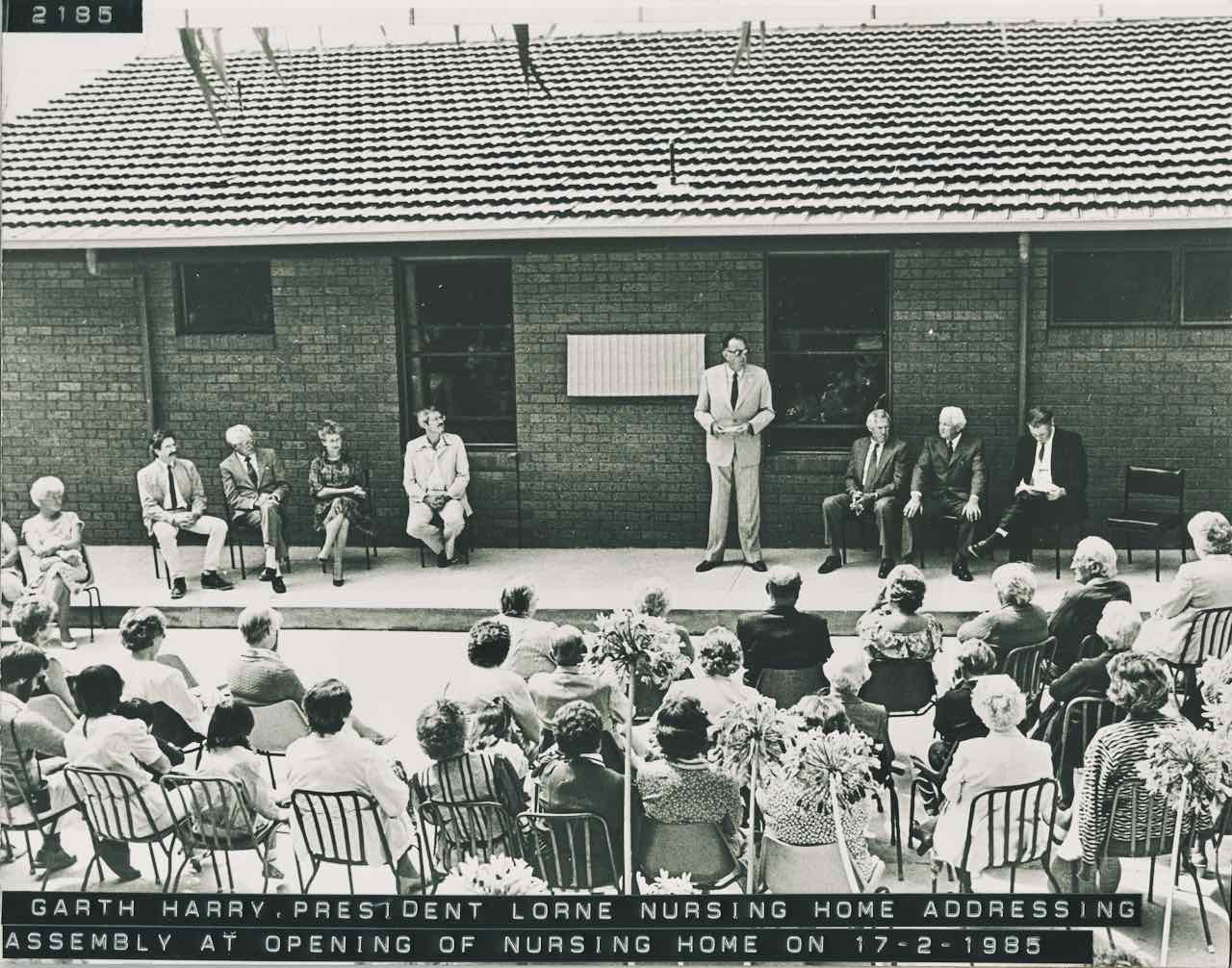
17-2-1985, Openning of Lorne Nursing Home. (LHS photo 2185)
It was officially opened by Minister for Territories Gordon Scholes MHR for Corio, on Sunday 17th February 1985, and it was totally free of debt. In the carly 1990’s it was enlarged to a 15 bed unit. In 2005 this building was demolished to make way for the new Hospital and Nursing Home Complex.
New Lorne Community Hospital (2006)
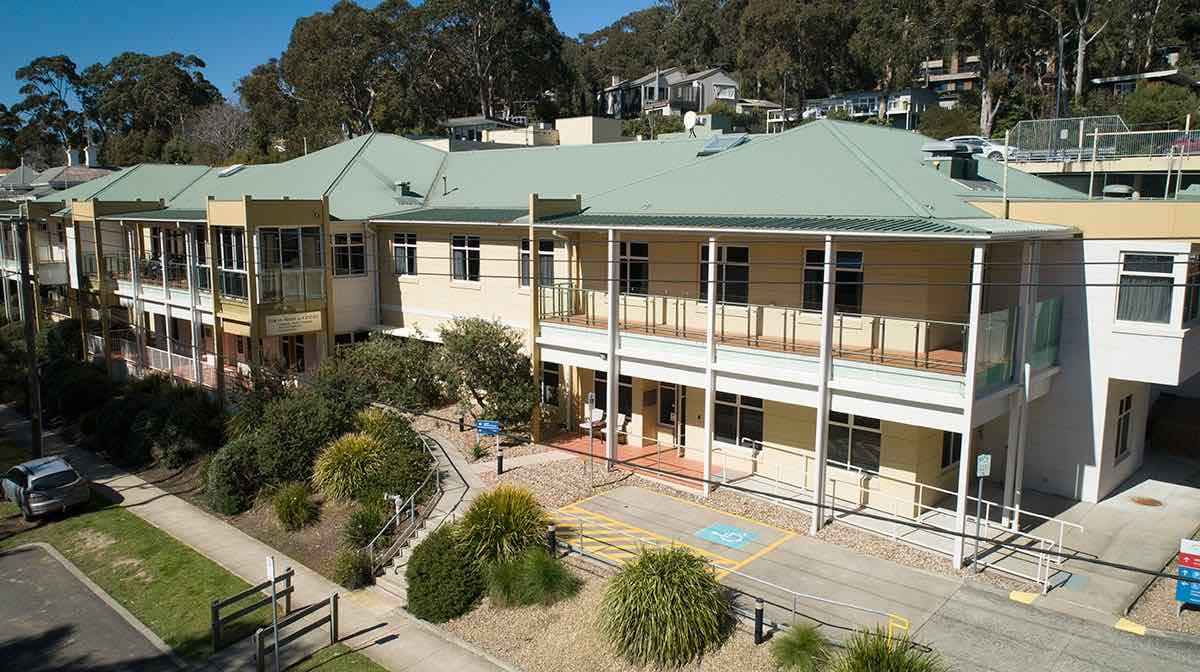
Lorne Community Hospital
It was officially opened on Saturday 4th February 2006 by the Premier of Victoria The Honourable Steve Bracks.
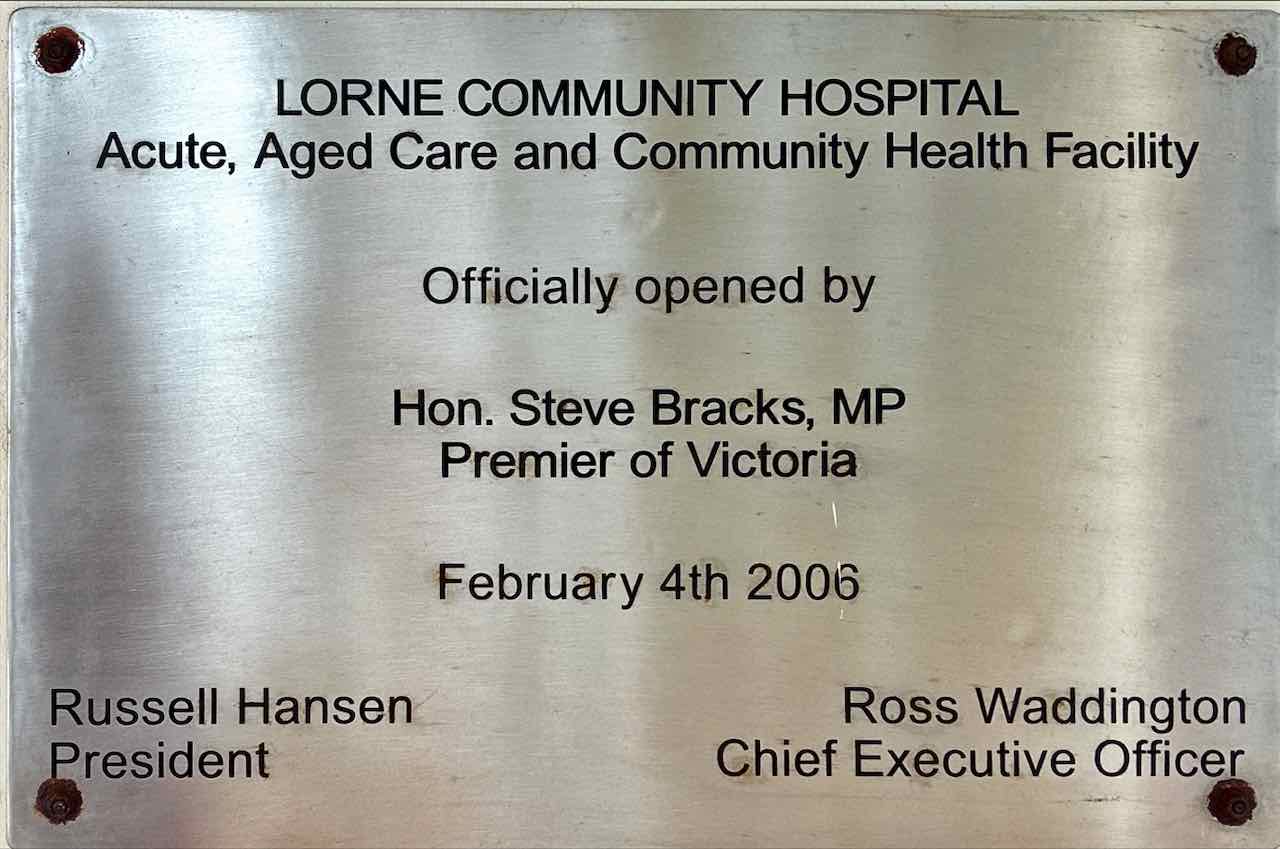
Great Ocean Road Health

Lorne Medical Centre, 2025
The current Lorne Campus was officially opened in 2006 and has been completely re-developed on its original site. It provides a modern work environment which is well equipped with current technology and equipment. A broad range of services include: Aged Residential, Acute Hospital, Emergency, Community Health, Home Nursing, Medical, Rehabilitation and Palliative Care.
Sources:
- Lorne Historical Society Collections
- Lorne Community Hospital
- Geelong Advertiser, 10 February 1919 (http://nia.gov.au/nia.news-article165249462)
- Great Ocean Road Health