
Lorne Victoria Australia
2026 Otway Flash Floods
Record-breaking rain fell along Great Ocean Road in the space of a few hours on Thursday 15th January 2026, triggering flash flooding that swept away cars, caravans and tents. The raging torrents hit Lorne, Wye River, Separation Creek and Cumberland River on Thursday afternoon, sweeping several cars out to sea at Wye River.
-

- 2026, Flood water from St George River, ABC NEWS
-

- 2026, photo by Megan Prictor, St George River
-

- 2026, photo by Megan Prictor, St George River
-

- 2026, Cumberland River, ABC NEWS
-
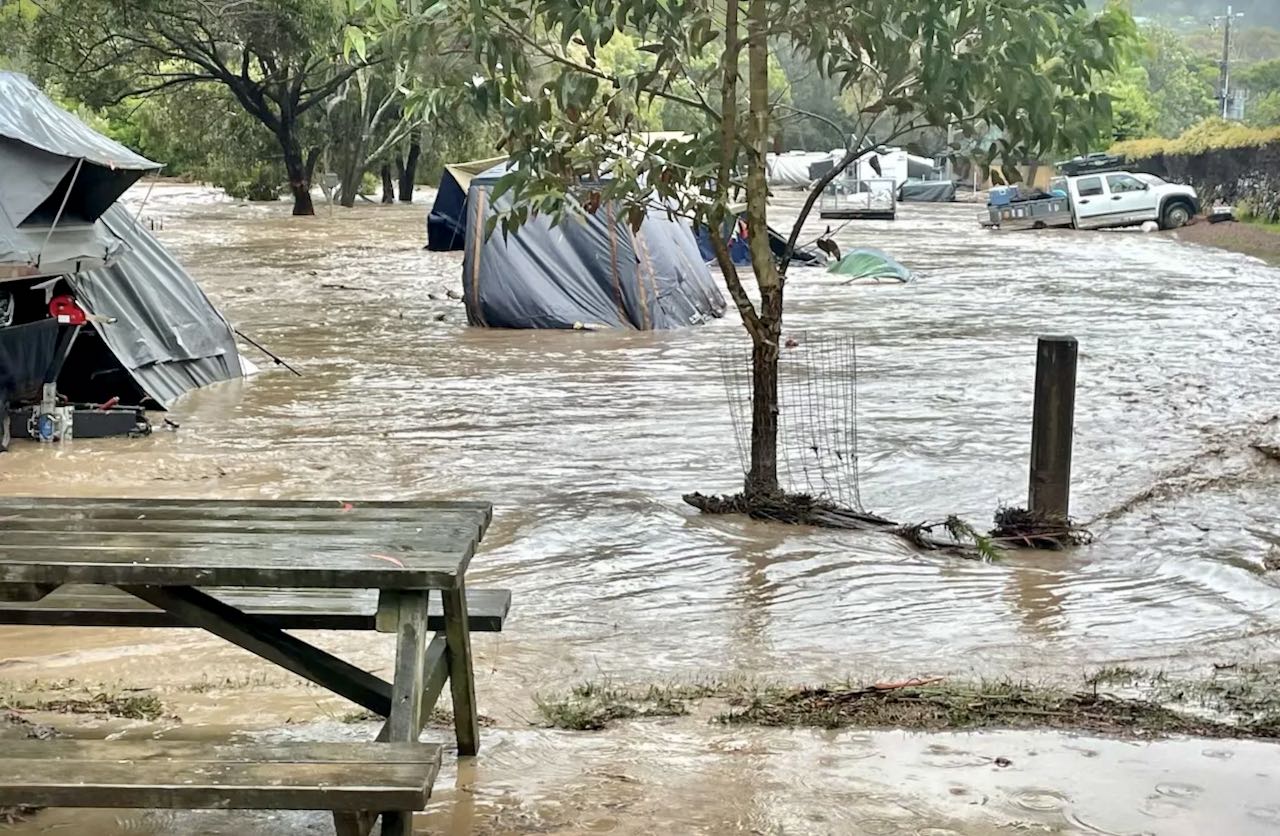
- 2026, Flooding at Wye River, REBECCA SCOTT
Sparked by huge downpours, the waters also swallowed riverside campgrounds, forcing panicked campers to run for their safety. Numerous people were rescued after flooding hit in the early afternoon, including a man stranded on a roof at Cumberland River who was winched to safety by police. Several people sheltered on Wye River’s general store roof, cars were left submerged under bridges and floodwaters trapped some holidaymakers in their caravans.

2026, Cumberland River. (Photo NINE NEWS)
Floodwaters at Lorne claimed several tents and lapped around caravans, with SES crews and residents seen carrying children from the water to safety. Authorities said on Thursday night that the Erskine River Caravan Park suffered significant damage.
-

- 2026, Lorne campground, NINE NEWS
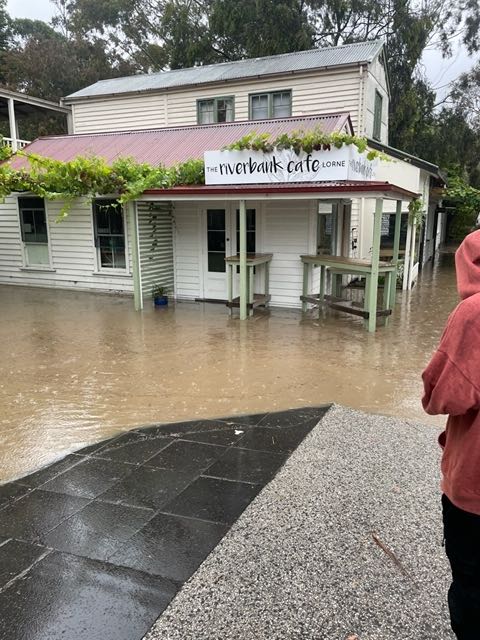
-

- Inside Riverbank Cafe

Between 200 and 400 people in low-lying areas were displaced, many of them holiday-makers in caravan parks, and dozens of vehicles were impacted by floodwaters, according to the State Control Centre (SCC). At least six people were rescued by emergency services during the flash flooding, but no-one was reported injured. Some foreshore areas were closed for weeks for a significant clean-up and repairs
-

- 2026, Cumberland River,cars piled up. ABC NEWS
-

- 2026, Cumberland River Bridge. (Photo NINE NEWS)
-
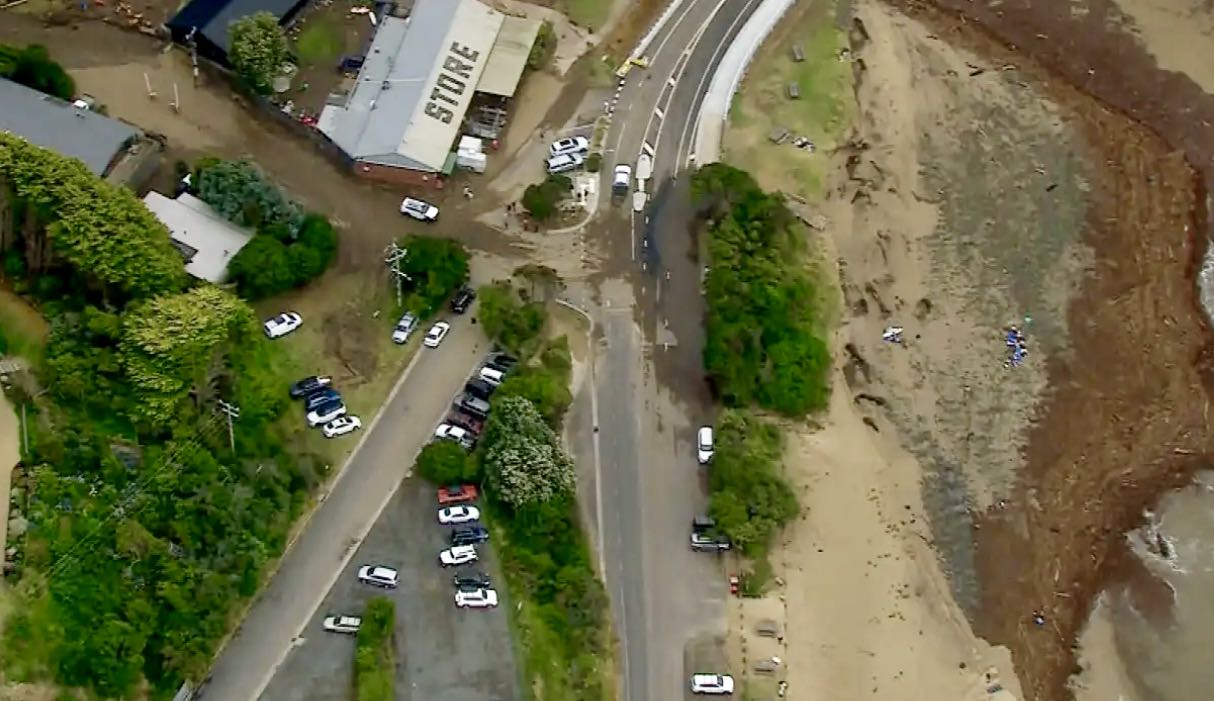
- 2026, Wye River Store. (Photo NINE NEWS)
-
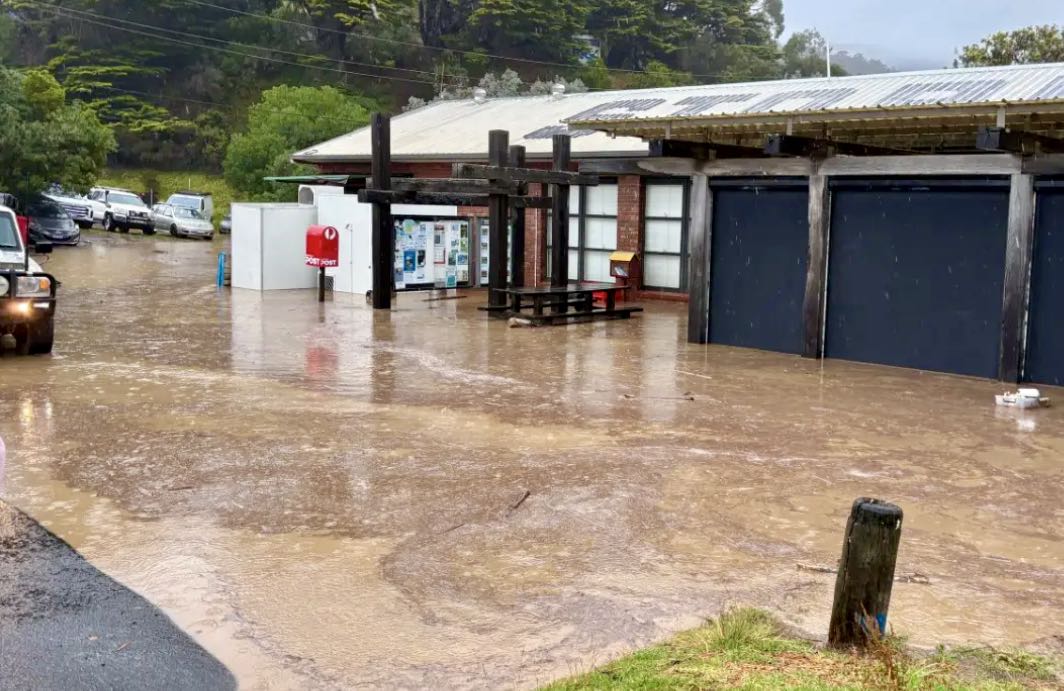
- 2026, Wye River Store. (Photo LUCA SHERMAN)
-
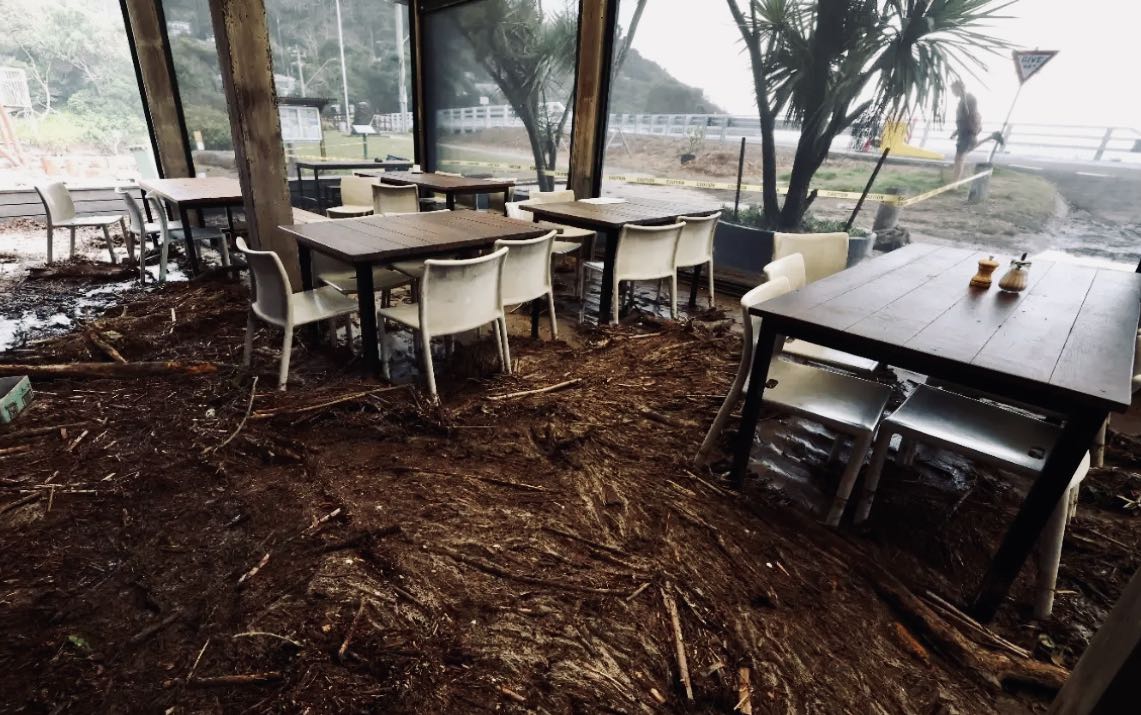
- 2026, Wye River Store. (Photo ALEX COPPEL)
-

- 2026, Wye River, flood damage. (Photo ALEX COPPEL)
Bureau of Meteorology (BOM) senior forecaster Angus Hines said Victoria was ripe for thunderstorms because of very high moisture in the atmosphere. Mr Hines said the humidity coincided with an upper-level trough, which helped intensify the stormy conditions. He said the location of the storm in the hills above the Great Ocean Road also played a part as the very humid air that arrives at hills or mountains or ranges rises to go over the terrain.
The Department of Transport teams inspected a number of bridges and roadways that were hit by vehicles and debris. One of the bitter ironies of the disaster is that some communities now dealing with record rainfall are less than 100 kilometres from bushfires that had been challenged crews in the Otways.
Forest Fire Management Victoria’s Chris Hardman at the State Control Centre, described the rapid flooding as extraordinary. With such a dramatic and extreme event occurring over such a short period of time. Surf Coast Shire councillor Leon Walker said the volume of water that came through was astounding. He said it was lucky the flooding happened during the day instead of sweeping through caravan and campsites at night.
BOM’s Angus Hines has confirmed the storms above the Great Ocean Road broke daily rainfall totals for the area. Mount Cowley reported 180mm through the course of six hours, which is incredibly heavy rain for that part of the country. In fact, it was the wettest day that was on record for that particular weather station. The previous record for that area was 123mm in a 24-hour period.
The flash flooding has also come just a few weeks after Wye River commemorated 10 years since the bushfire that destroyed 116 houses. This is not the first time this has happened in the area. In April 1985, thunderstorms and heavy rain caused Wye River to rise one metre in half an hour, destroying the caravan park and washing away 50 caravans.
The extraordinary storm cell over the Great Ocean Road was powered by a rare collusion of five weather drivers. Extreme thunderstorms with heavy rainfall are often seen in tropical Queensland, but are rare in colder Victoria. As the world warms, “extreme weather events tend to get more extreme”, said Angus Hines, senior meteorologist at the Bureau of Meteorology.
Five drivers collided to produce the downpour. First, ex-Tropical Cyclone Koji. It crossed the Queensland coast on January 11 near Bowen, bringing strong winds and heavy rainfall. The cyclone had a long tail of heavy moisture, a band of thick clouds that ran down through NSW and curled around Victoria’s southern coast. This moisture “primed” the atmosphere across the state for heavy rainfall, said Hines.
A strong storm developed over the ocean south of Lorne. Strong winds from the south-east pushed the storm onshore, dumping rain over the Great Ocean Road. It was what happened next that turned thunderstorm into disaster. Inland of Lorne lie the low coastal mountains of the Otway Ranges, topped by 689-metre Mount Cowley. The strong winds pushed the thunderstorm up and over the mountain range, moving upwards, and coolings to form raindrops. While that was happening a few hundred metres above sea level, a different but complementary process was playing out high in the atmosphere, where a low-pressure trough had formed. Low-pressure troughs encourage air from lower in the atmosphere to flow up – where it cools, and water vapour turns into raindrops. To this, we need to add one last non-weather driver: drought. Over the last four years, the Otways have experienced unusually low levels of rainfall. The dry soil tends to struggle more than moist soil to absorb rainfall. Water pools on the surface and runs off and just washes dirt away making a flash flood.

15 Jan 2026, Wye River CFA Facebook post.
On Thursday 22nd January 2026, Great Ocean Road was closed in both directions between Lorne and Skenes Creek from 6.30am so a helicopter could retrieve the stranded cars. ViSES operations manager Chris Longmore said an expert team, which included a Black Hawk helicopter and marine salvage crew, was called in to remove the cars that had come to rest on rocks, on the beach and out in the sea. He said the helicopter was deployed to retrieve the cars in order to protect the coastal environment and cultural heritage of the beaches, rather than dragging them up along the sand. There were about a dozen vehicles at Cumberland River and two at Wye River.
-

- (Photo supplied by Victoria State Emergency Service)


Sources:
- The Age, online articles 16 Jan 2026
- ABC News Melissa Brown online article, 16 Jan 2026
- The Age, “Why Wye River copped a rain bomb that washed away cars”, Liam Mannix, 16 January 2025
- Tim Young/EMV/SES