
Lorne, Fishing
Fish from the river and the bay was an important food source for the families who settled in Lorne in the 1850s. Recreational fishing became popular as the tourist industry began in the 1860s and beyond.
-
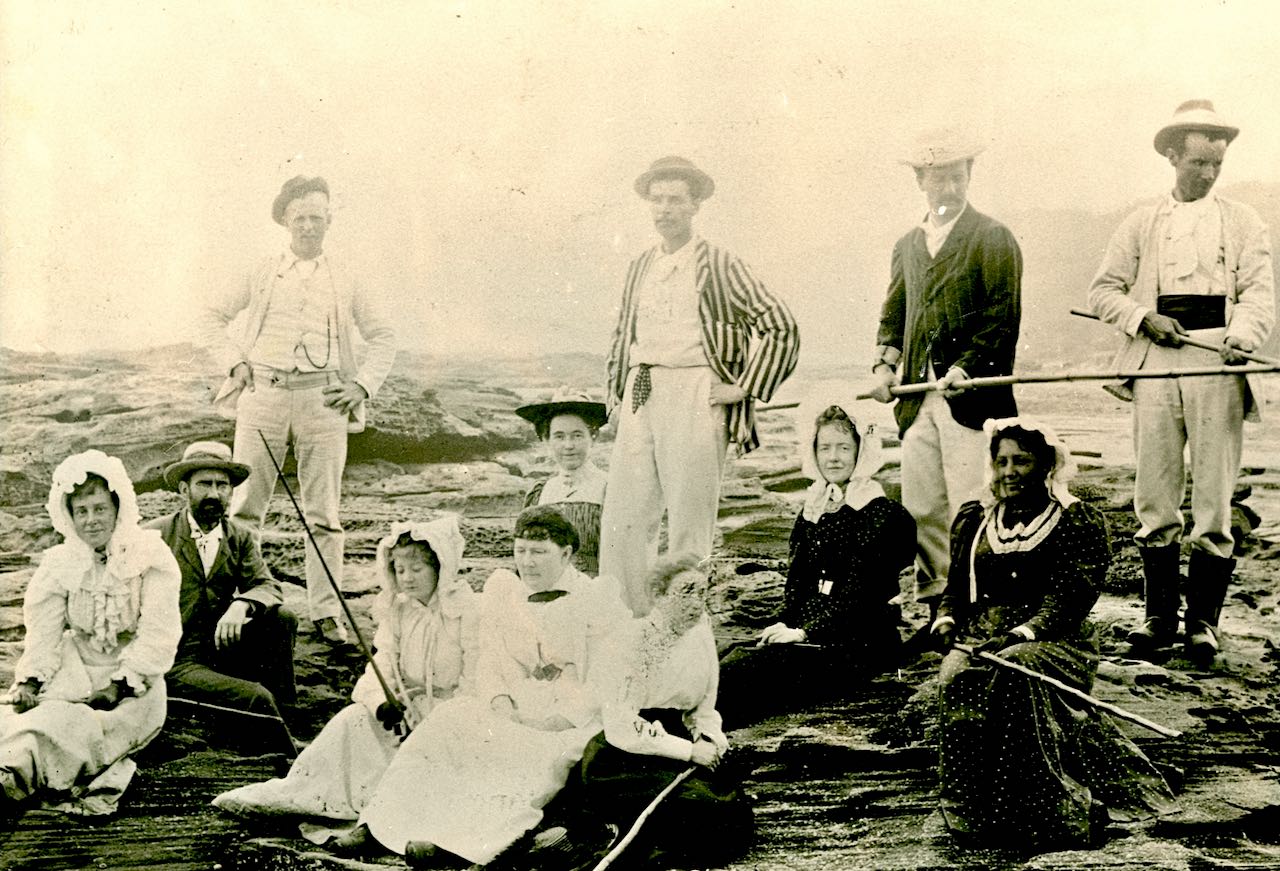
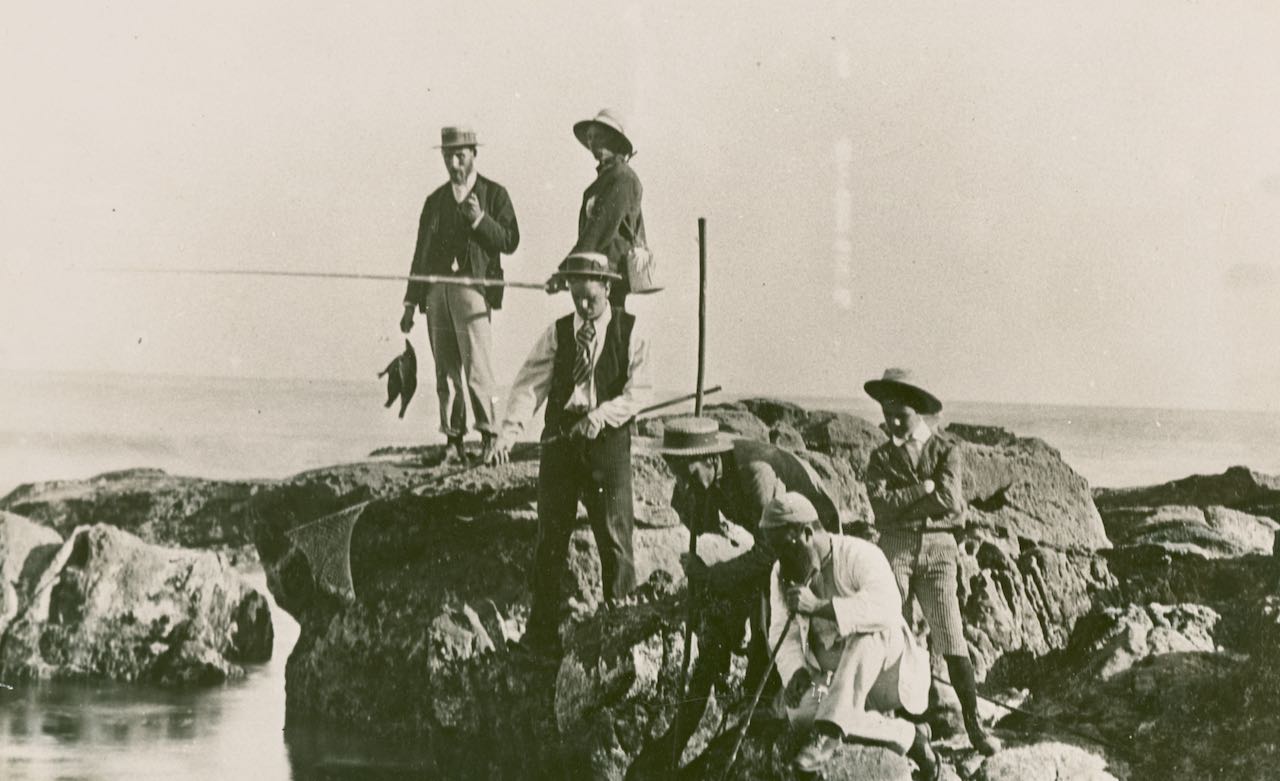
- Fishing from the rocks (LHS photo 5672)
-
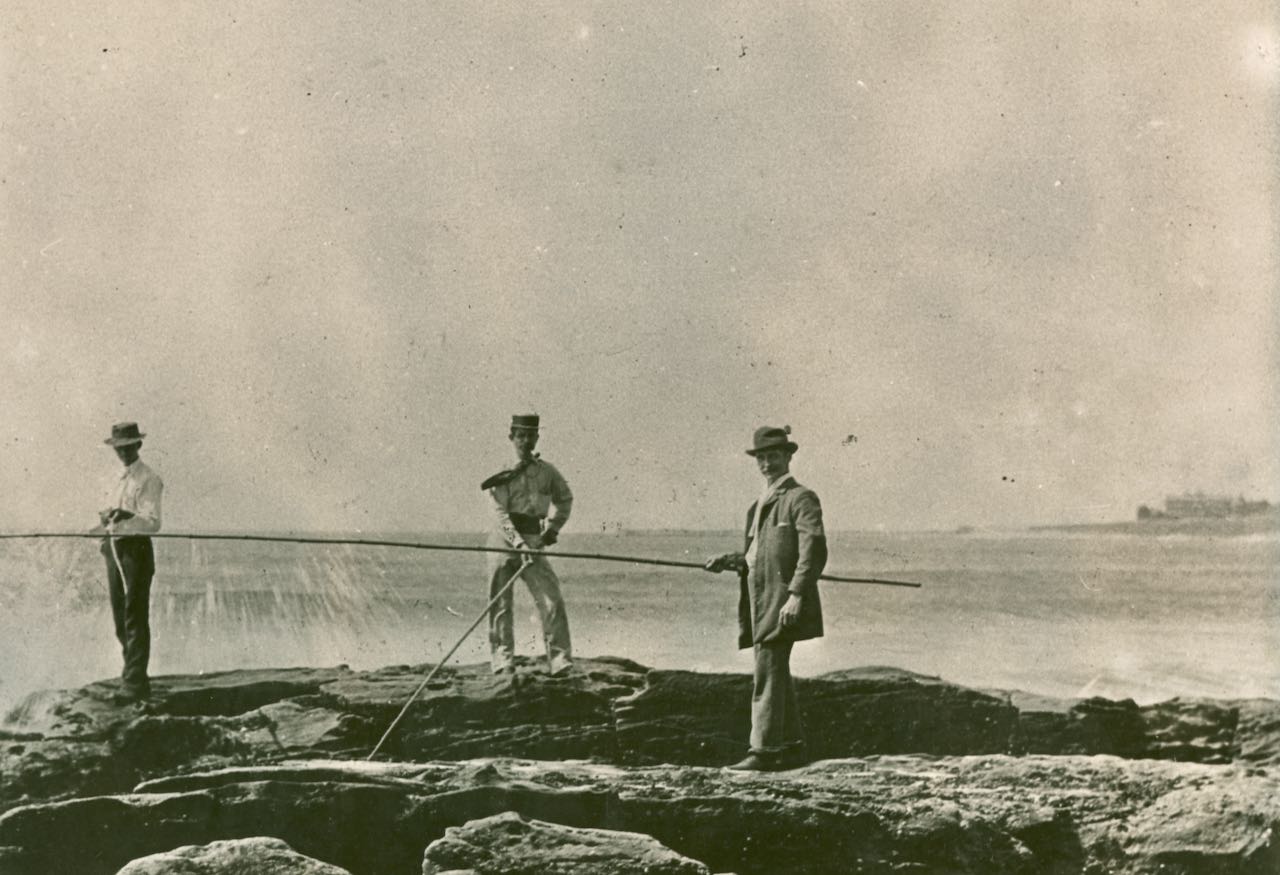
- Rock fishing, Pacific Hotel in the background. (LHS photo 5673)
-
- c1895, Fishing for crays between Stoney Creek and Reedy Creek. (LHS photo 5676)
In 1968, C. Clissold recalled it was also possible to catch plenty of fish coming into the Erskine river with the rising tides. A five pound schnapper was caught, a 4 foot shark (in front of Waverley house) and many other varieties such as black bream, silver bream, perch mullet and salmon trout. There were a lot of old logs in the river in which fish hooks were caught and many a time a broken line. One day after a flood, when the river was low, a bullock team was used to pull the log snags out, after this happened the fishing was never as good.
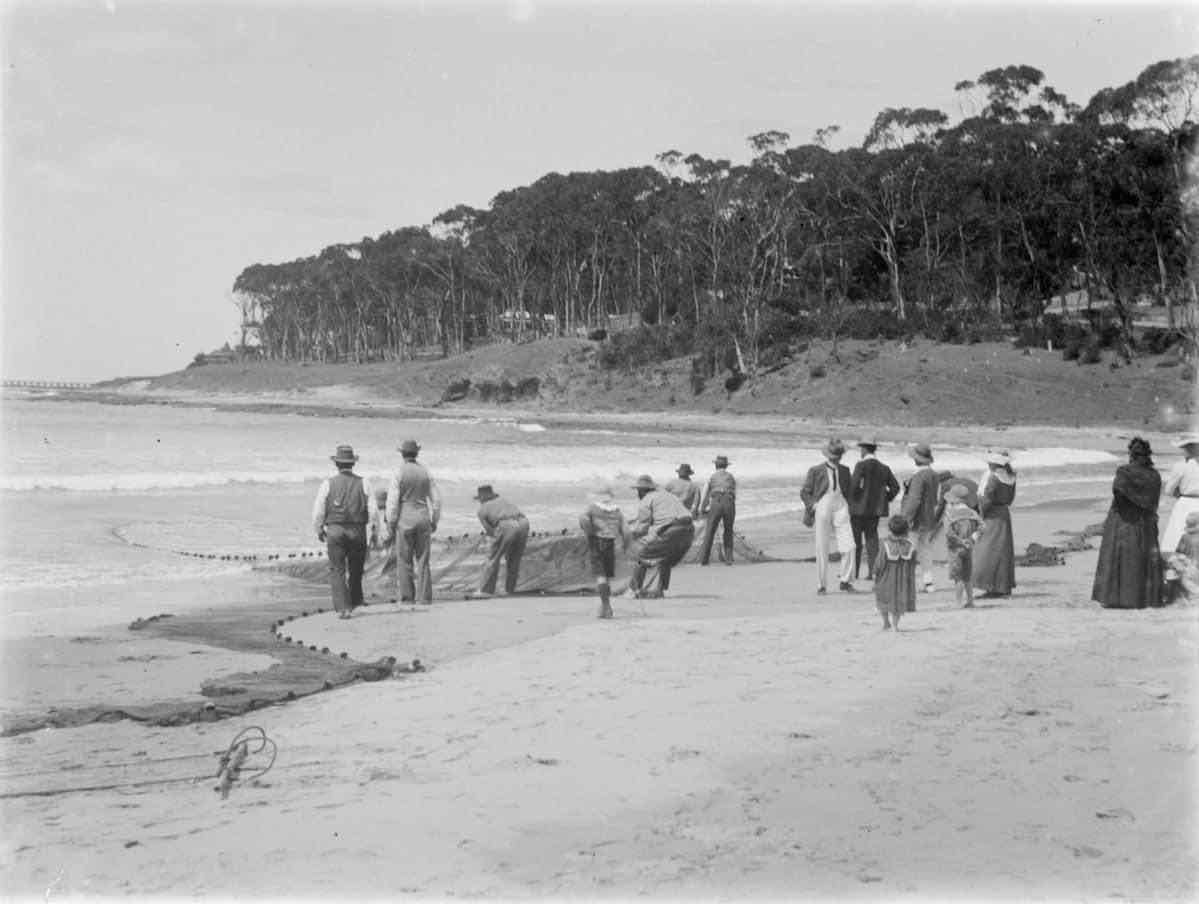
Catching fish from the beach
The early 1930s, during the great depression, saw the beginnings of the fishing industry in Lorne. Cecil Penny, Jack Romaro and Bill Hollingworth fished using nets off the front of the beach – one walking along the beach, the other walking the waves. Sometimes they used a small dinghy. They would catch salmon, garfish, mullet and silver bream. Bill Hollingsworth would sell the fish around the township.
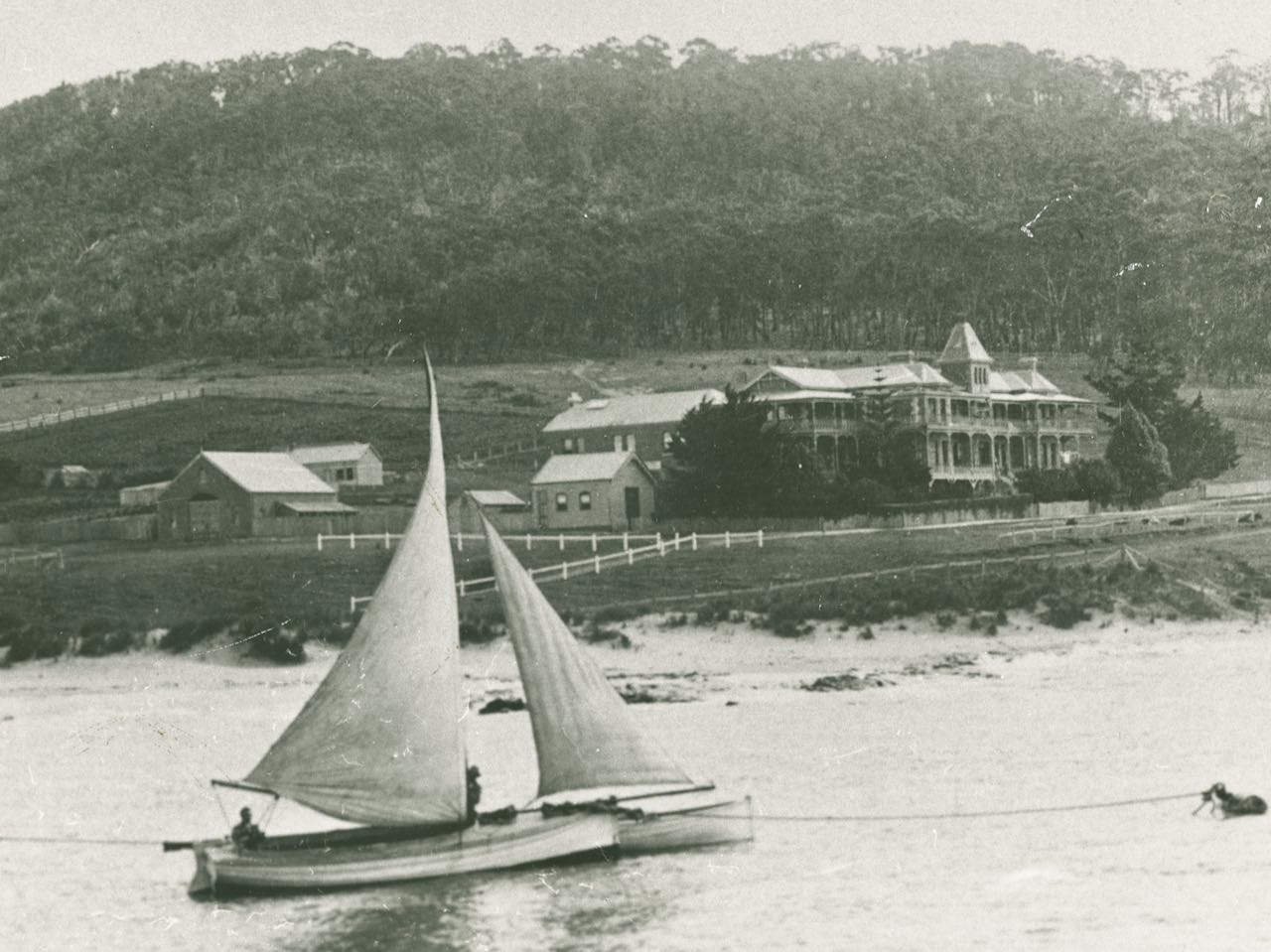
At this time Hector Stribling owned both the Grand Pacific and Lorne Hotels. Mr Stribling made an offer to the Norton brothers, Cyril and Arthur, to supply them with a boat in return for their catch of fish and crayfish which would be served at the hotels. The brothers were able to sell the surplus catch to the residents of Lorne. The boat he purchased was called the “Ina”.
-
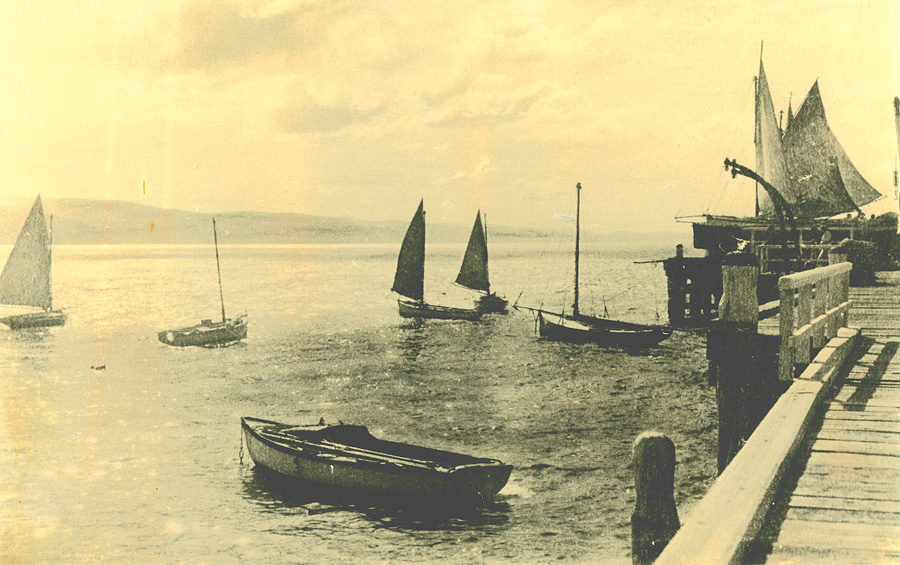
- Mr Romaro, Mr Penny, Mr Moroney boats. (LHS photo 751)
-
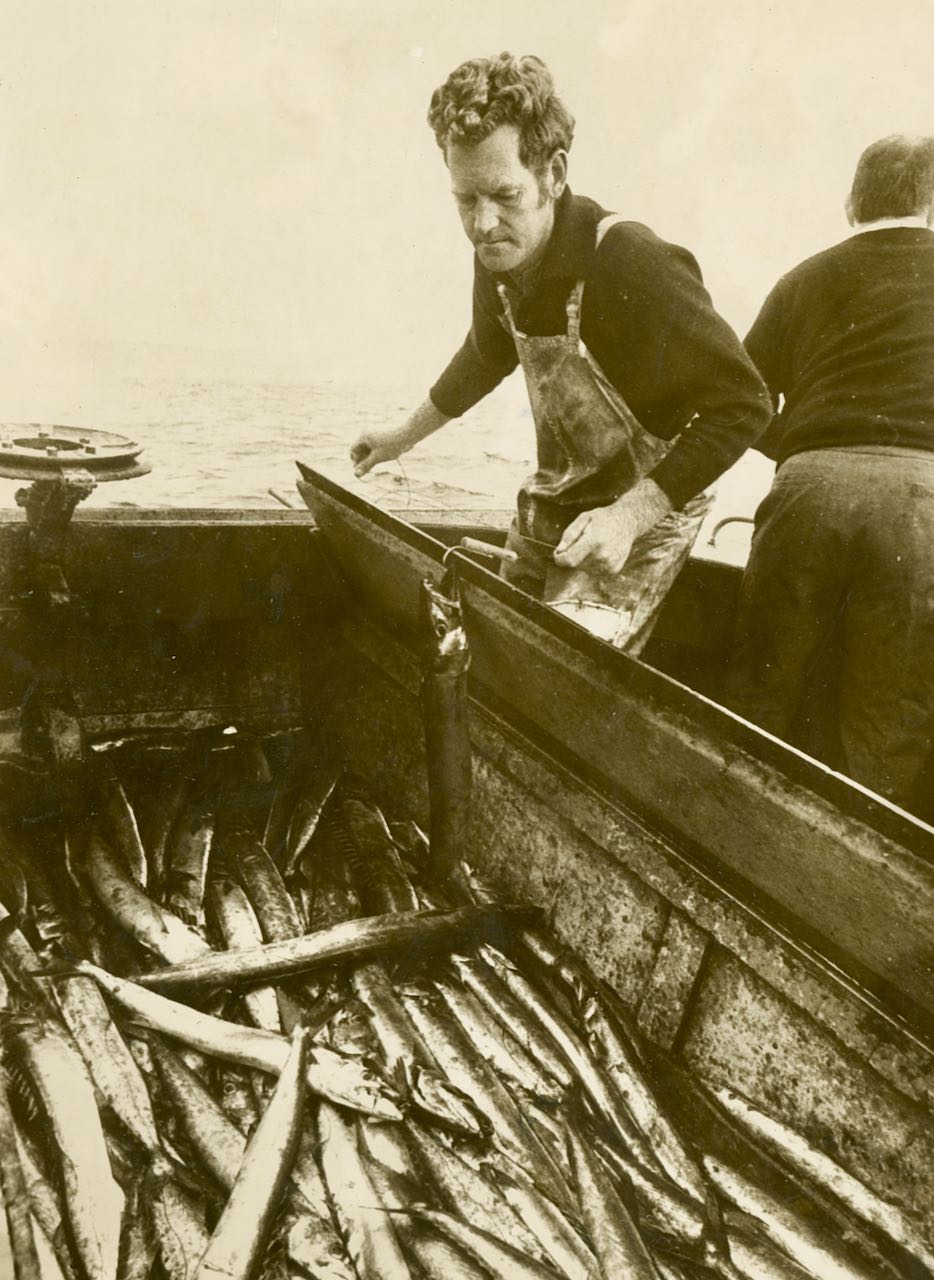
- Gordon Bannister fishing for Barracouta in Jan 1973
-
- Frank Ferrier (Lorne photo 5777)
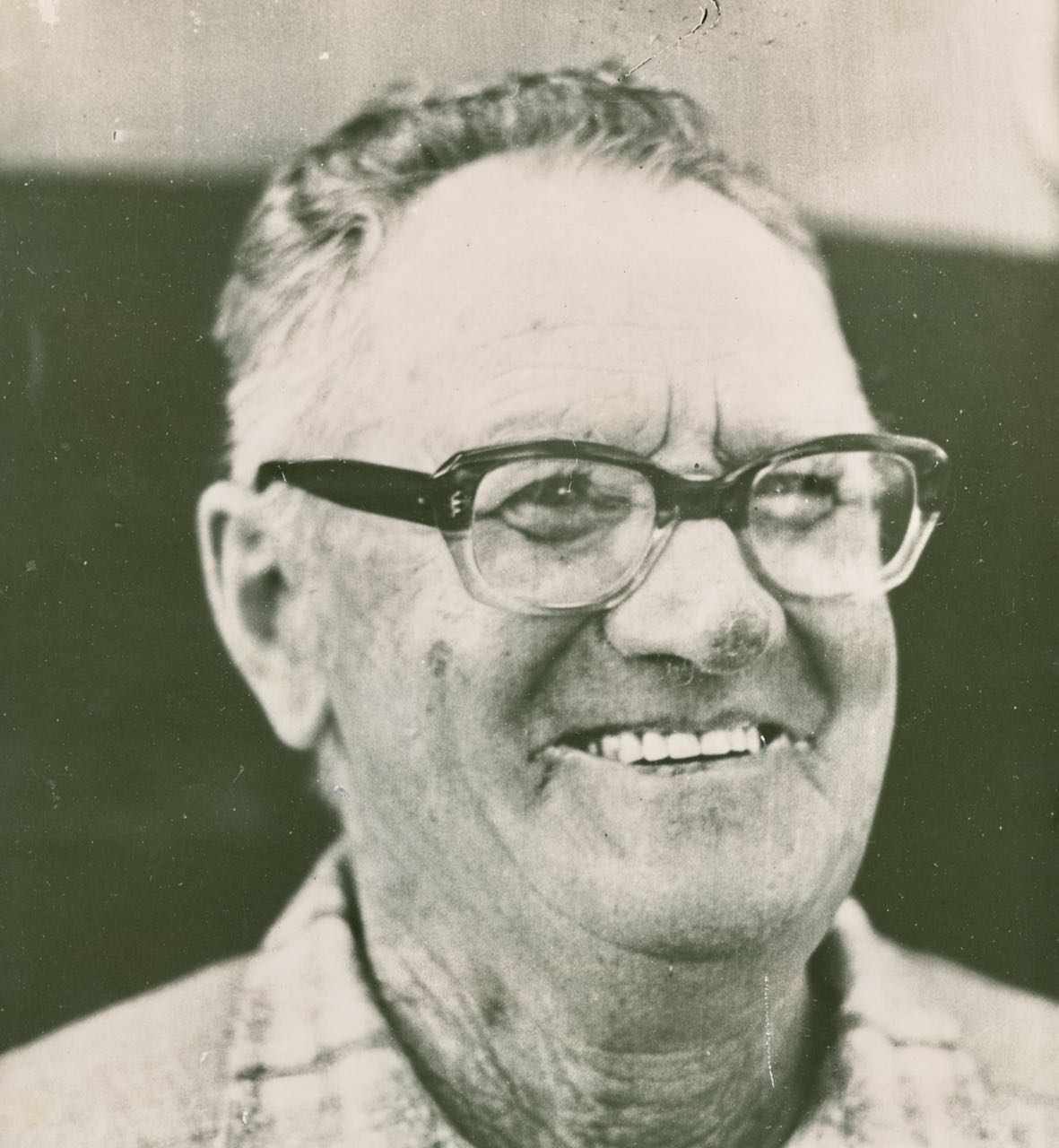
Frank Ferrier was a Victorian fisherman for 58 years, commencing at Queenscliff in 1925 and was taught the fishing industry by his father William and two older brothers Val and Bill. In 1933 Frank moved to Apollo Bay fishing and then moved on to Lorne in 1934. He was one of the first commercial fisherman at Lorne. Commenced fishing 1934 and organised Queenscliff fisherman to come to Lorne.
Prior to World War II, the industry supported the Norton, Love, Schram, Kelly and Harris families, and from 1936 in the winter months; the Brown, Ferrier, Wayth, McGrath, Nairn and Collins families came from Queenscliff to fish with them. Max Zanoni and his brother Jack also sailed to Lorne for the couta season. However, Max moved permanently to Lorne the day the Great Ocean Toll was removed. During the World War II, the local fishermen stored their boats in a community garage on the south side of the Pacific Hotel.
After the war most of the local fishermen returned and were joined by those from Queenscliff who decided to remain in Lorne. The industry flourished. In 1946 the fishermen built a large ice box to store ice trucked from Colac. The fish, mainly barracouta, were packed in ice and sent to markets in Melbourne and Geelong. Ice was also available from the ice works located in Smith Street.
-
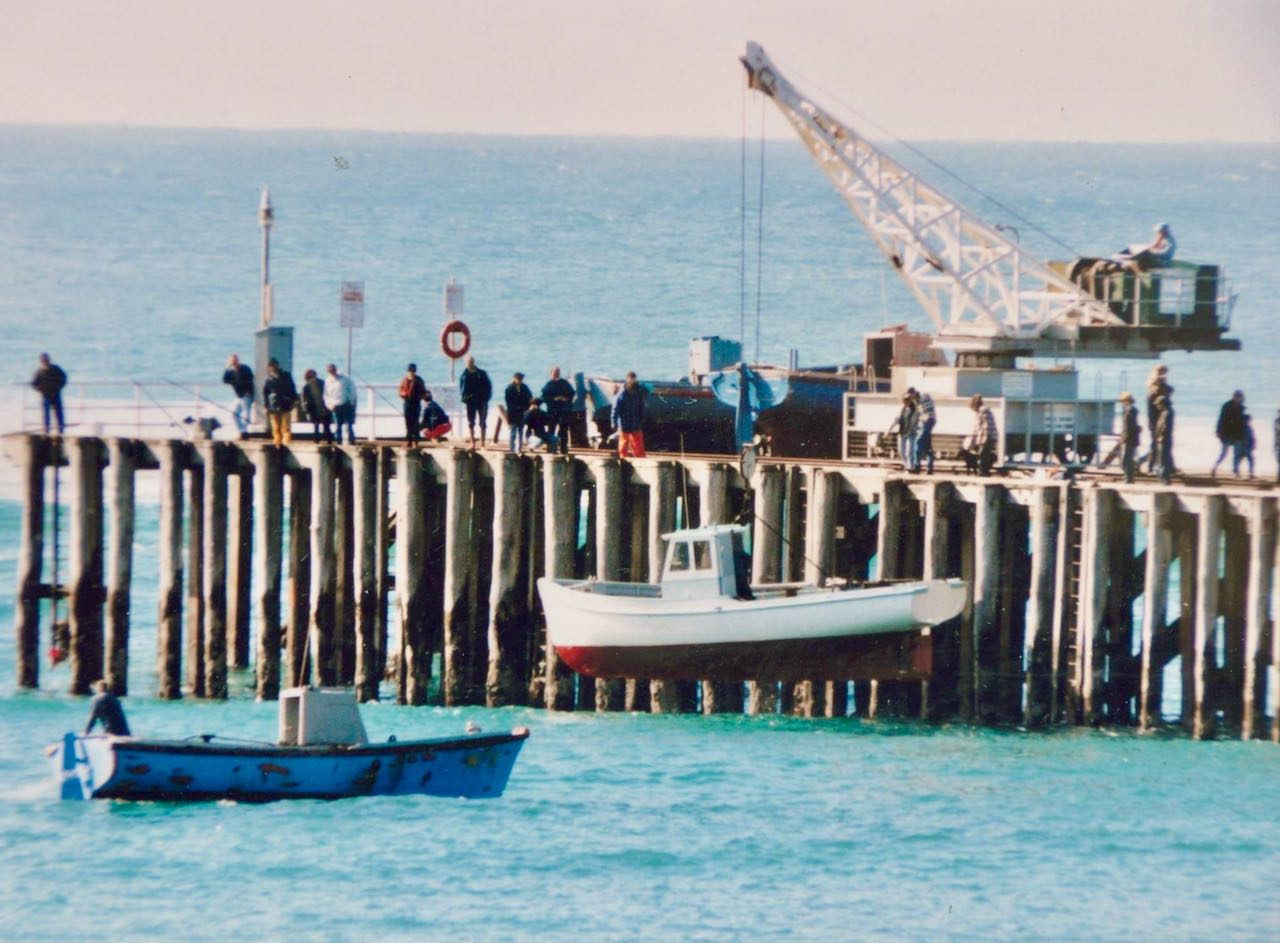
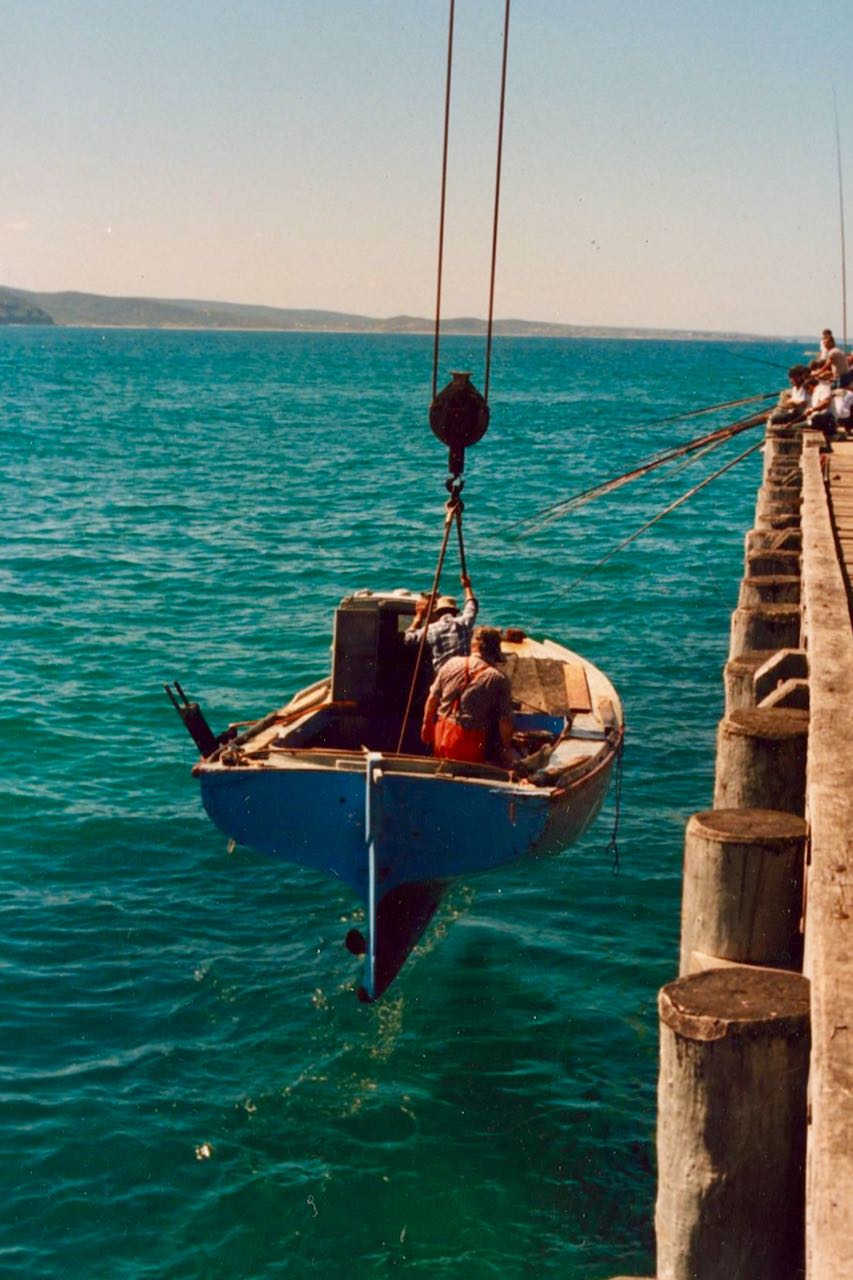
- Lorne Pier, fishing boat, crane
-
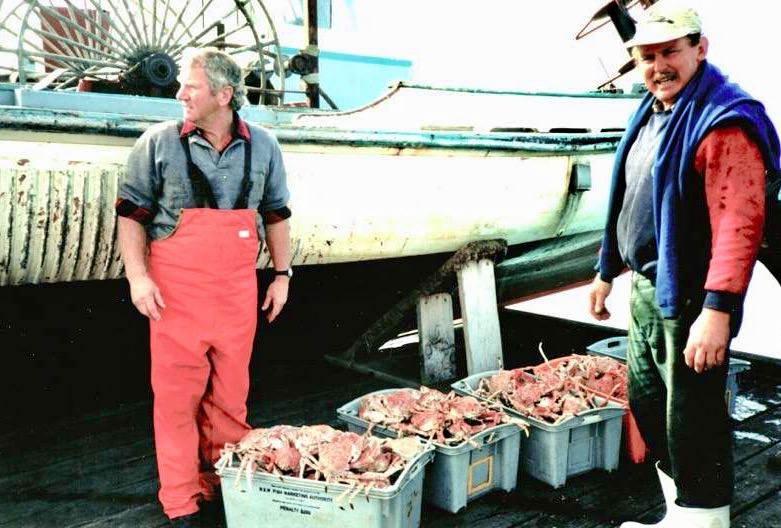
- Pier, Malcolm Campbell and Gary Norton.
-
- Lorne Pier, fishing boat
-
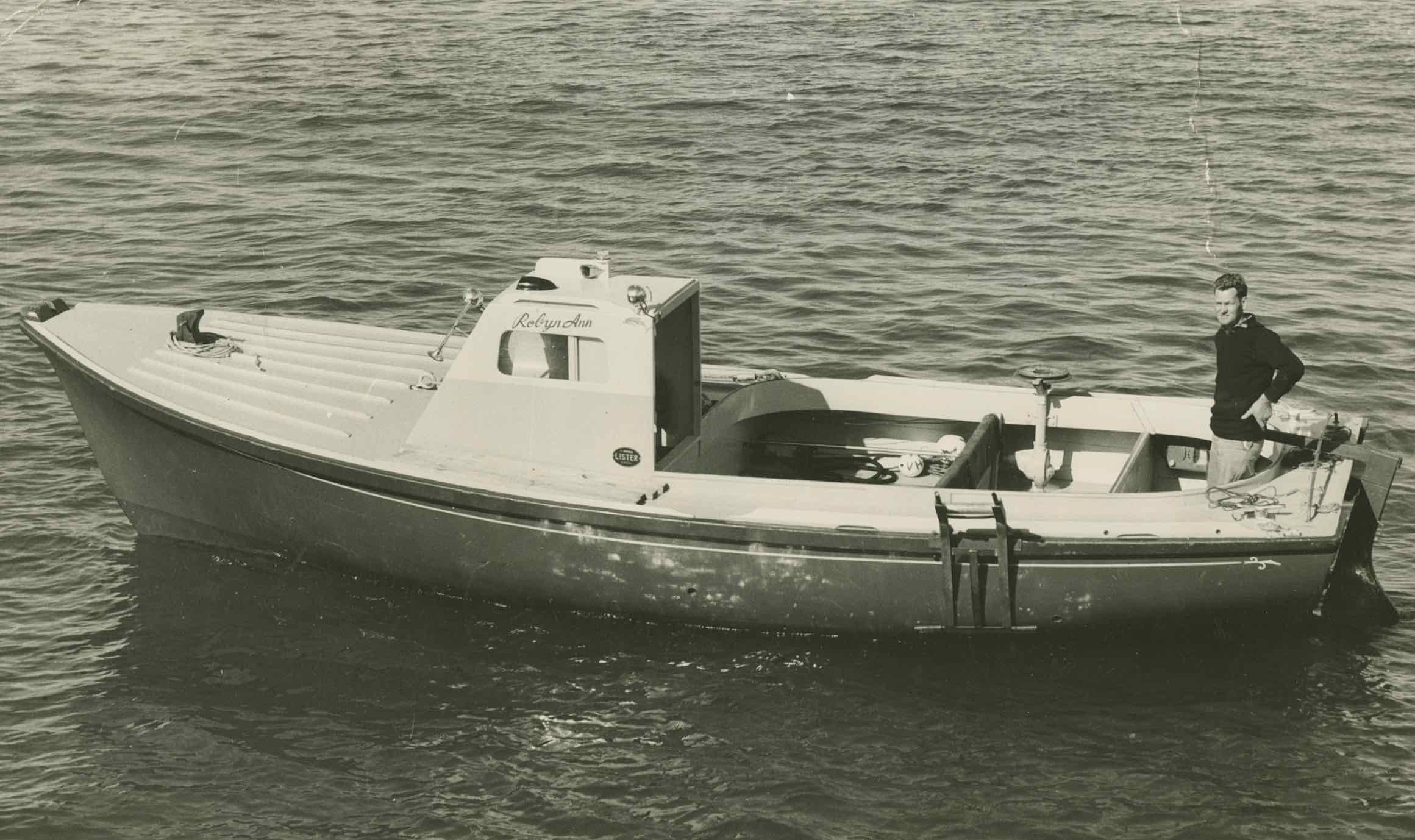
- Gordon Bannister
-
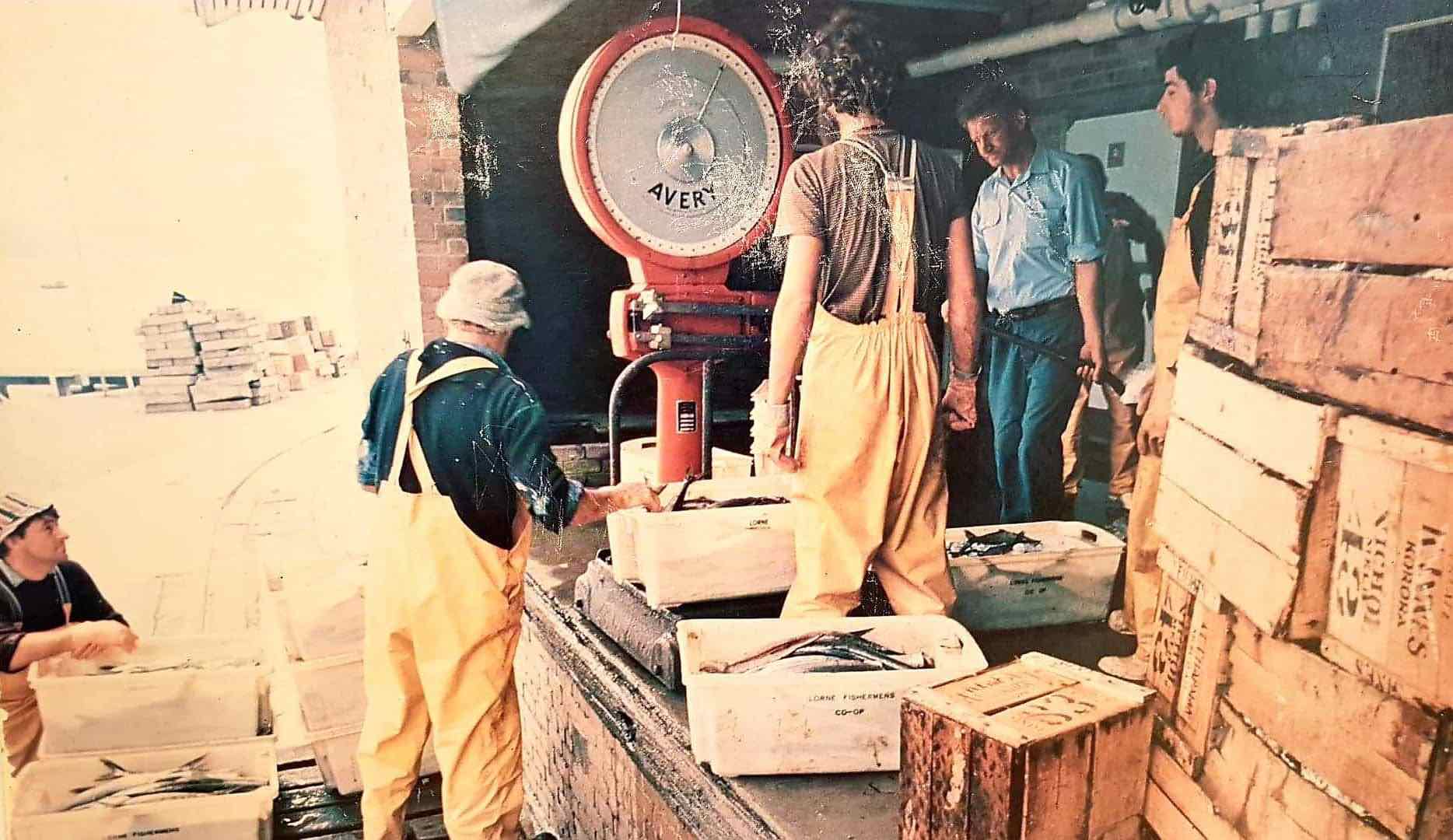
- Weighing barracuda
-
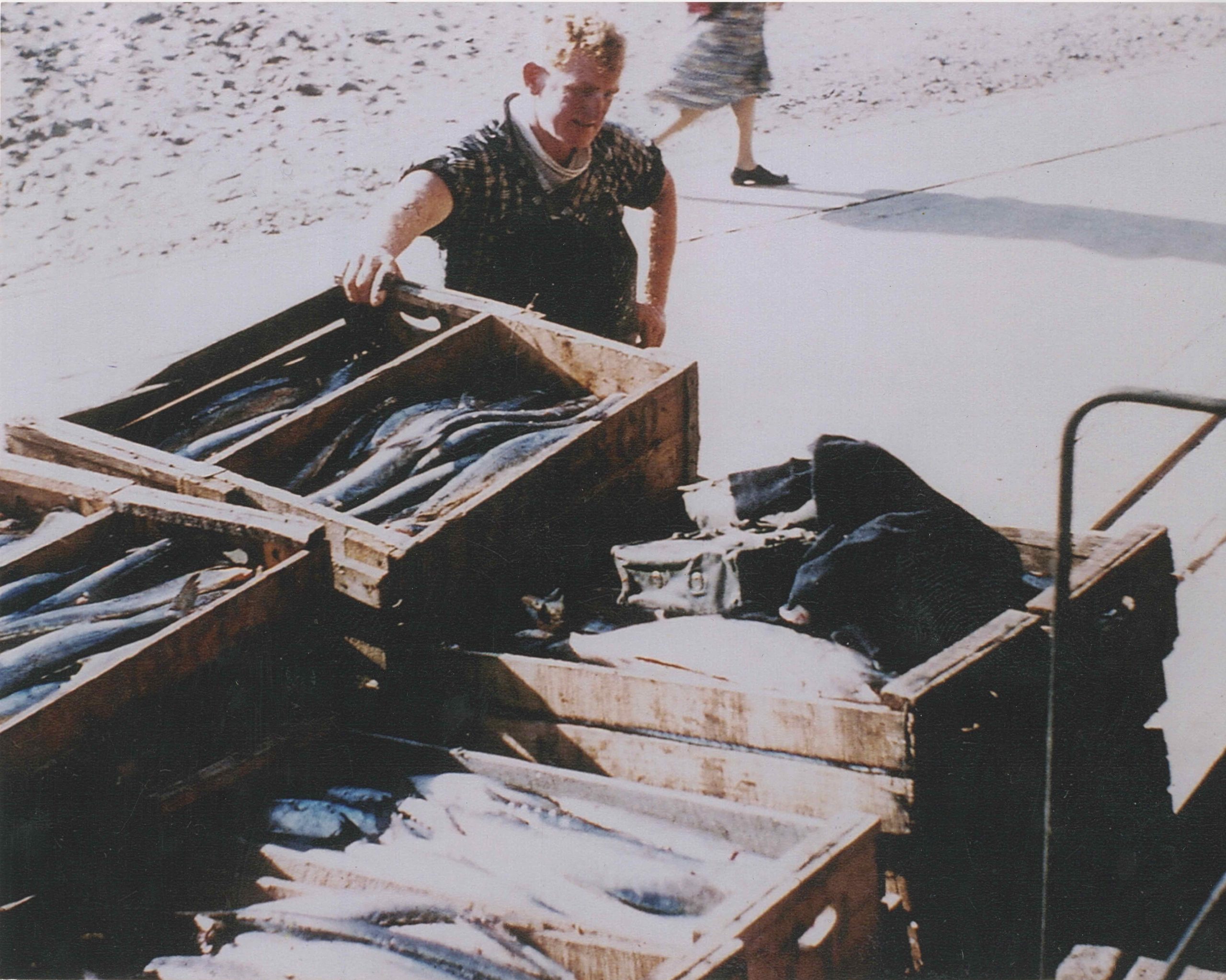
- Frank Norton with his daily catch
-
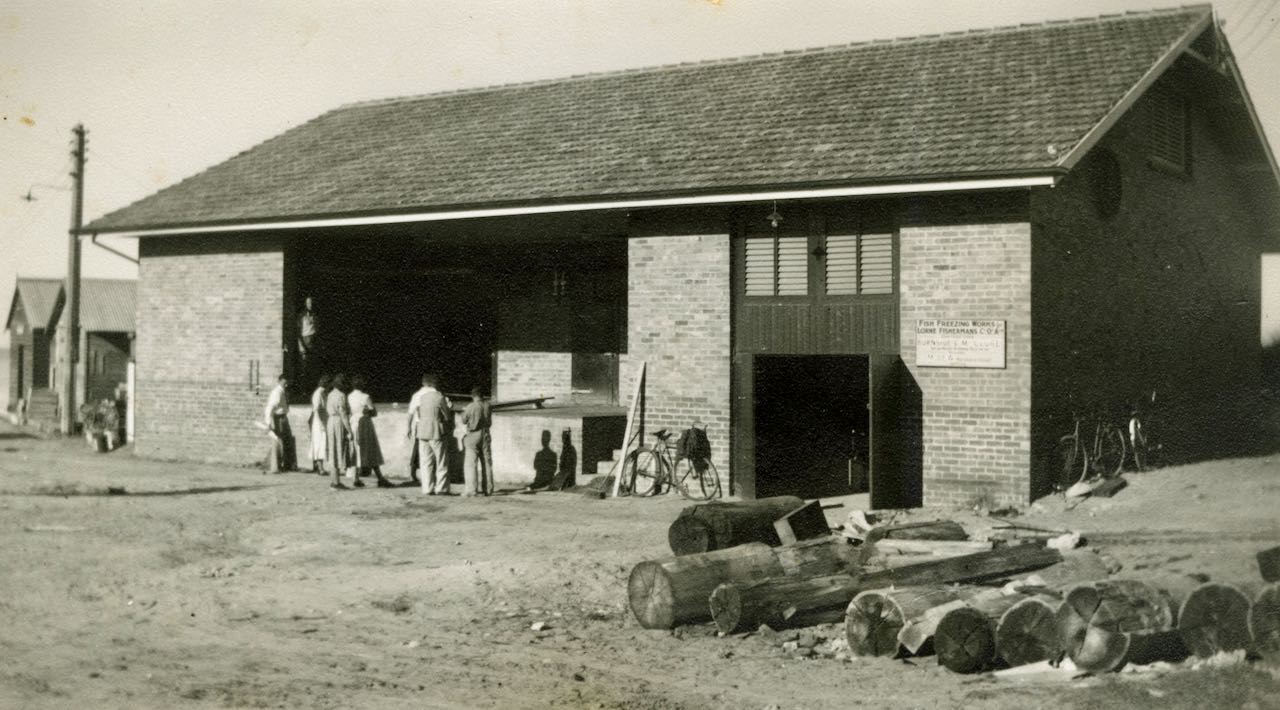
- Lorne Freezing Works at Lorne Pier 1955. (LHS photo B476)
-
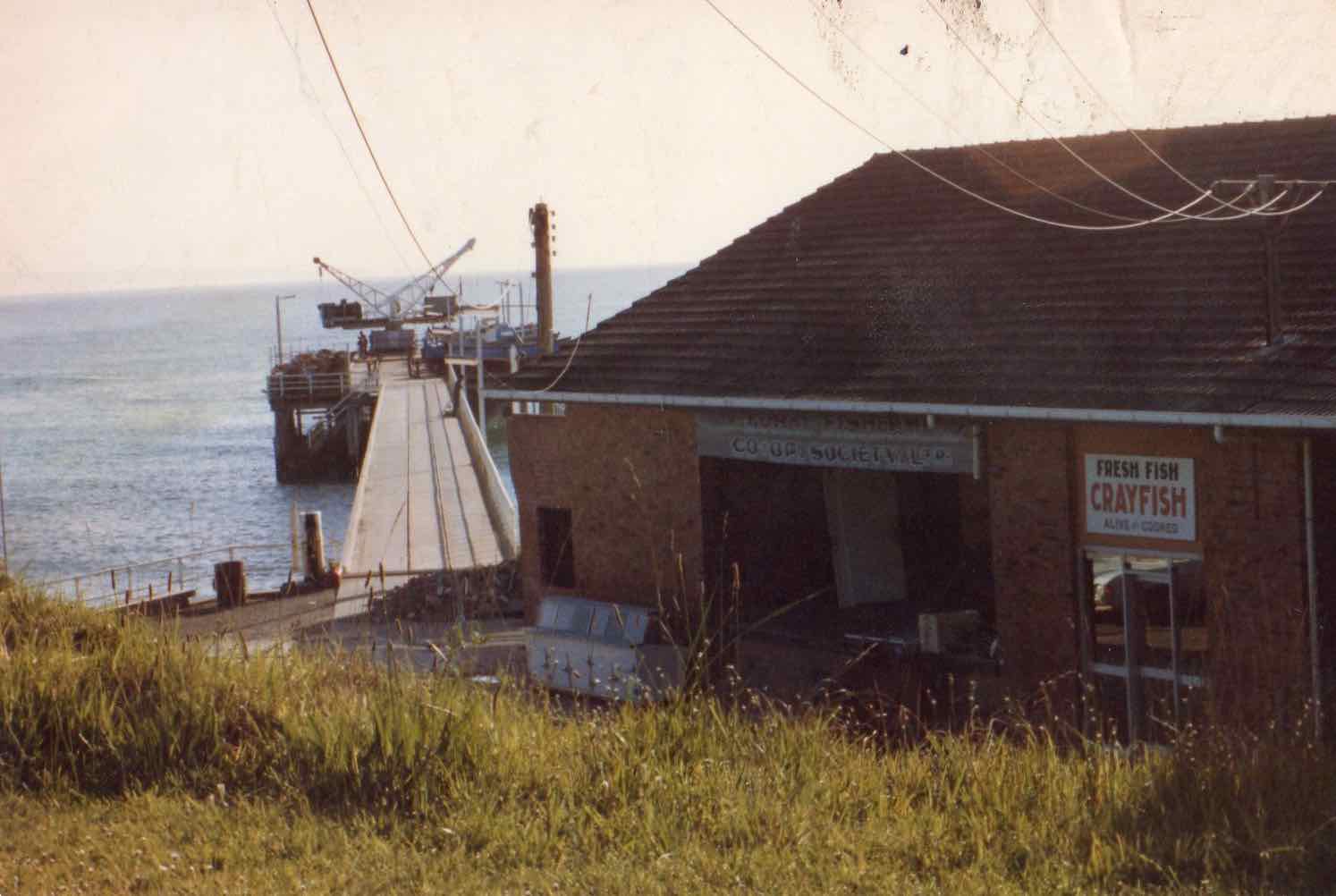
- Two cranes on the pier
-
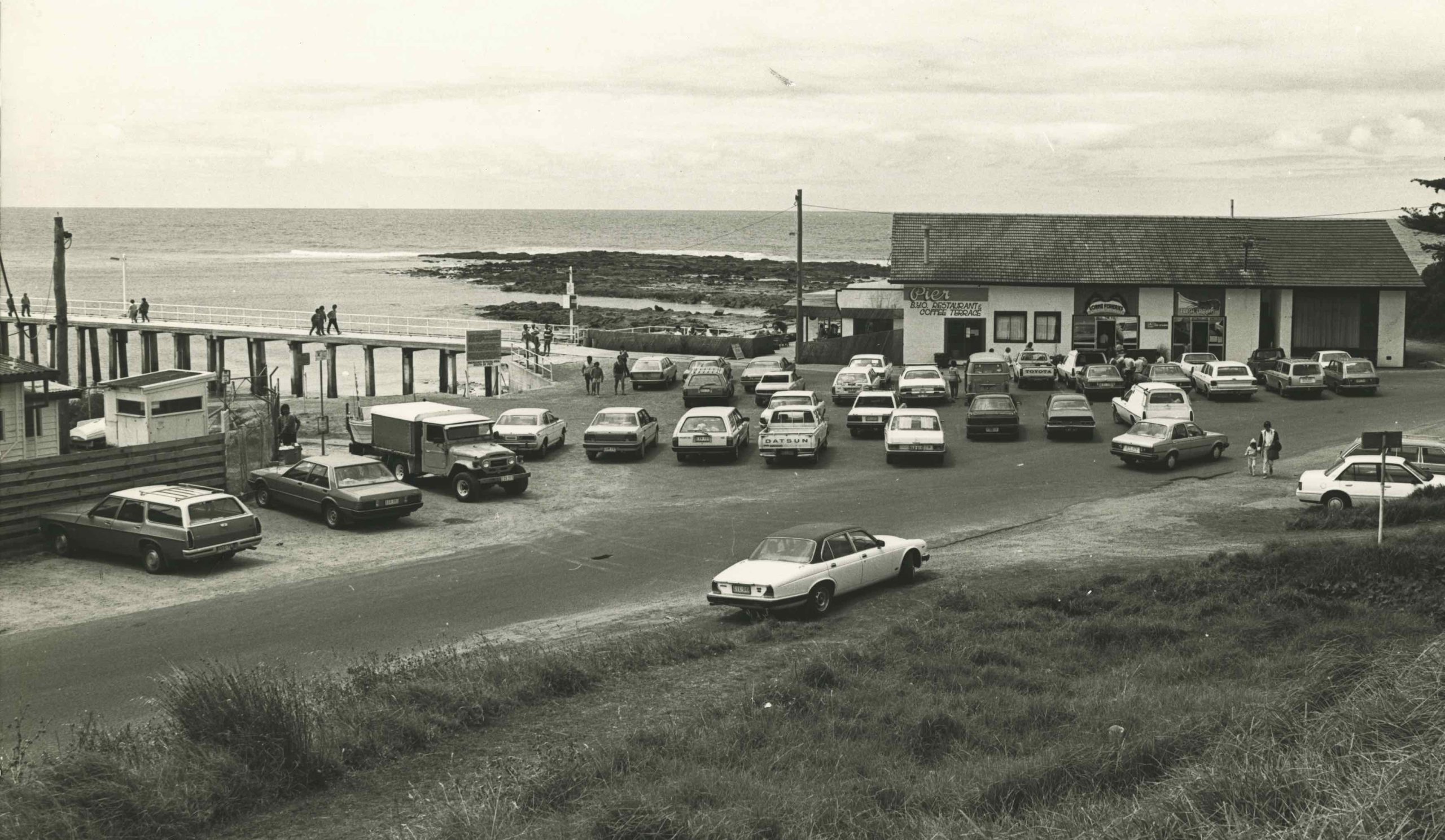
- Fishing Coop January 1986
-
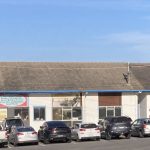
- Coop Building, 2025
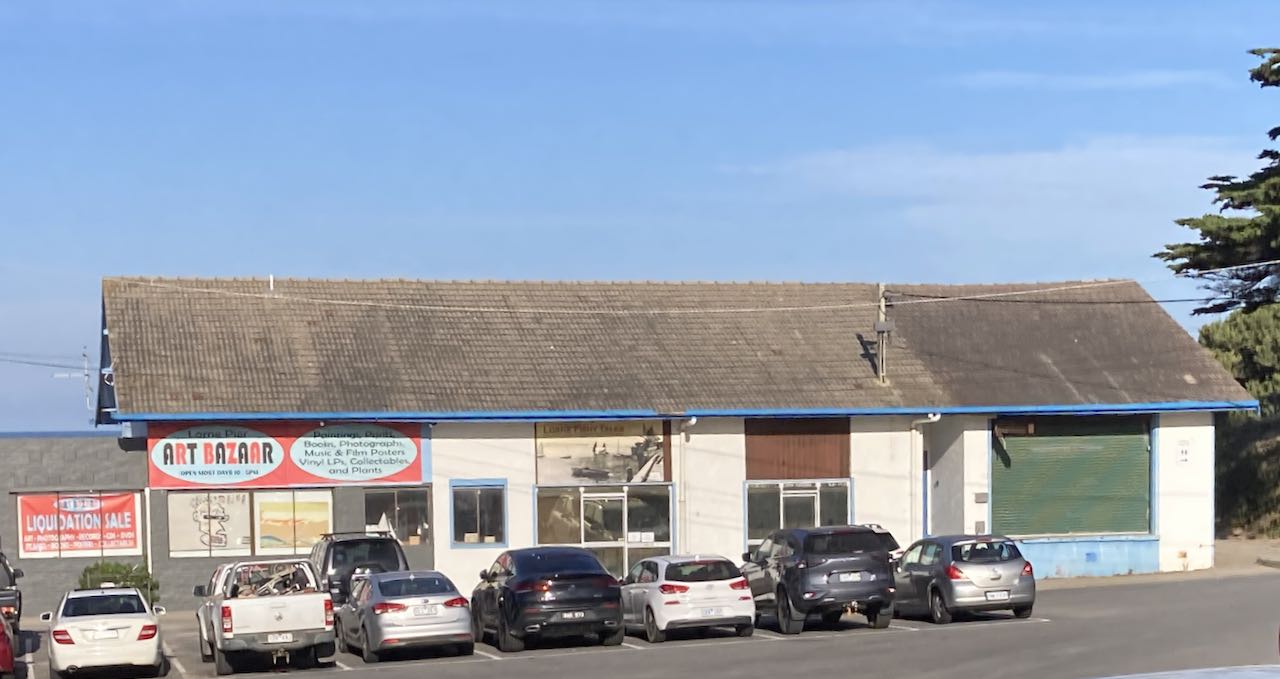
Managers of the Co-op included: Ian Hussan, Tom Maclndoe, Oscar Schram, Eddie Ridgeway, Fred Tully, Bonnie Muir and Henry Love. The last three boats left on the pier were owned and operated by Malcolm Campbell, Gary Norton and Scott Stewart. The end of commercial fishing from the pier occurred when the cranes were taken away on 27th February 2003.
Lorne Fishermen in Lorne Fishermen’s Co-operative
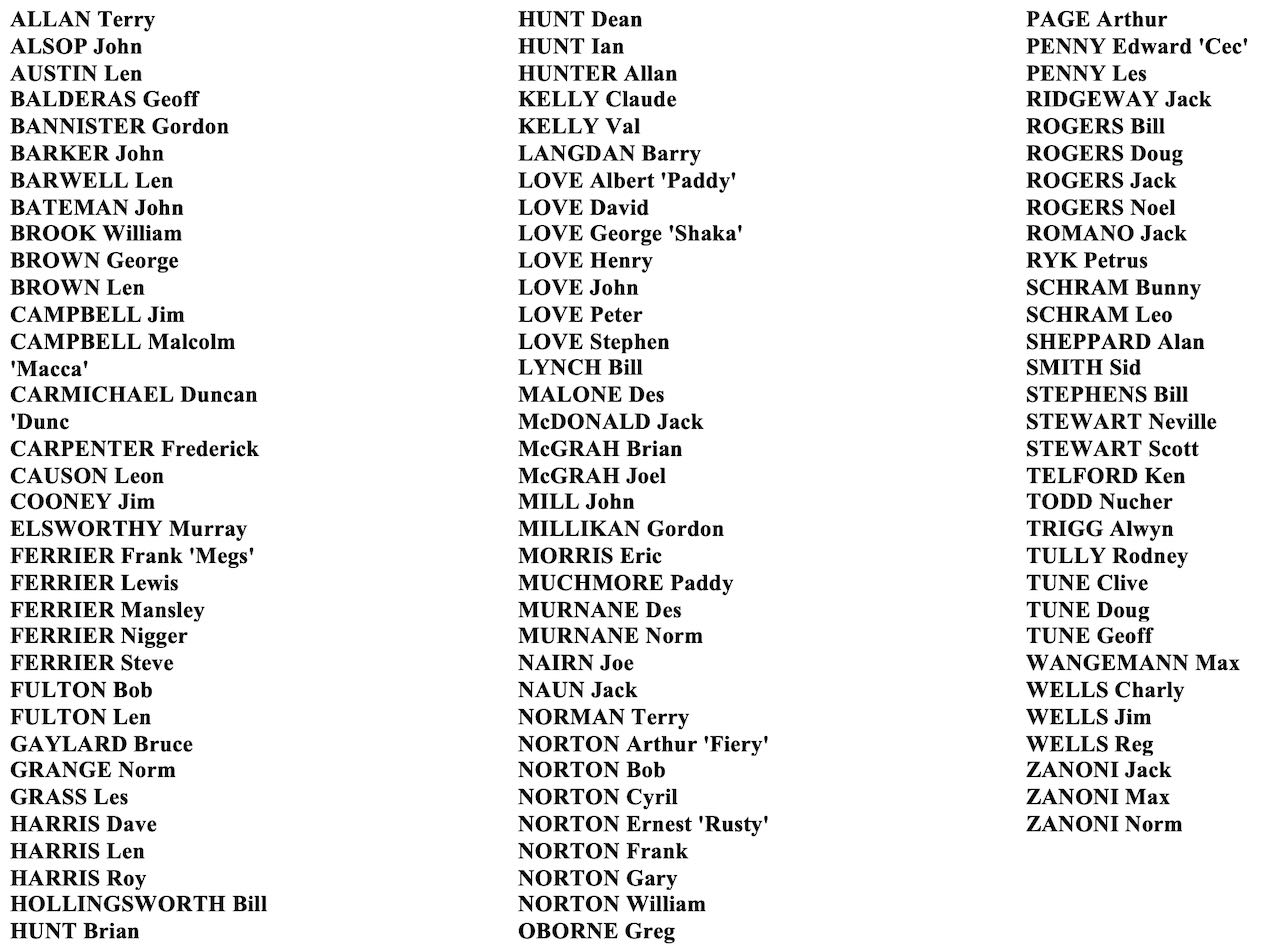
(From LHS document B863)
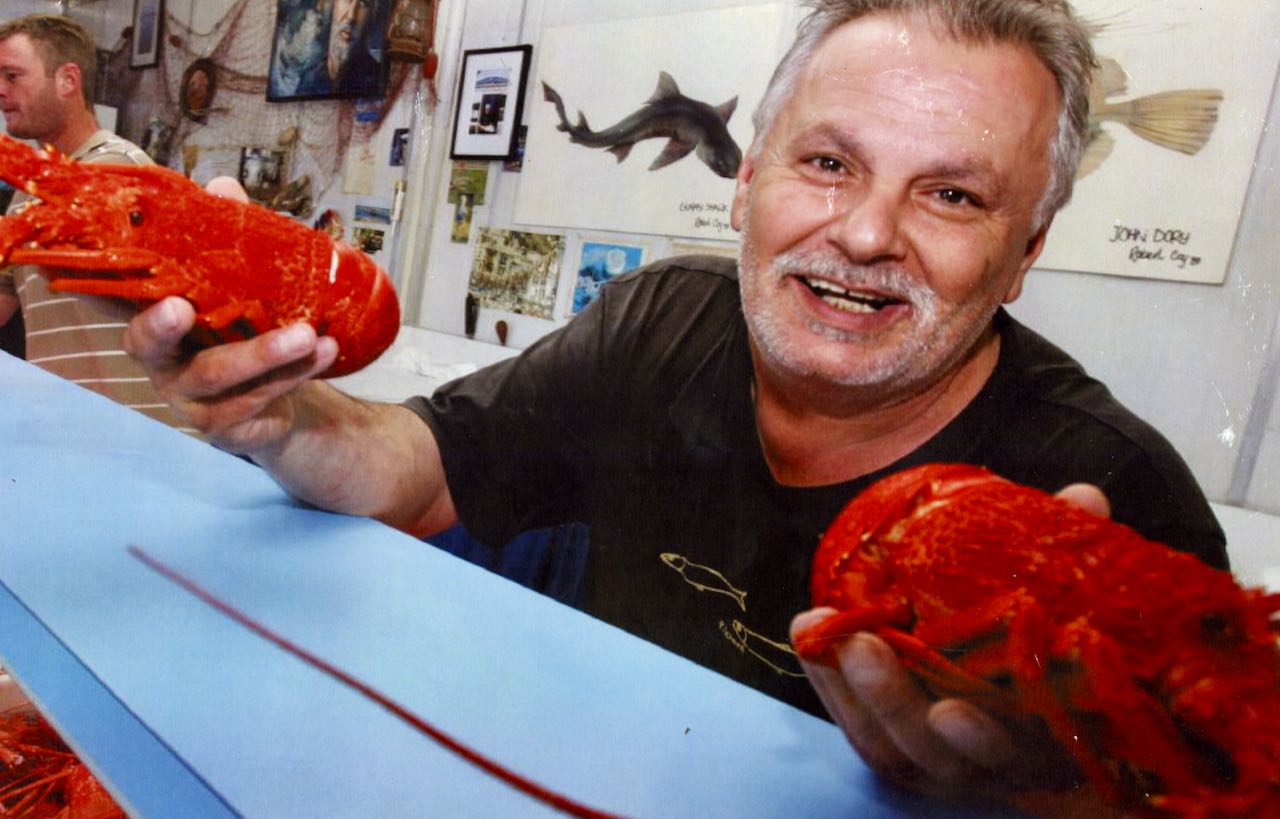
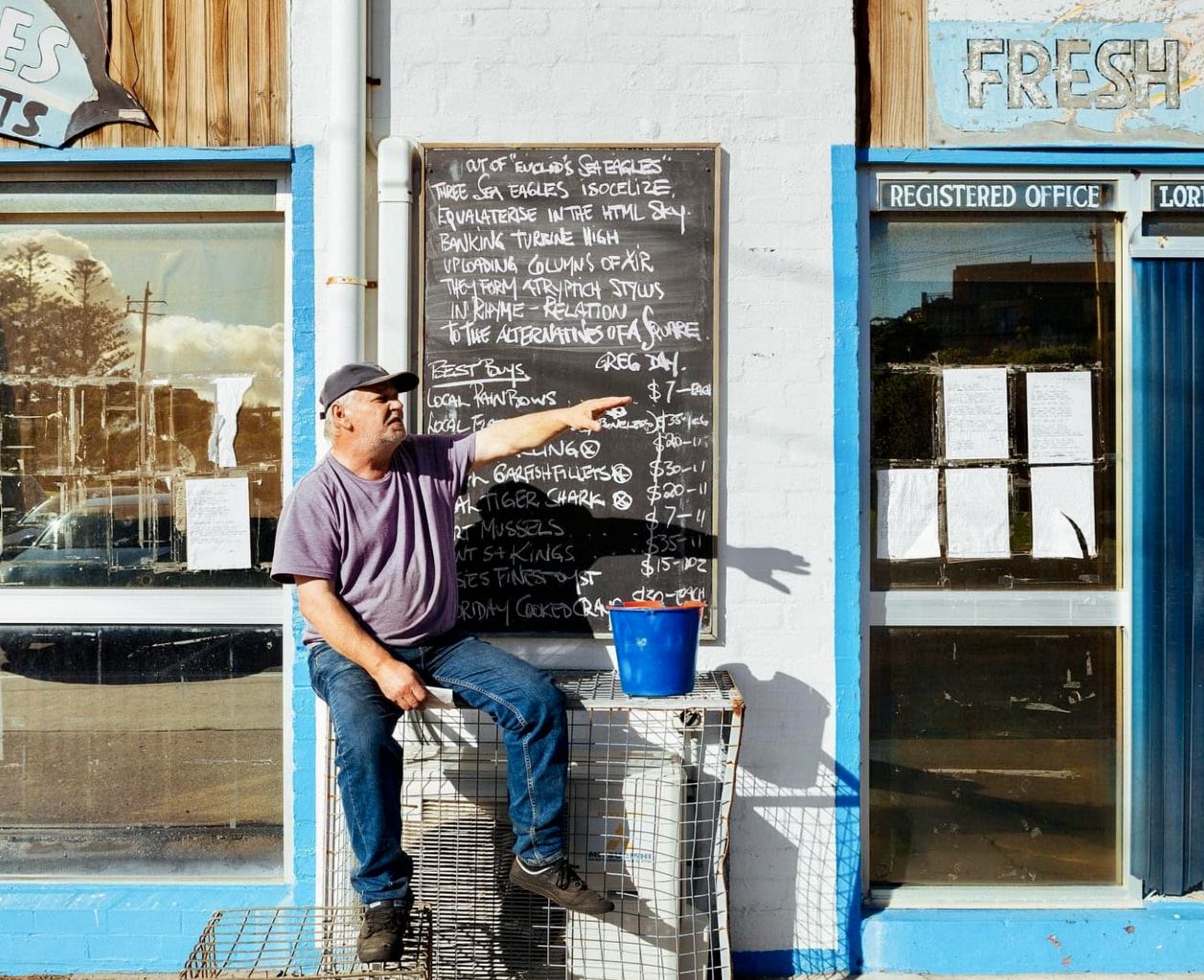
The Co-op was taken over as a private business and very successfully run by the Raskatos brothers, Bill and Christos. The Co-op ceased trading in 2017. The pier that the boats sat on, along with the cranes, was poorly maintained by the then Port authority and was condemned in 2003 and a new pier was opened in 2007.
-
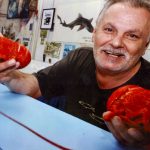
- Christos Rasktos with crayfish. (LHS photo B871)
-
- Chistos Raskotos
-
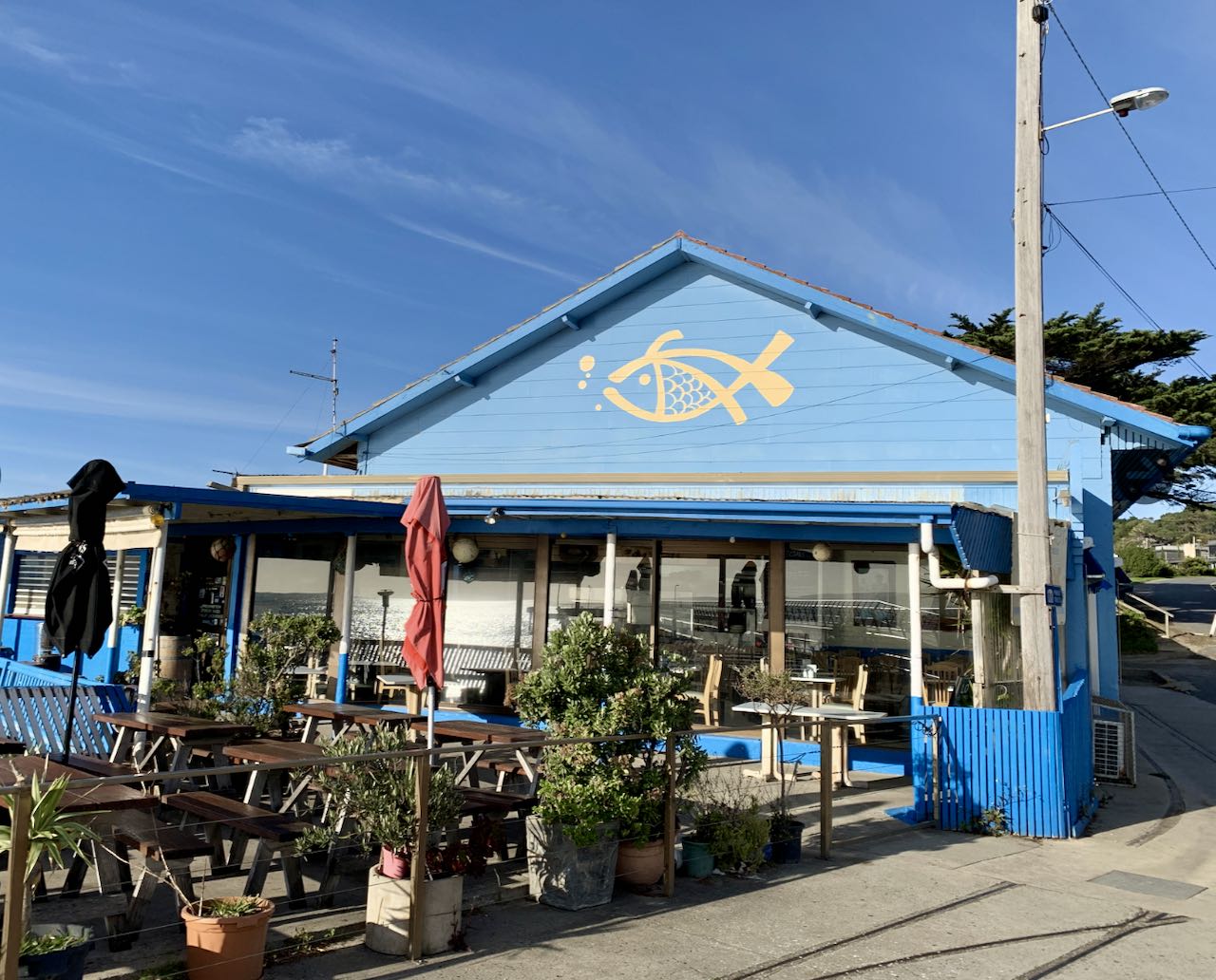
- Fish Restaurant at Point Grey
-
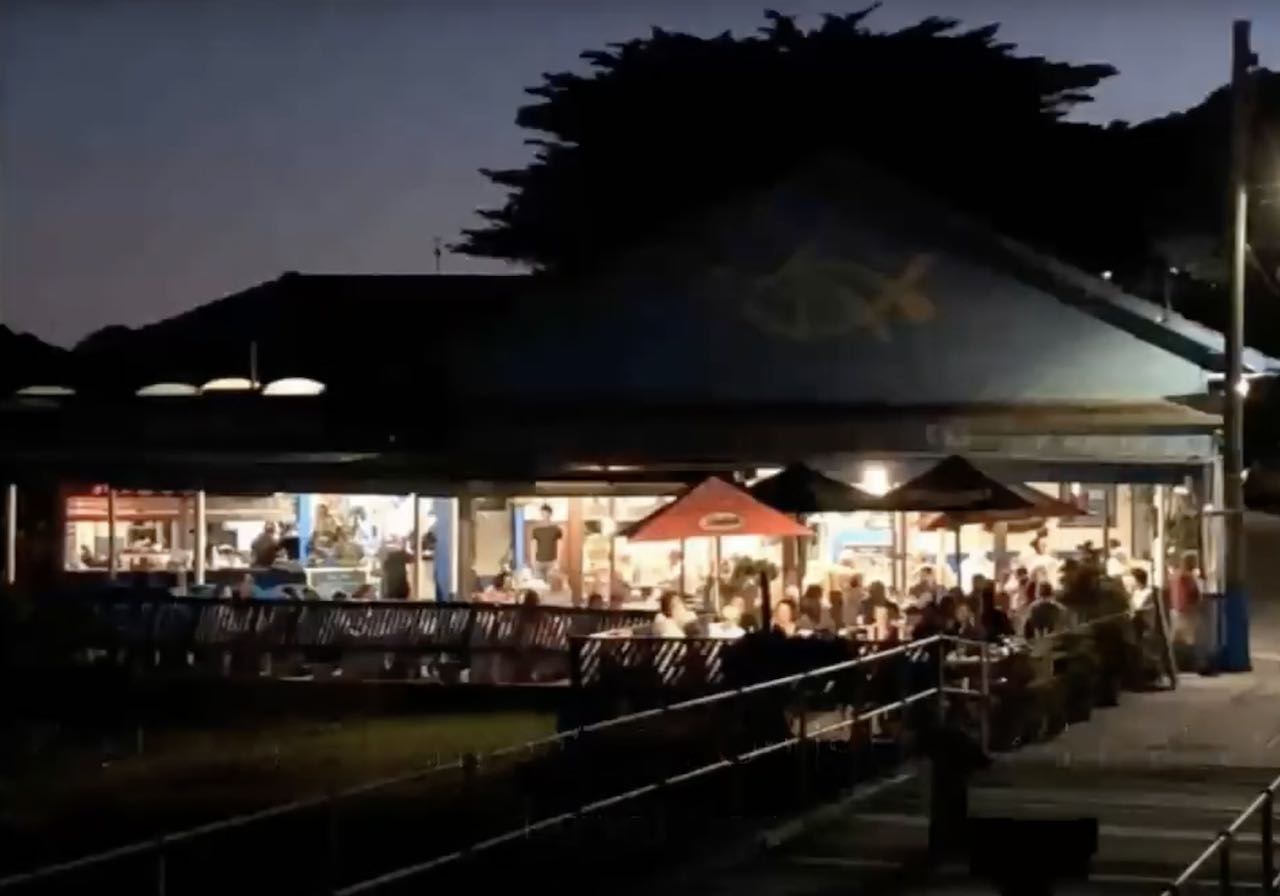
- Sammy’s Fish Restaurant
Actual Fishy Tales
Exploding Boat
In 1955 Des Murnane’s skipper was unavailable. He asked Frank Norton to take his boat out. They had almost their limit of barracouta on board, when the boat blew-up, lifting the deck, by about three feet, above the gunnel. Unknown to the fishermen gallons of petrol had leaked into the bilge of the boat, causing the explosion. They were towed home to Lorne keeping water on the boat to stop it burning.
Lost Snapper Boat
In 1980 Malcolm Campbell, fishing in big seas, had just finished shooting his snapper traps when a large wave struck the side of the boat. He lost balance and was flung into the sea and as his boat was still in gear, it motored away. Having little alternative Macka swam the three miles to Mount Defiance. He hitched a ride back to the co-op.
The then manager of the coop, Henry Love, contacted the police in Melbourne, who stated that as there were no lives lost they would not be looking for the boat. The television stations sent a helicopter down again not to look for the boat but interested in the story. Bill Fulton, a friend of Mackas and a pilot, drove to Grovedale obtained a light plane and started the search. Gordon Bannister and Gary Norton went out in Gordon’s speed boat. When they located the missing boat, still circling eight miles out to sea, Gary jumped aboard and brought the craft safely back.
Barbara-Dee Damaged
On Friday 13th, 1961, a Lorne cray boat, the Barbara-Dee, was hit by a freak wave as the two crew tended to cray pots. The boat overturned on a reef ten miles east of Apollo Bay, at Sugar Loaf. The skipper, Roy Harris, who was a former Victorian junior surf champion, swam half a mile to shore and then swam back with a four-gallon drum to help ship-mate Noel Rogers who couldn’t swim. After climbing the cliff to Wangan, a retreat house, the pair were “revived” with brandy by the Redemptorist priests. The Barbara-Dee was towed to Lorne where it was discovered that 400 pounds worth of damage was done to the hull.
Shark Attack
It was Christmas of 1935 when Arthur (Fiery) Norton, almost 20, and Rusty Norton, a 17 years old, were attacked by a shark. They had been fishing and were cleaning the catch just off Kalimna, near the pier. A 14-foot Grey Nurse shark appeared and began nudging the boat, for a feed. The shark had been annoying fishermen and had recently killer a seal.
Fiery lashed a knife to an oar and wounded the shark, it then lifted the boat almost out of the water, dislodging the knife as it did so and went back to the nudging caper, only this time more aggressively. Rusty disengaged the tiller and belted the shark over the head. With this the shark went away.
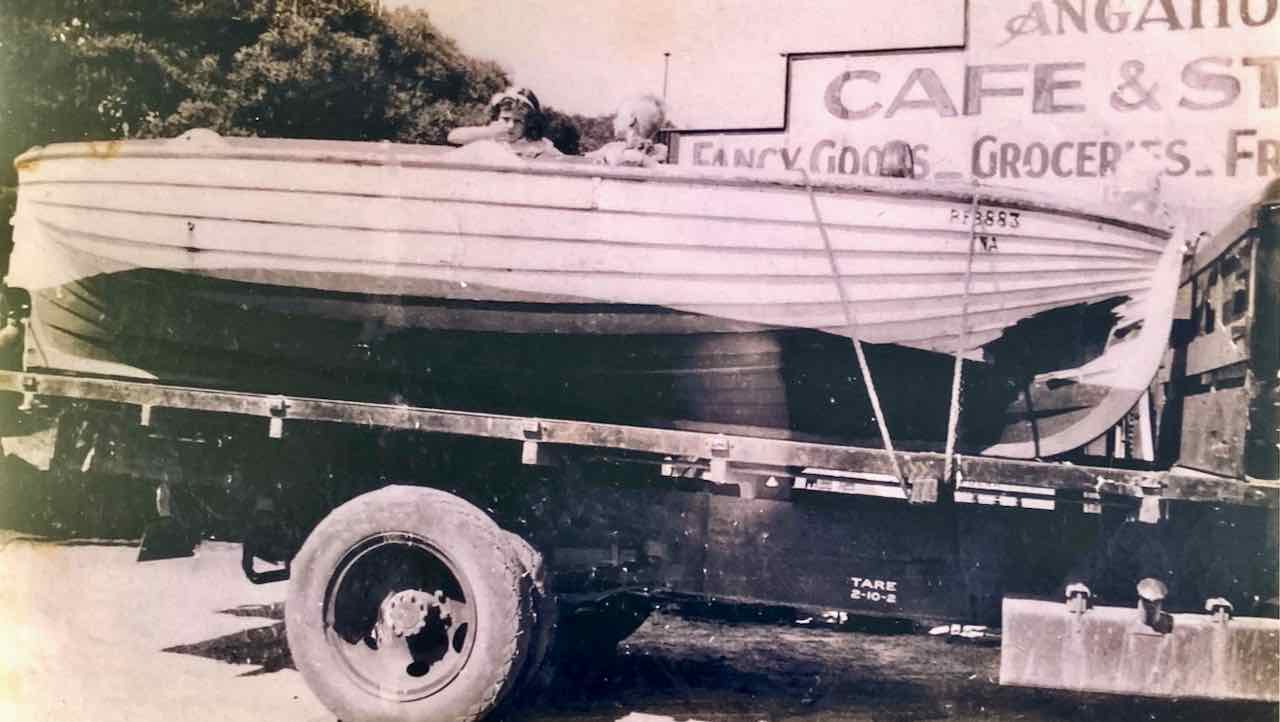
Damaged boat off for repairs. Note hole in the boat.
Videos
Sources:
- Lorne Historical Society Collections
- Lorne A Living History by Doug Stirling.
- Last Fisherman YouTube video by Judi Kenneally