
Victoria, Australia
Many people pass through Moggs Creek on their way to Lorne. However, Moggs Creek has its own rich history.
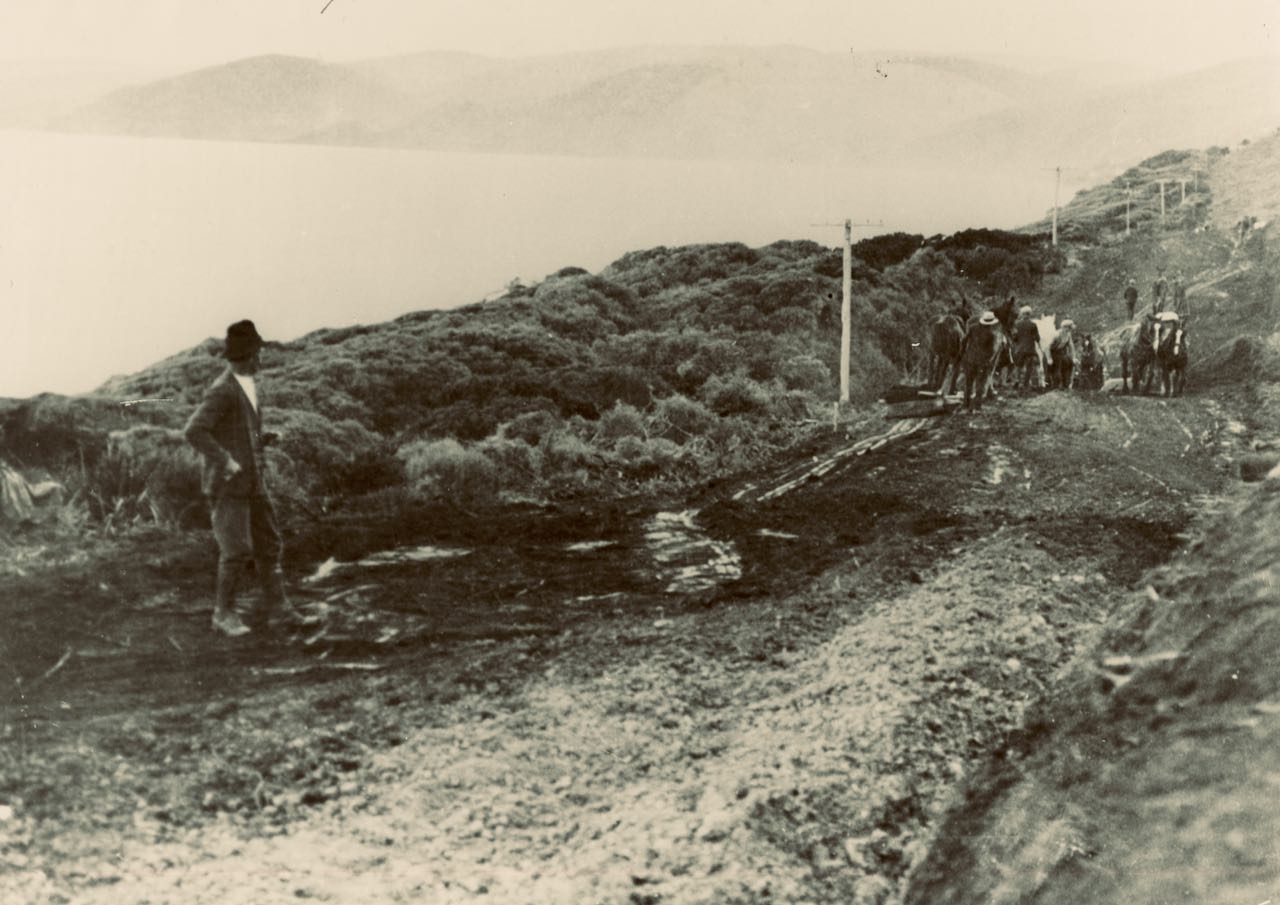
1920, Great Ocean Road near Moggs Creek. (LHS photo 0381)
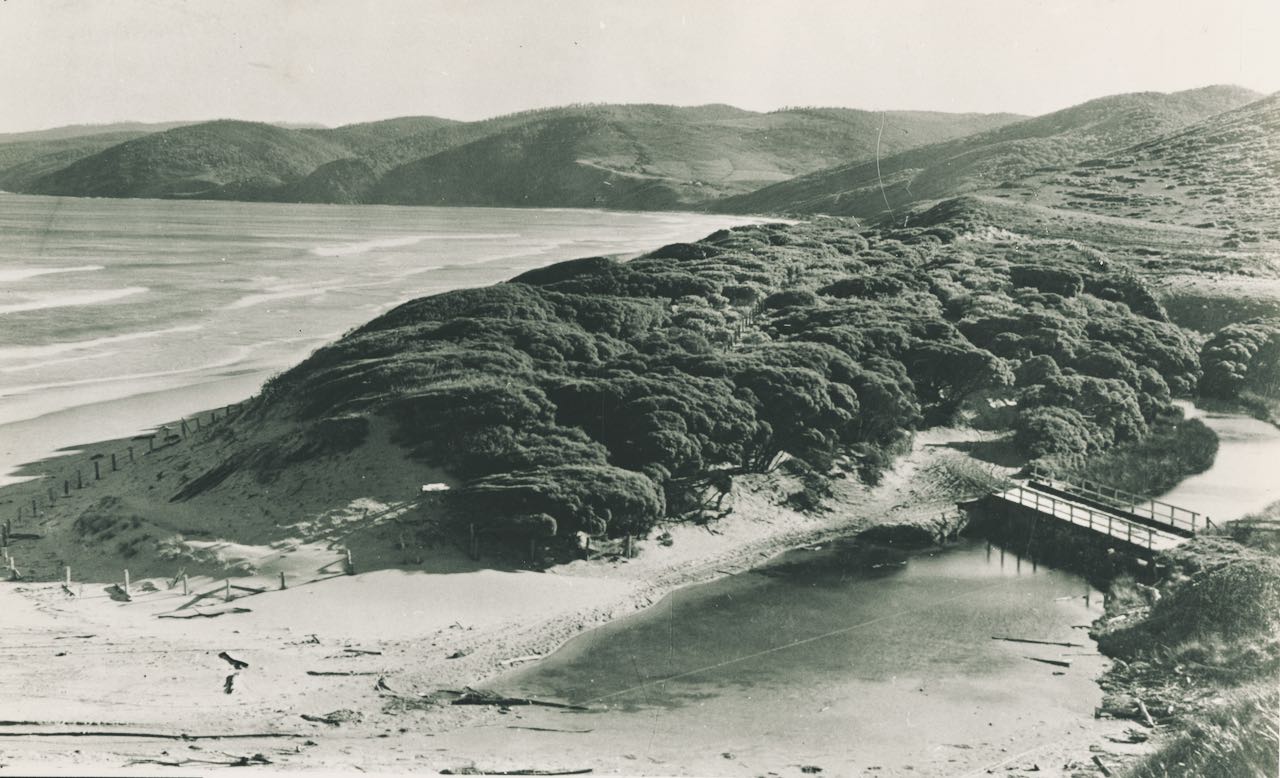
Moggs Creek (LHS photo 1702)
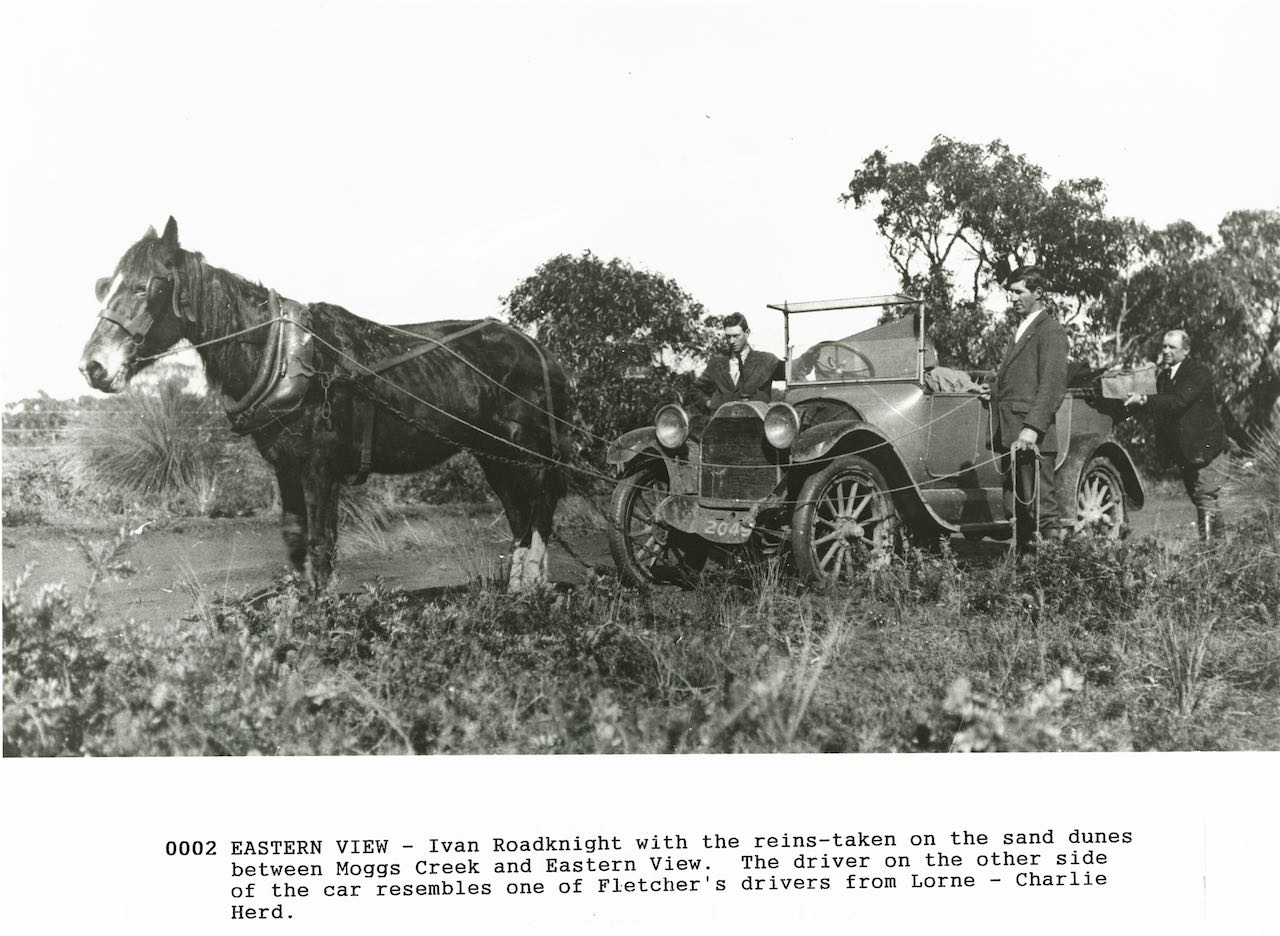
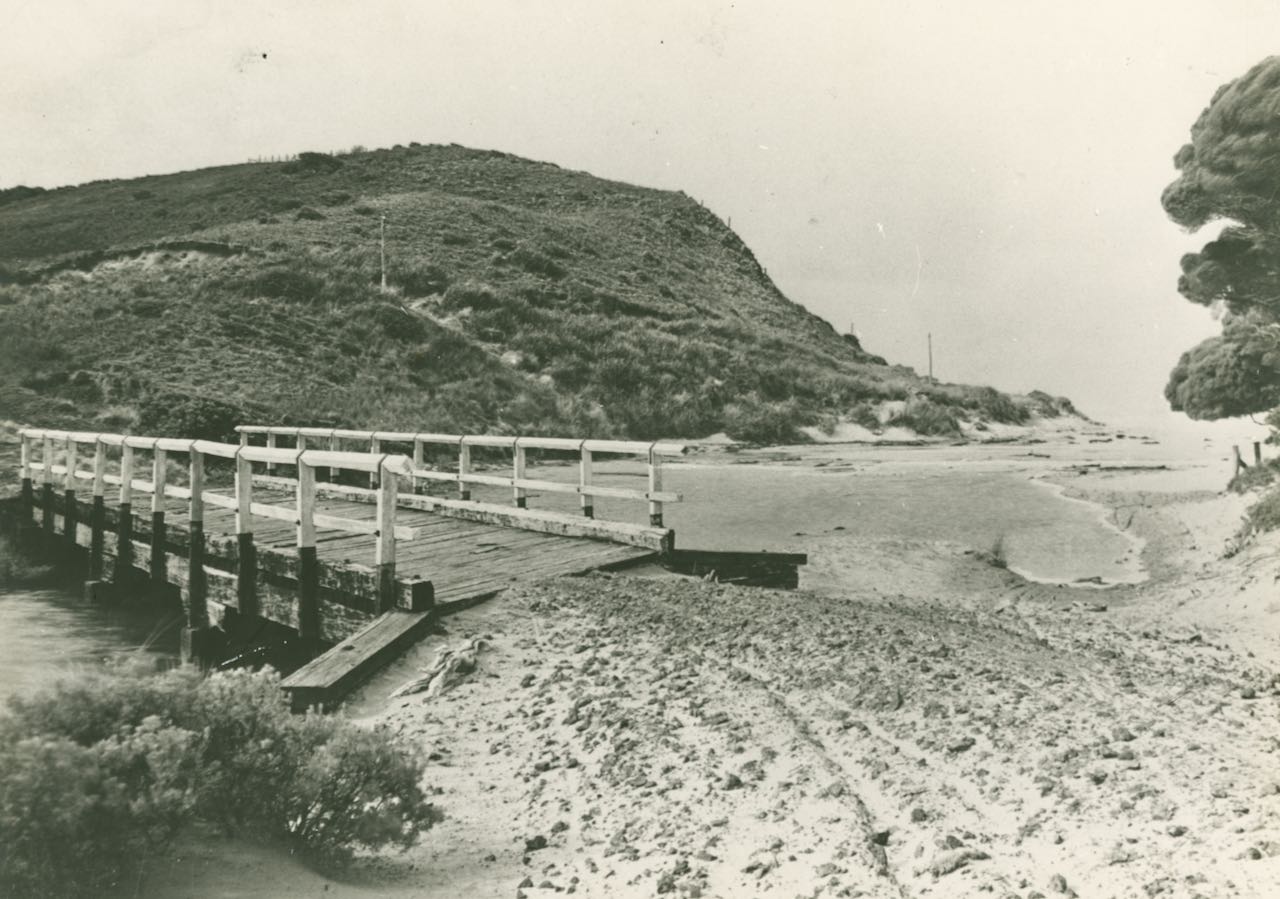
Moggs Creek Bridge. THE ROSE SERIES, P. 1246 (LHS photo 1696)
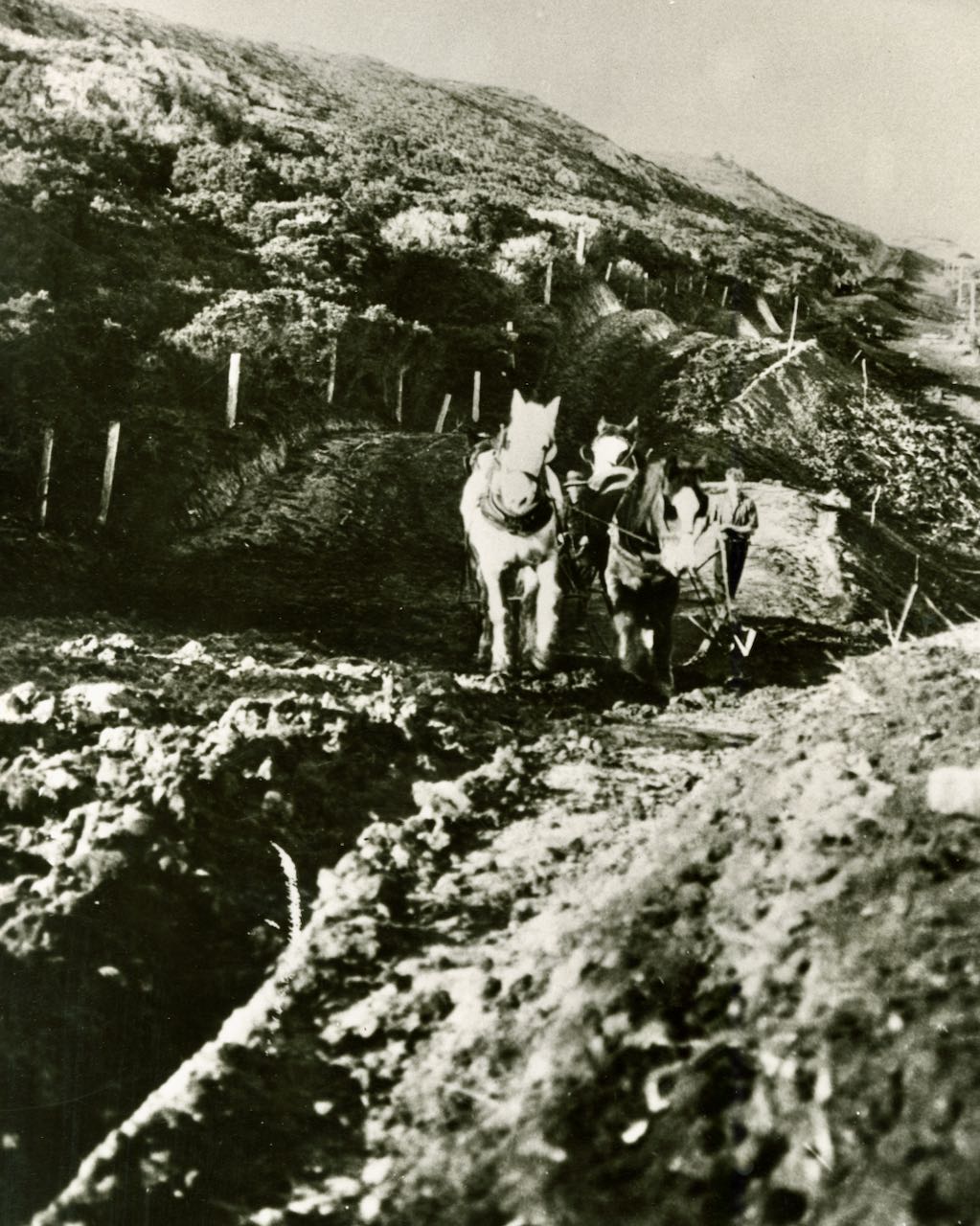
CRB photo of roadworks at Moggs Creek. (LHS photo B541)
The Story of Sir Samuel Moggs
According to Wikipedia, in 1959, a group of Moggs Creek residents erected a rough cairn of bricks, topped by a plaster bust, as a monument to the mythical Sir Samuel Moggs, alleged to be the first European to have landed at the location, on 29 February 1759.
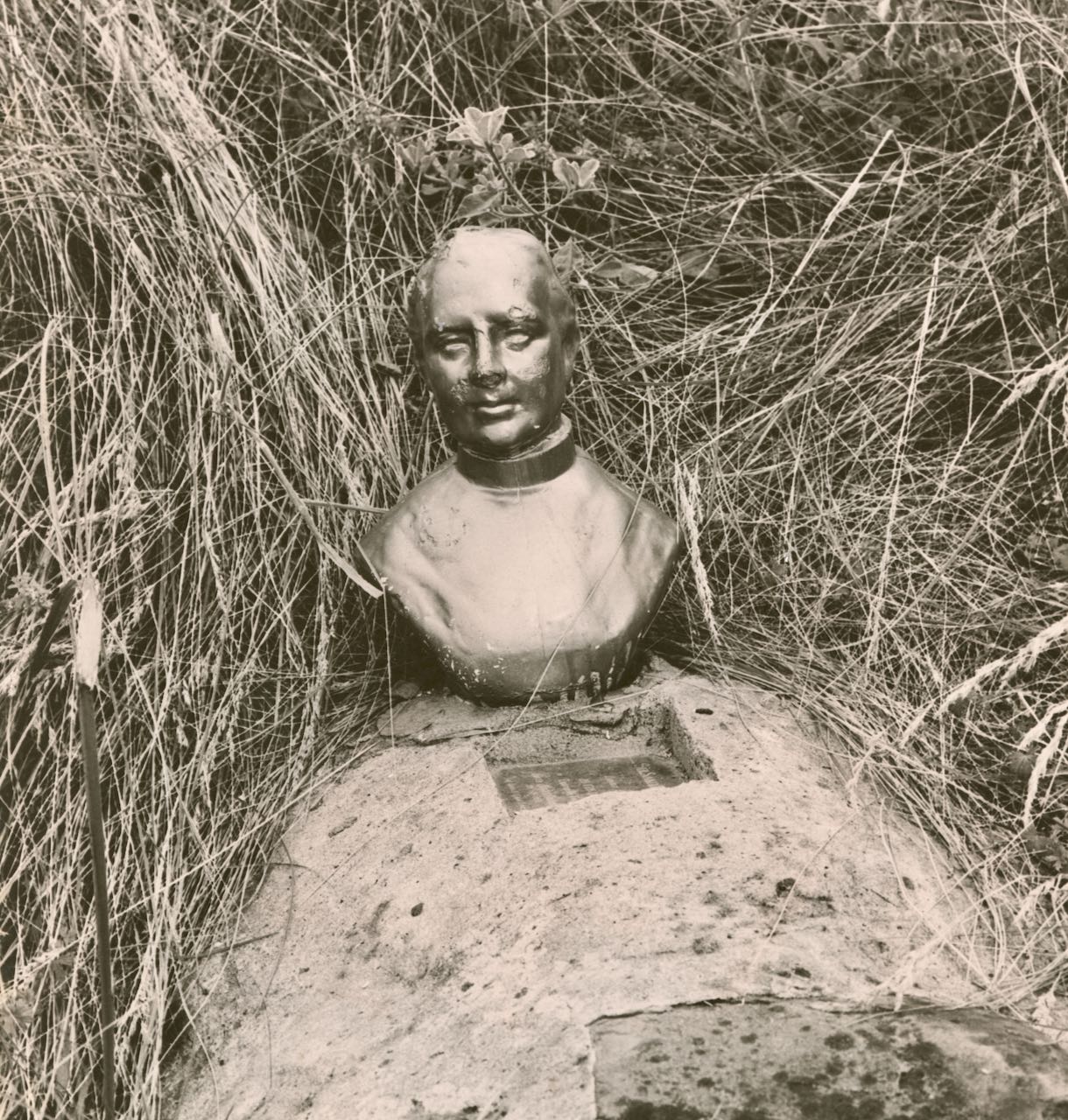
Alleged statue of Samuel Moggs. (LHS photo 486)
Profile of a Man of Distinction on the Surf Coast – Just for Fun
His name is Samuel Mogg or to give him his correct title, Sir Samuel Mogg. The story of his exploits and achievements has been largely lost to history and it is only through the resources of the Lorne Historical Society that a true picture of this great man can be still found.
The story of Samuel Moggs was recorded in the publication, “Aireys Inlet – A History” written by Keith Cecil and Roger Carr and published in 1987. Make of it what you will.
The Samuel Moggs Story
It was at Split Point (now called Aireys Inlet) that the “Spruit” (Spray), made her landfall in February 1759 after leaving the Cape of Good Hope three months previously on a voyage to Java. It was not at all unusual for a ship to be so far off her course. The instructions issued by the Dutch mariners were that they were to sail from the Cape between latitudes thirty and forty for about four thousand miles before turning north to the East Indies.
Navigational methods were still primitive and winds and currents unpredictable. Thus, as early as 1627, the “Golden Zeepaid” made her landfall at what has since been known as Nuits Archipelago (named after the navigator Peter Nuits) well to the west of the Great Australian Bight.
The name of the captain of the “Spruit” has not been recorded but the most influential member of the crew was the navigator, an Englishman from Bristol. Samuel Mogg. Perceiving his error, he ordered the course to be altered to the southward, but the was caught by the set of the tide and drifted on to an offshore reef. All hands were ordered into the boats ad safely landed at the mouth of Bellbird or Mogg’s Creek.
Relatively calm seas enabled the bulk of the ship’s stores and cargoes to be brought ashore and a comfortable camp was established a little inland from the mouth of the creek on the site of the property known as “The Neuk”. It may be significant that there is a low German word “neuk” meaning smash or wreck. When the ship actually broke up on the reef much of her timbers were washed up on a beach a mile or so west of Mogg’s Creek at the mouth of a stream now known as Spout Creek (it may be that “Spout” is a corruption of “Spruit”)
Little is known of the fate of the castaways, save that their relations with the aborigines appear to have been harmonious. This was largely due to the native girl called by them “Gentle Annie”. A daughter of the local chieftain, Painkalac, she played the part of Pocahontas to Samuel Mogg’s John Smith. It was she who eventually led him to the stream now known as Distillery Creek, a tributary of the Painkalac Creek (or Airey’s River) which joins the main stream near the junction of the Aireys Inlet-Bambra Road and the road to the Glen.
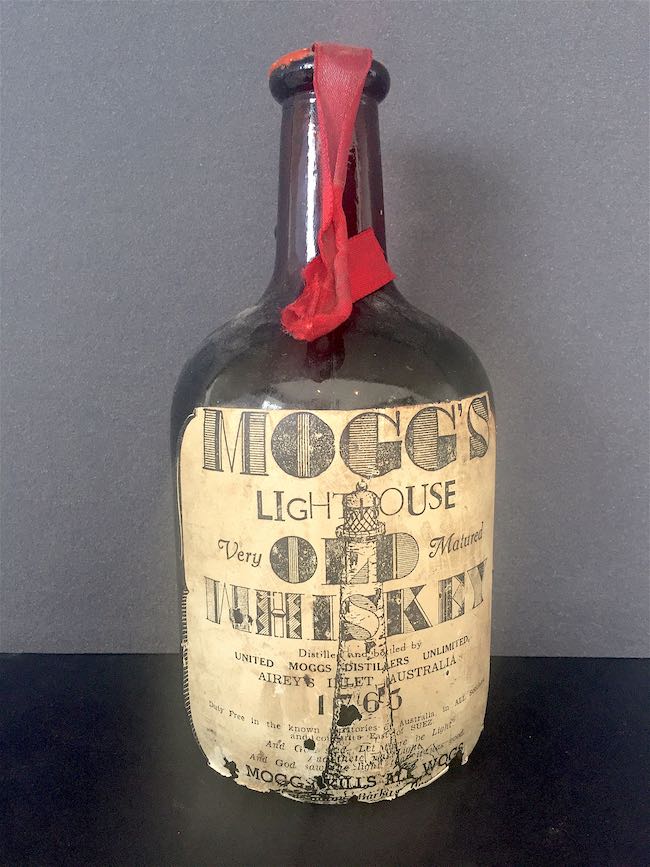
Samule MoggsWhisky Bottle
On 8th June, 1763, Samuel after many trials and tribulations, distilled with the pure mountain water of Distillery Creek, the first whisky to be produced in Australia. He subsequently married Gentle Annie. Six miles to the west of Airey’s Inlet the highest point on the mountain range dividing the waters of Mogg’s Creek and Airey’s River bears her name. Shortly after this date, a sail was sighted by the lookouts on Split Point and all personnel were safely embarked and eventually landed in Batavia.
Valentine Nott Mogg (a descendant of Samuel) in 1856 took up Swanwater Station of about 70,000 acres in north western Victoria and was subsequently known as “The Squire of St Arnaud”. It is noteworthy that in times of drought, stock from Swanwater was sent to graze on the grass at Mogg’s Creek.
No record of the bestowal of the knighthood on Samuel Mogg has yet been discovered. It is possible that his companions called him Sir Samuel for his outstanding leadership. However, much of the rest of the Samuel Mogg story has been verified from the archives of the Dutch East Indies, which have recently been made available to the Netherlands’ Government.
With thanks to Lorne Historical Society, Keith Cecil and Roger Carr
Peter Spring
Vice chairman, Committee for Lorne
Sources:
- Lorne Historical Society Collections
- Aireys Inlet, Down By The Sea
- WIKEPEDIA
- Peter Spring

