
Lorne Victoria Australia
The Lorne Picture Theatre Company
(This story was written by Doug Stirling in 1988)
About 1917 a chap from Melbourne tried to make money by showing movies in a tent on the flat using a French Pathe projector. He was desperate to quit the area and go home but was stony broke. So he asked Jack Anderson, at the store where the service station is now, if he would stake him for a the fare to Melbourne. Jack asked him what security he had and he said “Here take this projector, it hasn’t done me any good down here”.
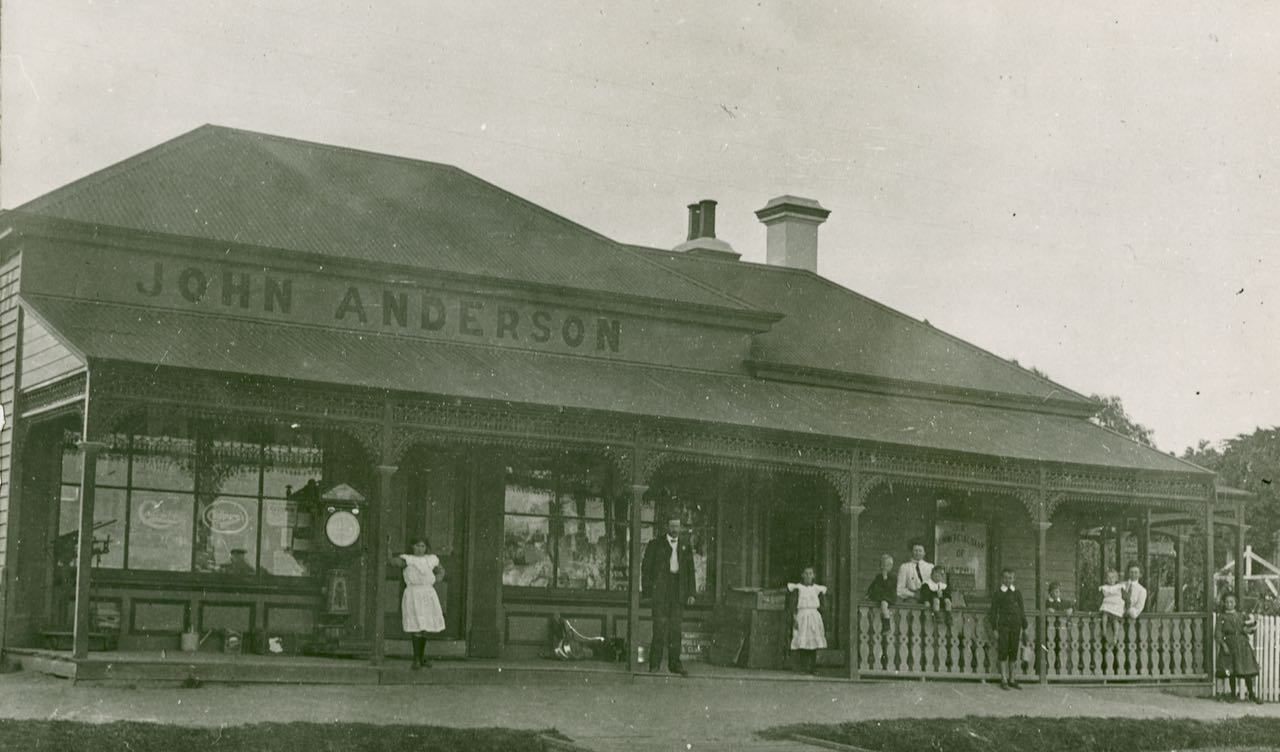
John (Jack) Anderson standing in the centre of Jessie Anderson and Sarah Anderson. (Photo LHS 4608)
Jack Anderson spoke to some friends suggesting they think about running pictures themselves in Lorne. They all agreed. The company they formed were Jack Anderson, Albert Jarratt, Jack Stirling, Jim and Bill Dorman. First they purchased a block of land from Erskine House on the corner of Lower Grove Road and the beach boundary of the south east corner of Erskine House property; about 60 yards below Mountjoy Parade. Second they built a fair sized hall, with a projection box outside, high up on the western end. Next they bought 2 Cummings and Wilsons junior projectors hand operated and carbon ark illumination of about 1000,000 candle power.
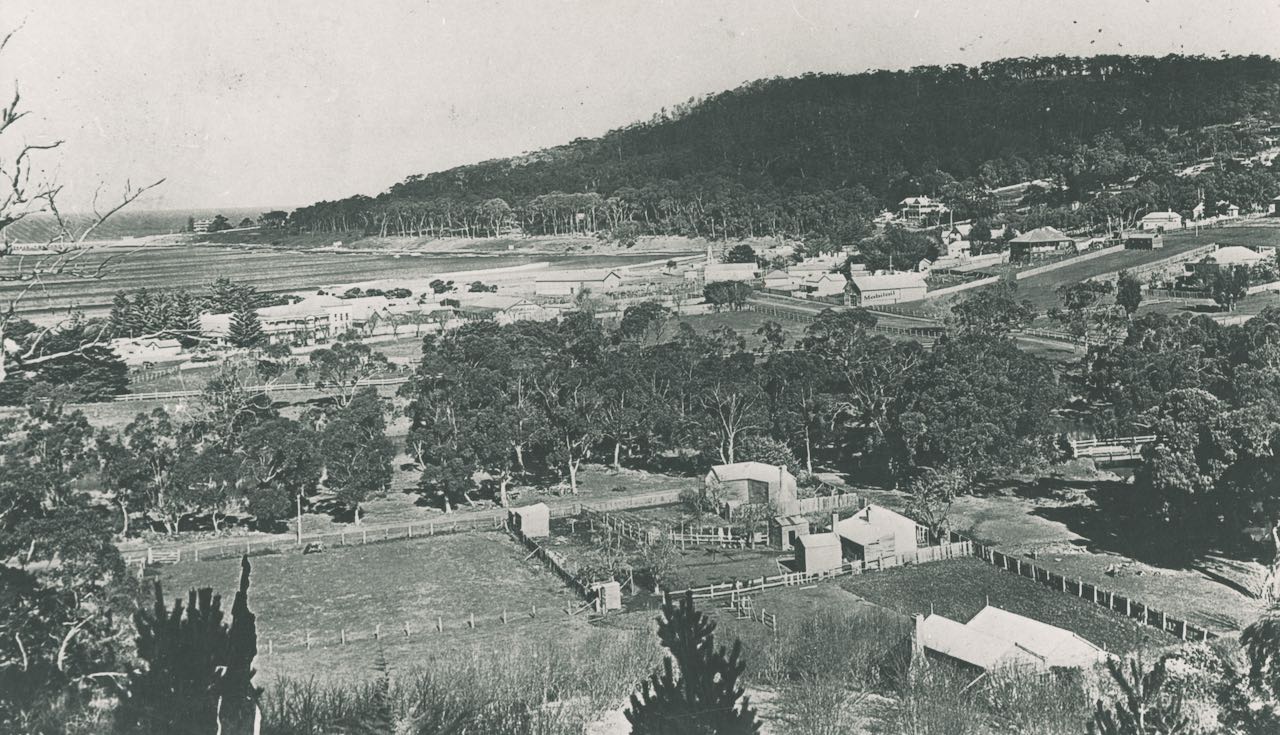
c1924, Bell Tower on foreshore, bandstand near first Picure Theatre. Cora Lynn not built, Allen Service station before Read and Clarke. A.E.Jarratt photo. (LHS photo 3039)
These silent moving pictures were really packing them in, so much so that about 1923 the company built a much larger 2 level theatre, right beside the first hall. This theatre would have held about 300 or so and all but the first 2 rows, where the kids sat on long benches, cost 6 pence. The projection box was on the ground floor and under the top lounge section, the projectors were operated by turning a handle, until they were motorised about 1930, I can remember standing on a box, turning the handle to give my Dad a few minutes break. I’ve have been about 7 years old then.
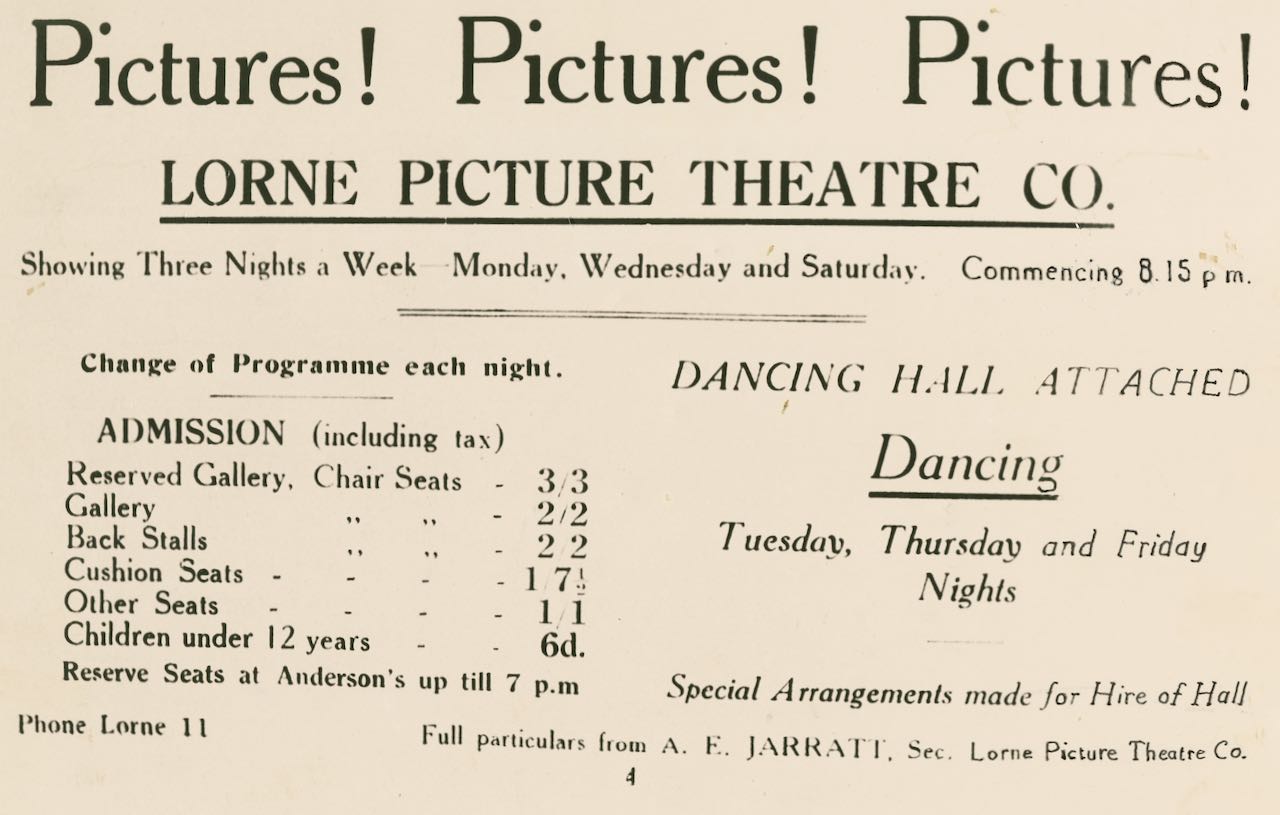
1935, Lorne Picture Theatre program. (LHS photo 2718)
It was obvious that Dad wasn’t keen on sloppy love scenes, so he would turn the handle faster, but went much slower than usual during a cowboy movie, Tom Mix etc. My Mum played the pianola for music during the silent films. The film exchange “Paramount” etc, would suggest suitable pianola rolls we should play to accompany the show. Talkie films started about 1933 or so and it seemed odd to “hear” Fat & Thin, Laurel & Hardy actually talking, it just didn’t seem right, but we got used to it. They had to hang long blanket material drapes at regular intervals along the walls, to stop the echo and deaden the sound, a canite absorbant ceiling was also added. About this time the Dorman brothers left the partnership.
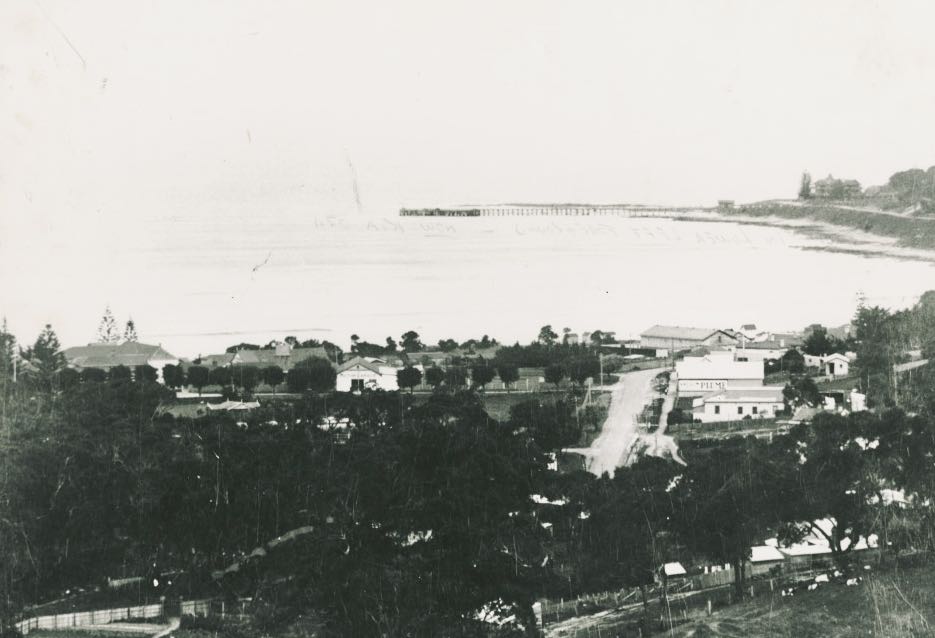
Lorne panorama. (LHS photo 1824)
(In Lorne panorama photo, north of the Picture Theatre, is the open air skating rink built in 1934 beside the first Picture Theatre facing Lower Grove Road. Plume sign on Reid and Clarke’s Garage, later Sim’s Motors and now the Anchorage Motel.)
The old original theatre hall had been turned into the Beach Dance Hall, and in 1935 we started roller skating in there, but although it was very popular it was slippery and some of the lads knocked holes in the 3 ply walls now and then. In 1936 the Company built a concrete floored skating tank with a high tin fence, on the north side of the picture theatre. It was very treacherous to skate on when it was wet, so the next year they built a roof over it.
The locals had a roller skate hockey team, which was really hot stuff They cleaned up Geelong and Colac teans on several occasions. The Company leased the rink to a Professor Kingston, who for several years ran all kinds of novelty events, ie fancy dress balls, dancing competitions, skate racing and all kinds of things. There was a covered spectators gallery which held about 50 or so, skating became very popular.
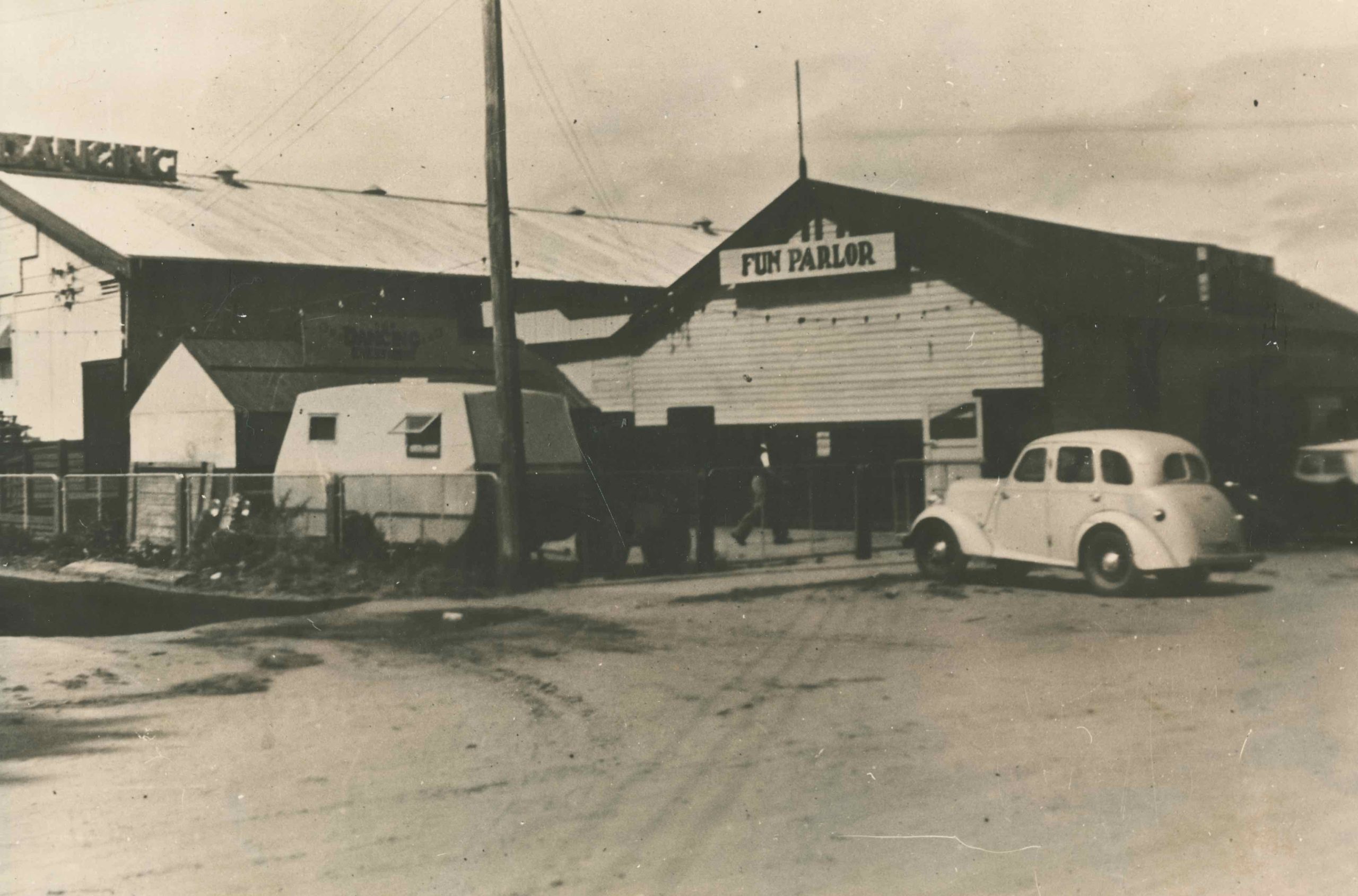
When the Company built the present theatre in Mountjoy Parade in 1937 they sold the complex to Mr Steve Waterhouse. He used the theatre as a dance hall and the old original hall he used as a fun parlor, and still ran the skating rink. About 1957 Robin and Allister Smith rented the dance hall and ran a very spectacular successful dance called the Wild Colonial Club and boy did they stack them in, it was extremely popular. Not long after Steve Waterhouse died and his widow, Sadie, ran the business under the expertise of Bert Driscoll, who managed it for her of several years.
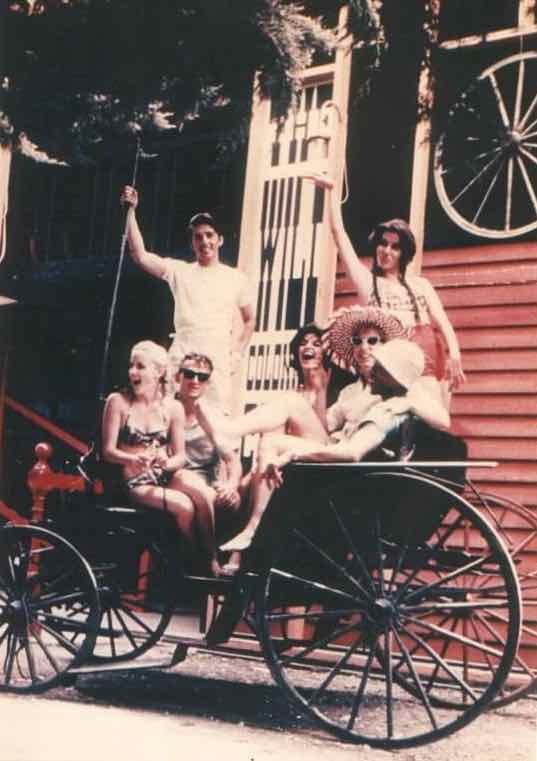
1960, cast of the production of West Side Story in front of the Wild Colonial Club
Mrs Waterhouse put the business on the market about 1962. A developer made an offer and it was said that he proposed to erect high rise flats on the site. This prospect caused much public concern, so much so that the Government was urged to buy the property, which was subsequently done and the whole area is now a car park controlled by the Lorne Foreshore Committee.
Jim Dorman lived on the corner of Grove Road and Smith Street and the Picture Company bought two of his allotments which fronted onto Mountjoy Parade, building the present theatre on the corner block. Mr J.T. Anderson died in the early 1940s and soon after the business became the Jarratt and Stirling partnership. Jack Stirling died in 1949 and Albert Jarratt died in 1962. The Jarratt boys and Doug Stirling became the owners and carried on the cinema business until it was sold to Ken Todd about 1983.
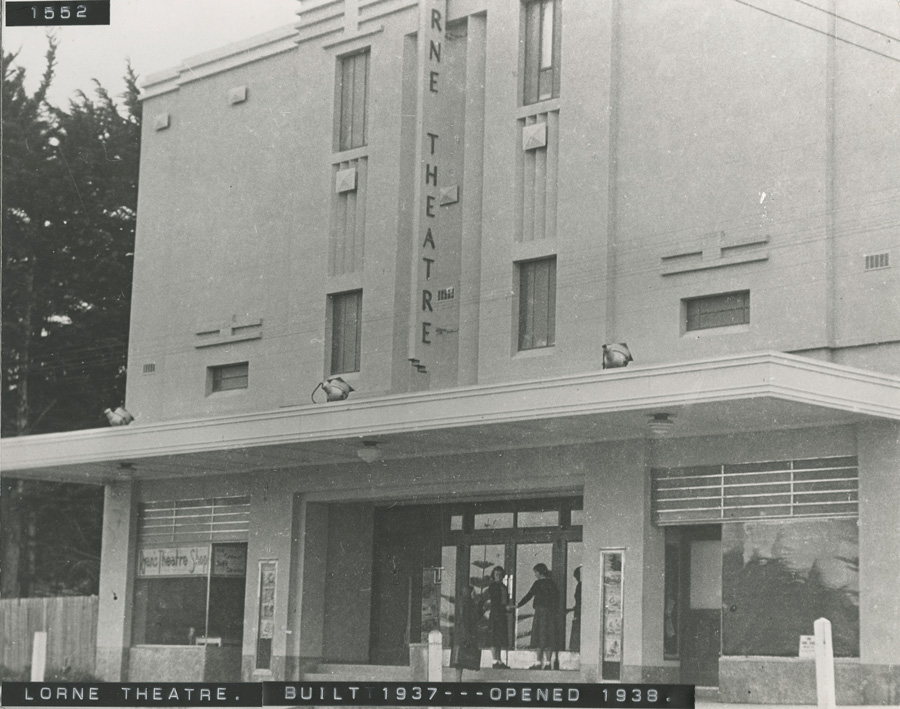
On the second Mountjoy Parade block that the Company bought from Jim Dorman, we built the J & S Steam Laundry in 1956 and after many hard years of heavy work, which was very ably managed by Geoff Jarratt it was sold to Malcolm Hand and is now called Reifs.
Movie film in the early days was 35mm nitrate base and highly inflamable. The Health Department sent their inspectors to regularly check cinemas for fire safety and the like. These inspectors would check out the projection box “Bio Box” meticulously, always when the show was in progress. One night a very diligent inspector presented his card of identification to the usherette at the top of the stairs, who promptly tore it in half and gave half back to him– well, he was fuming when he stormed into the Bio Box, and became very “picky”about every thing and Lyn Jarratt and I had to pour on the charm to cool him down, but on subsequent inspections he would joke about the event. Acetate film replaced the dangerous nitrate type in the 1940s or early 50s so that changed the regulations regarding projections. One silly regulation which may still be enforced, was a bucket of sand was to be adjacent to each projector in order to smother a fire. It takes little imagination to think of the consequences after a bucket of gritty sand is hurled into the oiled intricate parts of a delicate movie projector.
The old 12 foot square screen was replaced by a wide-angle type, which was superseded by the very wide cinemascope one that is used today. The Carbon Arc projector light produced about 600,000 candle power of illumination and had to be constantly checked and replaced carbons during a show. These arcs produced a lot of heat and at times the bio box was very uncomfortable indeed. Ken Todd replaced the old projectors that we used with more modern types, which includes zenon lamps instead of carbon arcs and the bio box has become a much more comfortable environment.
After a lifetime of involvement in the cinema business, space here precludes me from writing more on the subject, although the stories one could tell are endless.
Read more about Cool Times of the 1950s and 1960s.
Read more about Wild Colonial Club
Read more about The Lorne Theatre
Sources:
- Lorne Historical Society Collections
- Lorne Local News, 1988, written by Doug Stirling

