Lorne Victoria Australia
Surf Coast Places of Cultural Significance Study
Selected Lorne / Deans Marsh Heritage Place Assessments, 2003 (amended 2005)
Site Name: Erskine River Shops
Site No: 253
Address: 2-6 Mountjoy Parade Lorne
Approx Date: 1878
Integrity: Good
Significance Level: Local
History
This group of small timber shops, which includes a 19th century bootmaker’s shop, a turn of the century cafe, and a slightly later photographic studio and shop, and several shops and another cafe constructed in 1896/97, has important associations with the early history of the Lorne township. Although these shops are not located near the present town centre, their site was in an important commercial area last century. An examination of early maps shows that the Erskine River shops were located near the old coach road from Lorne toWinchelsea, and close to the 1850s electric telegraph line, as well as the old bridle track which followed the same route. The site was also near to Erskine House, an important early guest house with extensive vegetable gardens along the riverbank. (Allan 1869; Geological Sketch Map of Cape Otway District 1874; Vickery 1878)
The oldest shop in the group (now known as Lorne Antiques and Books) was constructed as William Wallis’ bootmaker’s shop in the pre-1893 period. The building can be identified in an early 1890s photograph taken from the other side of the river. The Lorne Historical Society holds a copy of this photograph.
According to one account, as early as 1878, William Wallis opened a bootmaker’s and tanner’s shop in a building on the site of ‘4 Mountjoy Parade near the Erskine House vegetable
gardens’. (Graham 1999 : 2) Winchelsea Shire rate records confirmed that, in 1879-80, William Wallis, bootmaker, occupied a shop and dwelling at Erskine Ford, owned by Alfred Elkington. Elkington, a wool classer, also owned two acres of enclosed land on the Erskine River. (Shire of Winchelsea Rate Books 1879-80 Lorne Township, Nos. 511, 455.) The following year, Wallis was described as ‘bootmaker and furrier’ with his shop and dwelling ‘on Erskine Creek frontage’. (Shire of WRB 1880-81 Lorne Township, No. 548) Wallis was there still in the late 1890s. (Shire of WRB 1899-1900 Lorne Township, No. 877)
Another early timber building in the group, the Rivergum Cafe, is of later date, and appears in a c1900 photograph held by the Lorne Historical Society. It has always been a cafe and in the 1920s was owned by Frank Clissold, caterer. (Shire of WRB 1928-29 Lorne Township, No. 897) The name “XLCR” can still be seen on the building.
HERITAGE ASSESSMENT
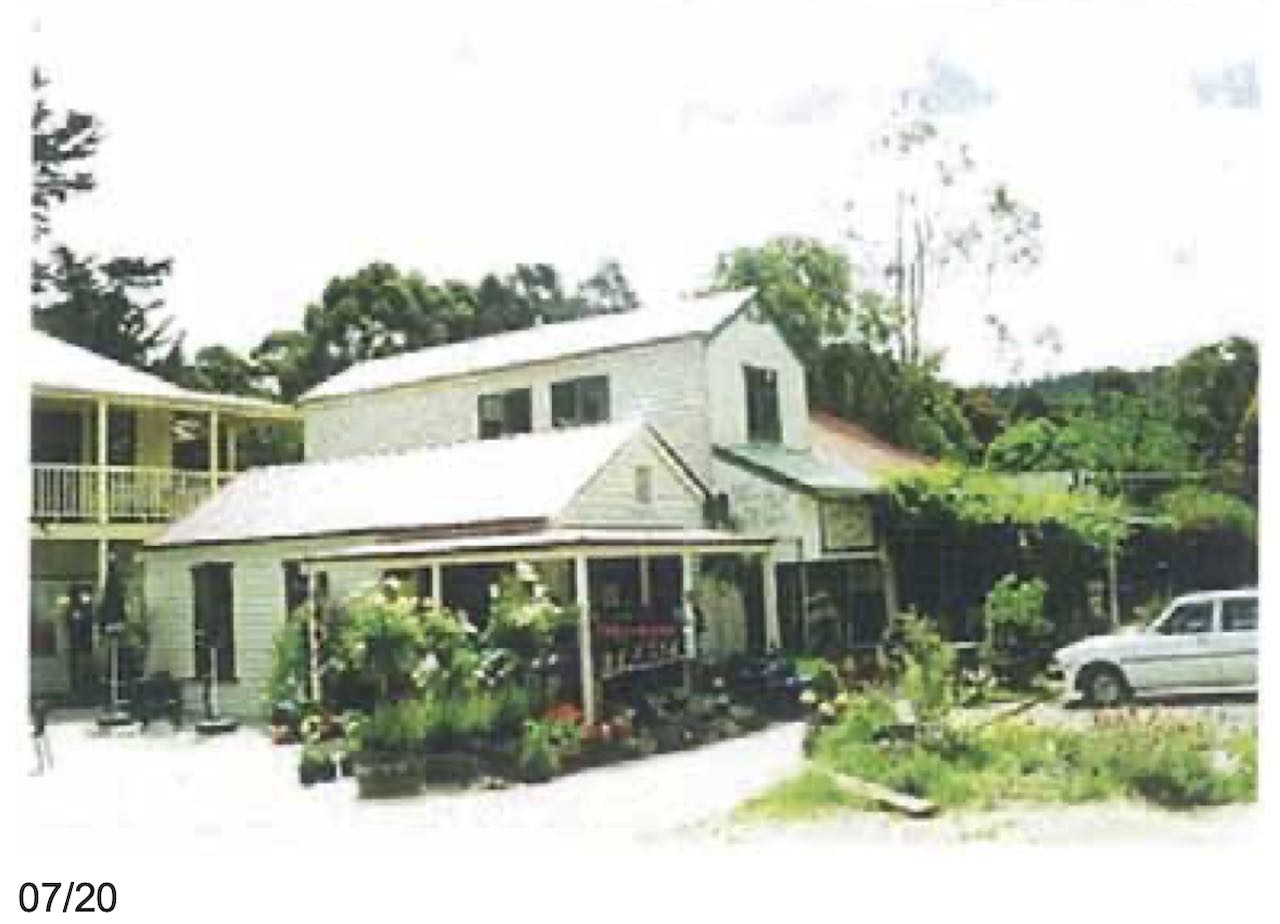
The two-storey timber Erskine River Trading Company building adjoins the Lorne Antiques and Bookshop, and was most probably built as an extension to the earlier former bootmaker’s shop. The Lorne Historical Society holds a c1912 photograph, which shows what was once the photographic studio and shop of William Snowdell Anderson, Ormond photographer. An examination of Winchelsea Shire records confirmed that in 1903-4, Anderson purchased Wallis’ bootmaker’s shop. (Shire of WRB 1903-4 Lorne Township, No. 893) It is thought that he built his studio and shop next door about 1910. The Lorne Historical Society holds the original sketch plans for this building, signed by Doble, the man who built it. The finished building was to cost £26.
Anderson was one of Lorne’s best-known commercial photographers, the other being Albert Jarratt, owner of the Lorne Cinema in the 1930s. A collection of Anderson’s Photographs is held at Scienceworks in Melbourne.
The two timber shops and the cafe once formed part of a much larger group of shops and shop/residences beside the Erskine River. Those owned by Mrs L. F. Kane of Maryborough have now gone. In the mid-1930s, Mrs Kane’s ‘shops etc.’ in Marine Parade (the earlier name for Mountjoy Parade) had the substantial valuation of £100. (Shire of WRB 1934-35 Lorne Township, No. 909) The 1938 Winchelsea Shire Engineer’s Map of Lorne Township shows both the ‘William Anderson Shops’ and ‘Mrs Kane’s shops’.
The 1939 map of Lorne Township prepared by the Lorne Sewerage Authority shows the Erskine River shops in greater detail. The 19th century cafe and pair of wooden shops owned by William Anderson have front verandahs facing the Erskine River. The two Anderson adjoining buildings share a common verandah. Mrs Kane’s shops have front verandahs, too, and are separated from the Anderson shops by a long galvanished iron building. By the late 1930s, Mountjoy Parade was linked up to the Great Ocean Road.
Today, the Kane buildings have gone, and there have been many changes in the ownership and occupancy of the remaining early buildings. The former bootmaker’s shop later became a grocery shop owned by Mr and Mrs Major. During the Second World War, Jack Rogers ran the shop and then, from 1945, Jack and Alma Graham. It was later known as the ‘Lorne Hardware Store’ run by Alma, Jack and Ron Graham. More recently, in 1985, it was Pam Tank’s craft and pottery shop (Erskine Gallery). Later still, the shop was divided in half. One part became Deck Chairs Overboard and the other half, a small antiques and bookshop. (Graham 1999: 2)
The former Anderson photographic studio and shop is now the Erskine River Trading Company, and the early cafe is a cafe and health foods store.
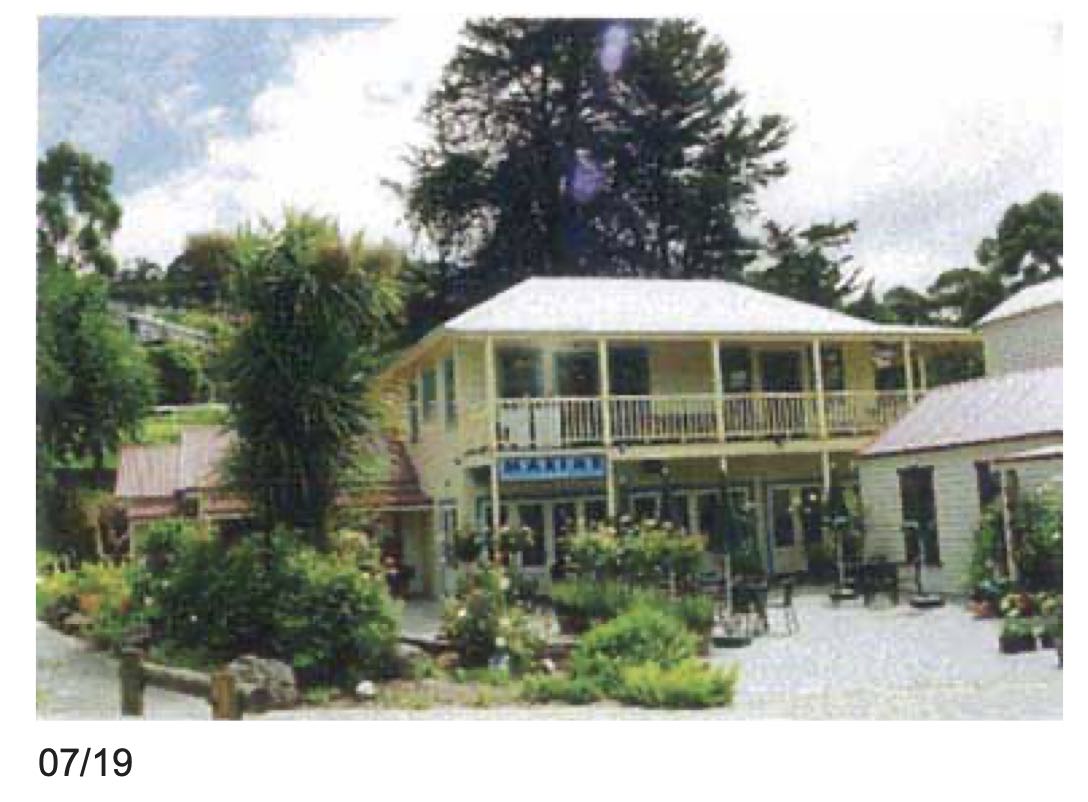
Most recently, between 1996 and 1997, the old verandahs have been replaced and rebuilt on the early timber buildings by the present owner, Mrs Lyndon Crossland. The old corrugated iron garage has been removed from the site, but the metal plates have been left in the pavement. In addition, a number of new timber buildings have been constructed in a style compatible with the earlier buildings. These are Lorne Greens, a small single storey shop with the furthest setback from Mountjoy Parade; the Marine Cafe, a large two-storey building set to the side and behind the early shops; and a new shop in front of the Marine Cafe.
Description
Set of seven small timber shops facing the Erskine River, south and west of the Great Ocean Road bridge. These shops are located on a small stretch of road which leads from the Great Ocean Road to the Kia-Ora Caravan Park – possibly an extension to the present-day beginning of Mountjoy Parade and reflecting the changed positioning of the road bridge.
The shops demonstrate a range of building periods, levels of alteration/renovation, and size, and occur on three separate setbacks. Within this group of buildings are three nineteenth/early wentieth century timber buildings:
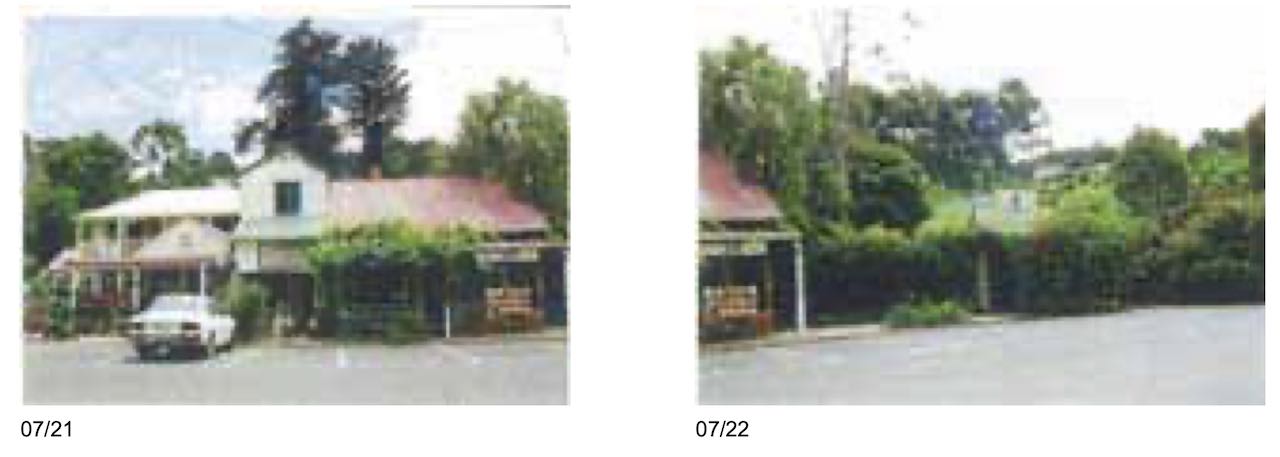
‘Lorne Antiques & Books’ – double fronted single storey building, with two entry doors, and large windows added at the front – pre 1893.
‘Erskine River Trading Co.’, a two storey building attached to Lorne Antiques and Books. The upper storey retains pressed metal cladding – c.1910.
‘Rivergum Cafe’ – small single-fronted roof, with garden/spare lot next door, and possible extensions at the rear – c. 1900.
There are also several recent buildings (c1996/7), namely ‘Lorne Greens’ – a small single storey shop, newly constructed, with the furthest setback from Mountjoy Parade; ‘Marine Cafe’ – a large two storey building, newly constructed, set to the side and behind the shops on the Mountjoy Parade alignment; and small weatherboard building used as a flower shop, with a new verandah attached.
Statement of Cultural Significance
The group of buildings comprising the Erskine River Shops is of local significance because of is historical and architectural values. The group of small timber shops, shop-residences and cafes, dating from the late 19th century to the 1990s, has associations with the early commercial life of the resort town of Lorne. The oldest buildings in the group, a former bootmaker’s shop and an adjoining photographic studio and shop, and an old cafe, are all that is left of a larger group of commercial buildings which once stood beside the Erskine River near the prestigious Erskine House, Gracedale and Cora Lynn guest houses. The design and placement of the more recent buildings are sympathetic to the earlier buildings, and together demonstrate the evolution of this small commercial area over more than 100 years within the Lorne township. (criteria A4, F1) The significant and contributory elements are the fabric of the older buildings, and the external design and close placement of each of the shop structures, including both older and very recent buildings. These are listed in detail in the description of the place.
References
Shire of Winchelsea Rate Books, Geelong Historical Records Centre, 1899-1935 Graham, M., Chronological Table of Events in Lorne, (unpub), 1999
Allan, A., Lorne, (map), 1 March 1869
Vickery, J., Resurvey of Allotments at Lorne, (map), 1878
Geological Sketch Map, Cape Otway District, State Library of Victoria, 1874 Lorne Sewerage Authority, Lorne Township Map, 1939
Recommendations
Planning Scheme