
Lorne Victoria Australia
This precinct has a huge amount of historic interest for Lorne and the wider community.recognised. It dates from 1878 as an important commercial area and continues to this day to be a much-loved place for people to gather in Lorne and enjoy the ambiance of a 138-year-old business area.
In 2005 the Erskine River shops, at 2-6 Mountjoy Parade, were included in a study commissioned by the Surf Coast Shire of Places of Cultural Significance. It was recognised as a place of local significance. The detailed report prepared by Dr Carlotta Kellaway and Dr David Rowe noted that, as early as 1878, William Wallace opened a bootmaker and tanner shop.
Like layers of an onion, there are many stories of history associated with the Erskine River Shops. Here you will find basic timber buildings that are over the last 138 years have been at the heart of commerce. We know the Erskine River shops have been home to an ever-changing array of businesses including a garage, grocers, tearooms, guesthouse, bootmaker, furrier, surf shop, video shop, restaurants, cafes, architect, nursery, green grocers, hair dresser, gift shops health food shop and a famous photographer W.S. Anderson.
Photographer William Snowdell Anderson (1867-1948) purchased Norman and Brown’s photographic business and began what was to last for fifty years. He took photos of holiday makers arriving at Lorne by Mountjoy or Cobb & Co coaches. Anderson used both glass plate method and celluloid roll film processes. He portrayed Australia as it really was, demonstrating his skill as an artist.
When Anderson first arrived in Lorne, he operated from the same mobile caravan that he used on his earlier photographic tour of Victoria. He later built a two-storey studio/home for himself at 4 Mountjoy Parade in 1910. Anderson’s studio and shop would have been like a souvenir/gift shop. The interior of the shop was set out with sample photographs and his own water colour paintings adorned the walls. In addition, he displayed for sale pottery articles he had made using local Lorne clay. His darkroom was located at the rear of the shop. It is thought that the upstairs portion was used for formal studio portraits.
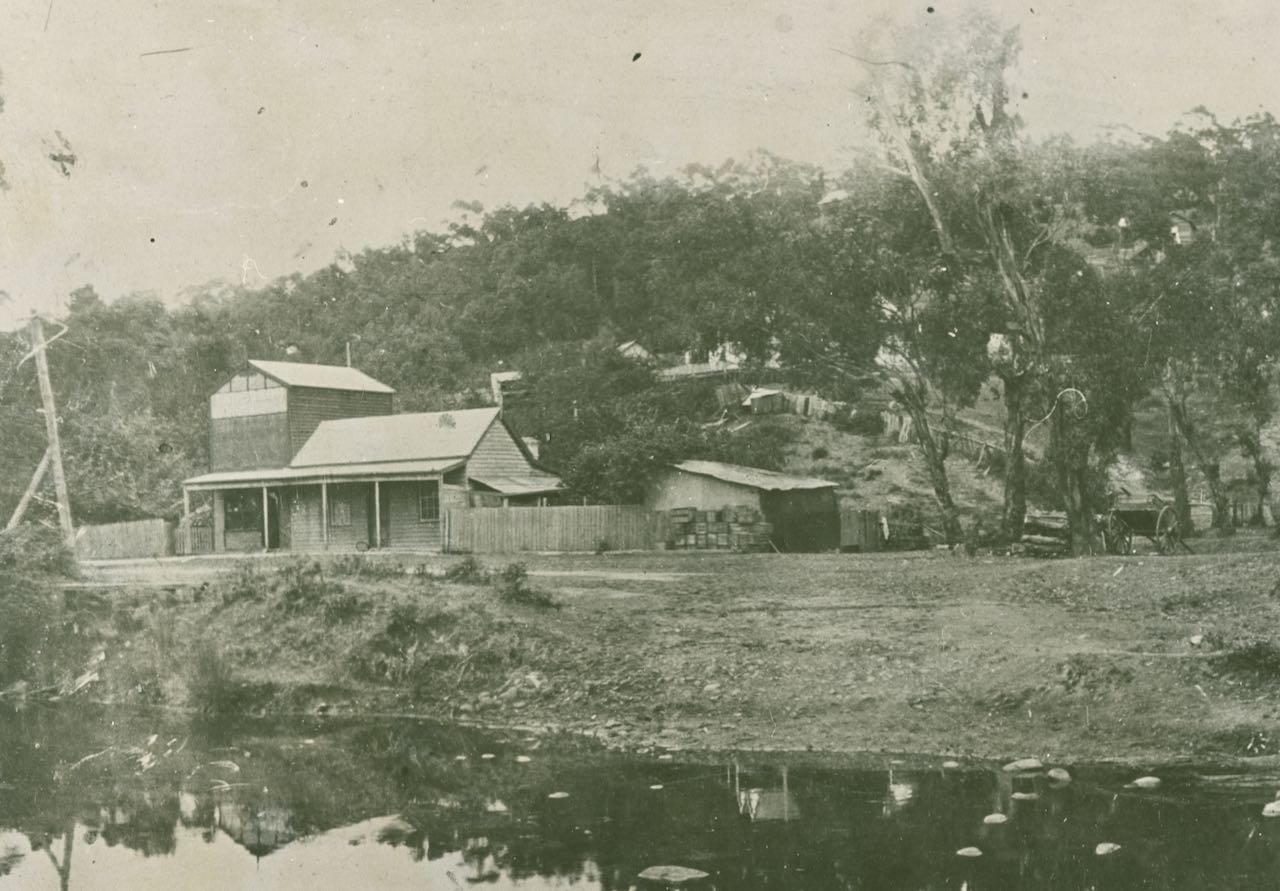
Before the construction of the Erskine River bridge, a ford was used by the Cobb and Co and Mountjoy Coaches to cross the Erskine River after a four-hour journey from Deans Marsh. The coaches would often stop in the ford, so the mighty horses that pulled the heavy coaches for hours could cool their hooves in the sweet water of the Erskine River. Even after the bridge was added, many coach drivers would prefer to use the ford to wash the brakes of coaches as well as give relief for the magnificent horses. As the early coach travellers arrived in Lorne, they would see a collection of weatherboard buildings comprising the Erskine River shops.

Allen Cottage above Butcher shop, home of Norm and Kath Allen, childhood home of Gary Allen. (LHS photo 5364)
Next to these shops lies the Kia-Ora caravan park archway, leading to an extensive caravan and cabin accommodation area. Before it was a caravan park, Erskine House had a large fruit and vegetable garden to provide food for the guests. At one stage in 1999, the Lorne Hospital needed an upgrade, and it was suggested the Kia-Ora Caravan Park area may be a good place for building a new hospital, before it was decided to develop the new hospital on its existing site.
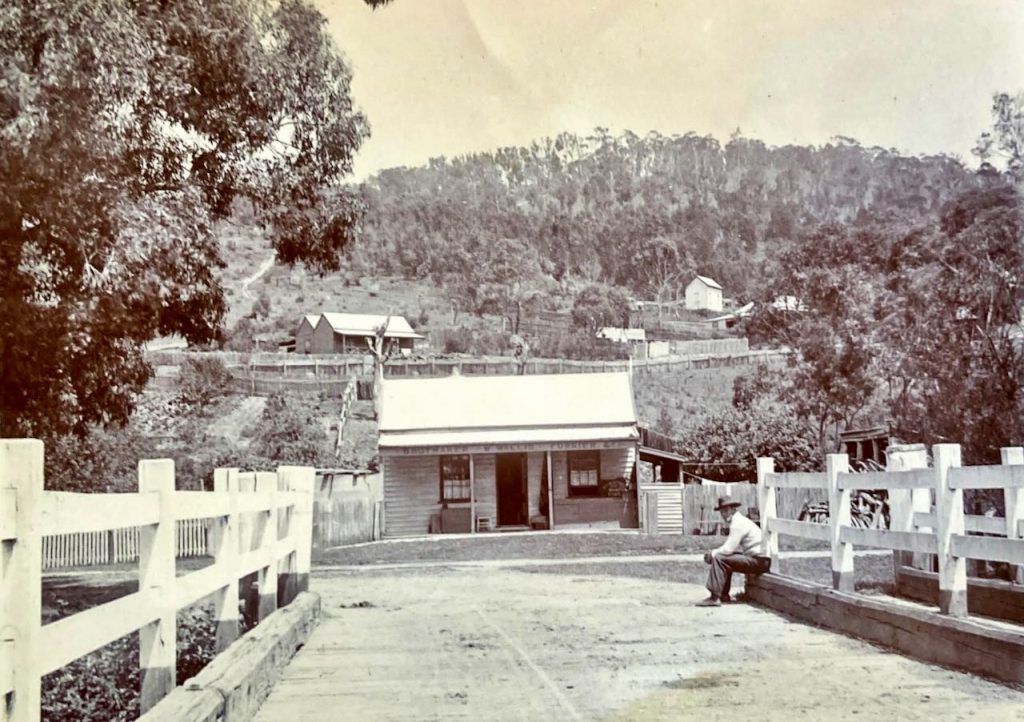
c1878, William Wallace, Bookmaker and Furrier)
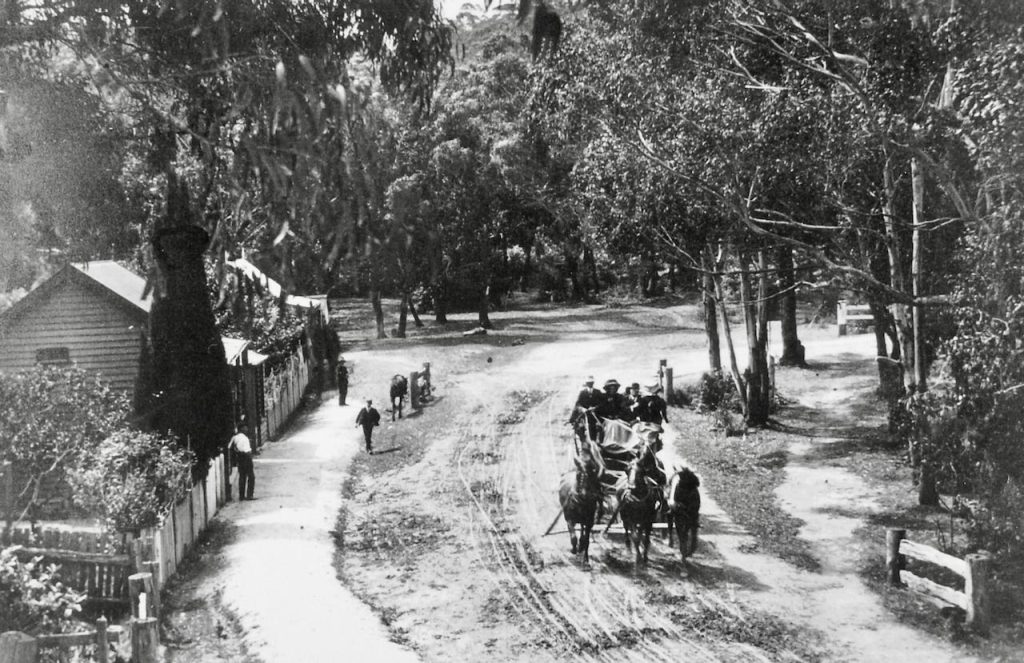
Pre 1910, Anderson’s shop not yet built. (LHS photo 171L)
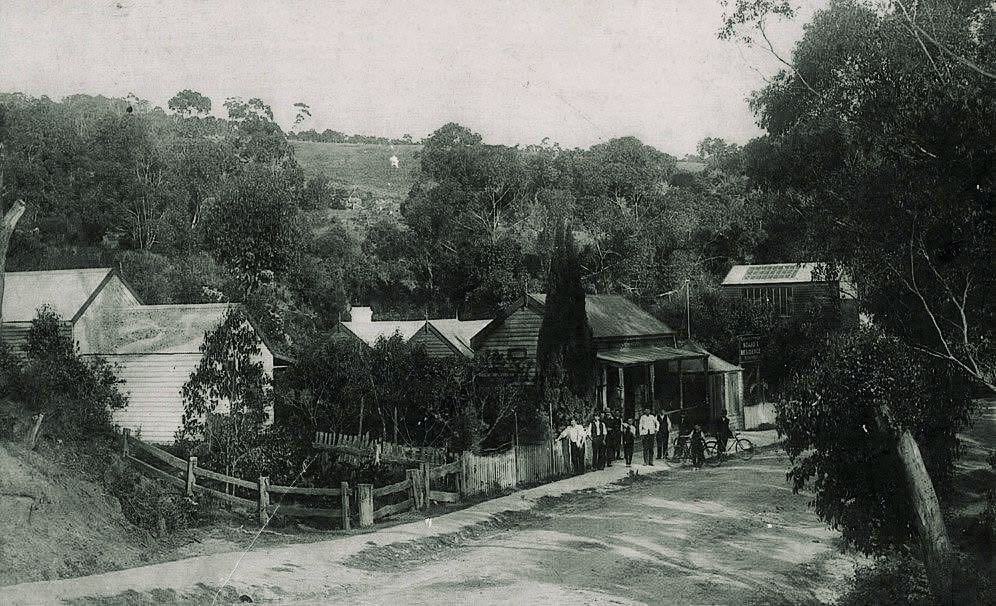
Post 1910, Anderson two-storey building constructed. Note windows in roof and on south-side wall to provide light for photographic studio above shop. People standing in front of Erskine Bridge Guesthouse.
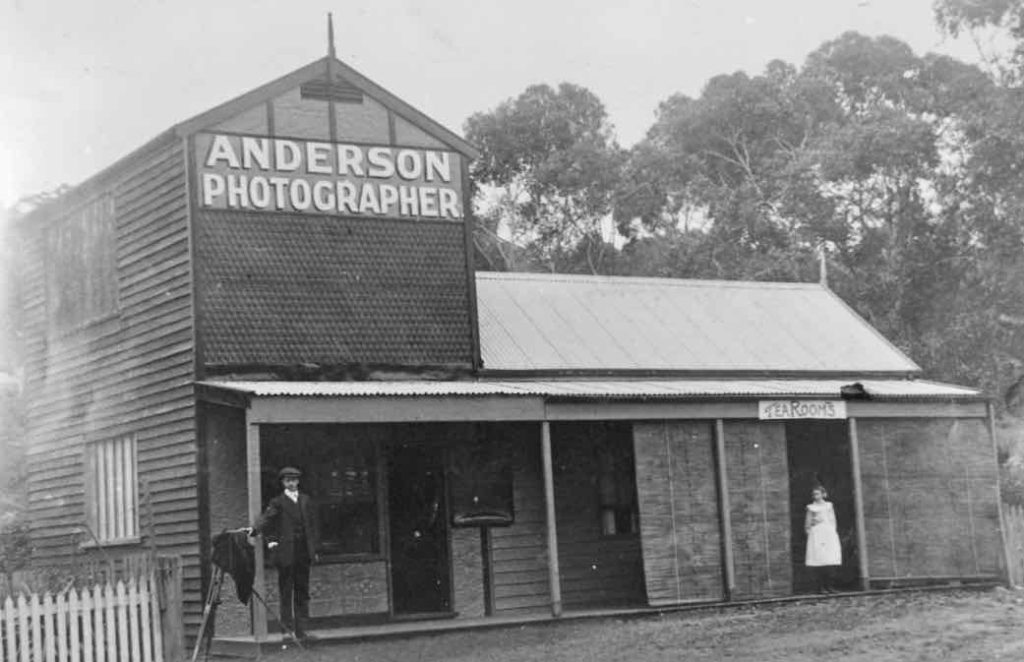
1910, Harold Anderson on the left.
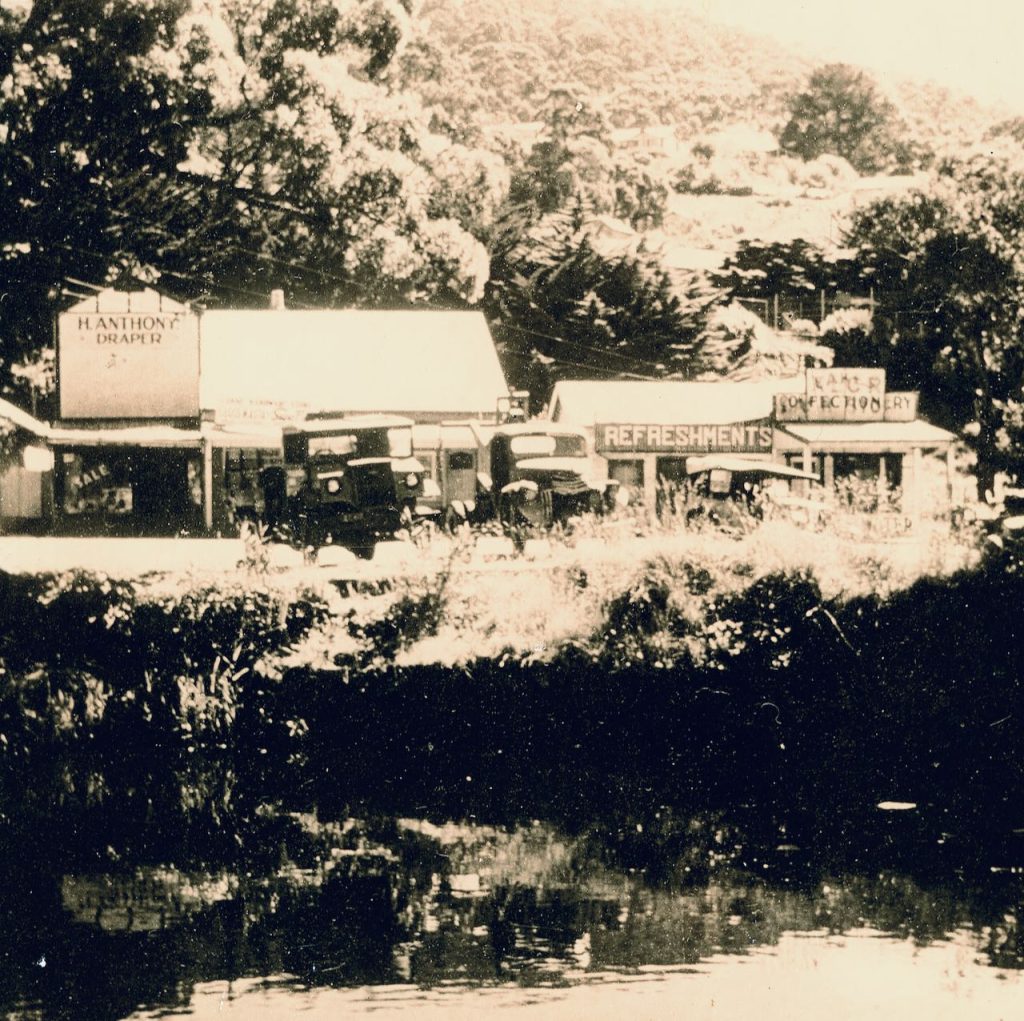
Eskine River Shops. Draper Mrs Anthony, Hardware Mr Ron Graham, Refreshment, Confectionary. (LHS photo 7480)
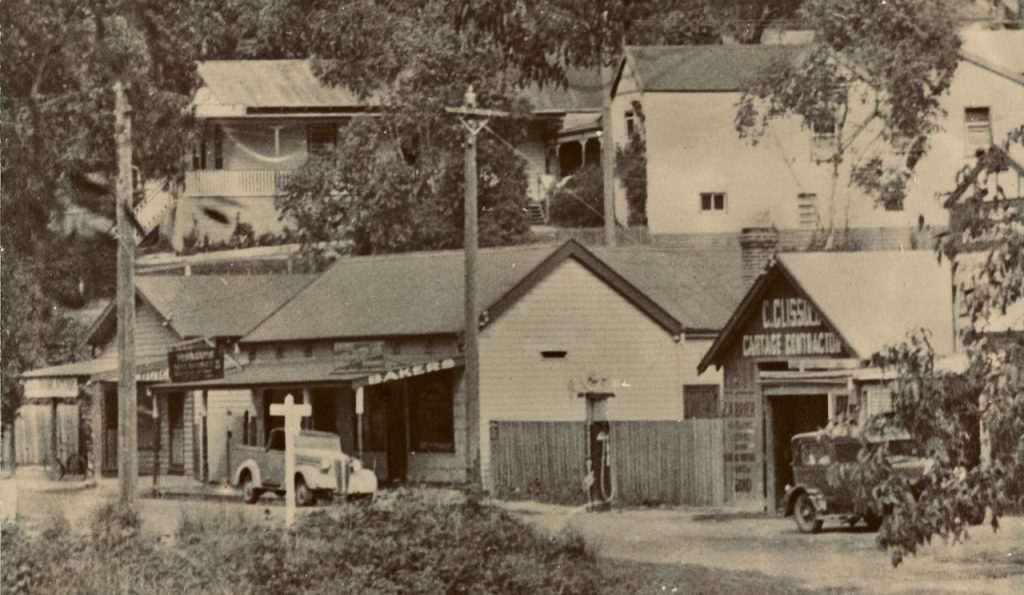
Erskine River Shops (Gracedale in the background).(LHS photo 6069)
Bakers shop and to the left Graham (Jack) and Eddie Ridgeway’s butcher shop. These shops were demolished when Lower Otway Street was created.
2 Mountjoy Parade
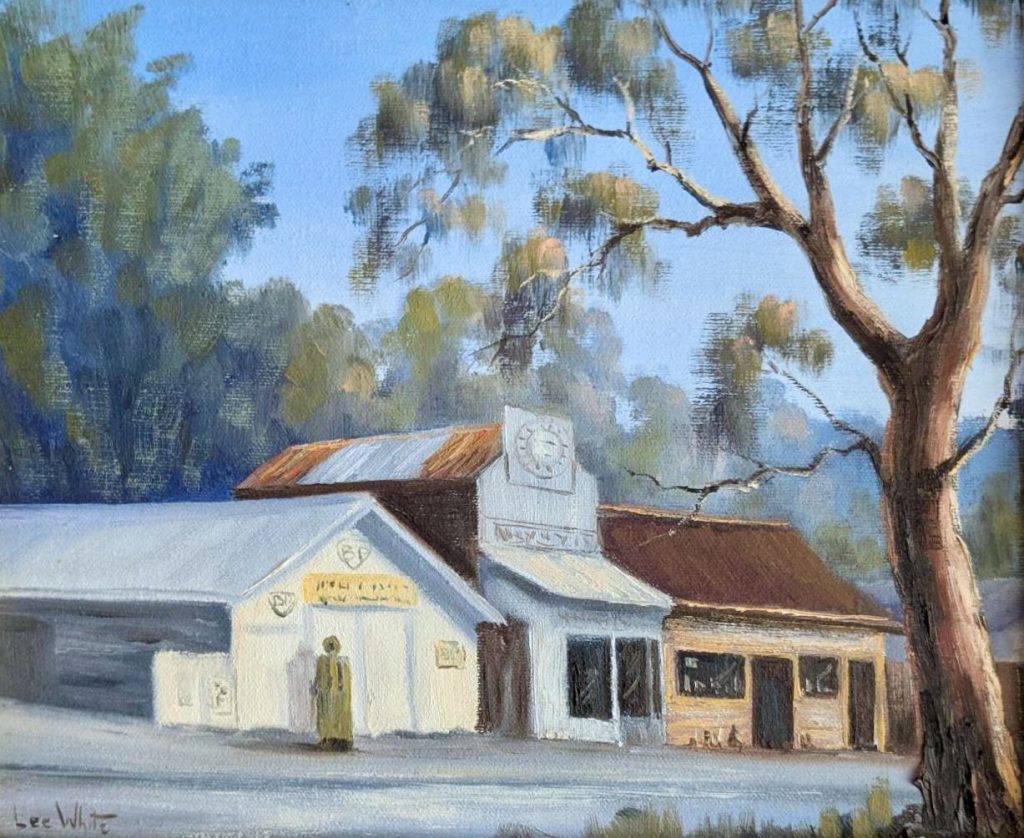
c1970s, oil painting by Lee White (photo by Karen Pitt)
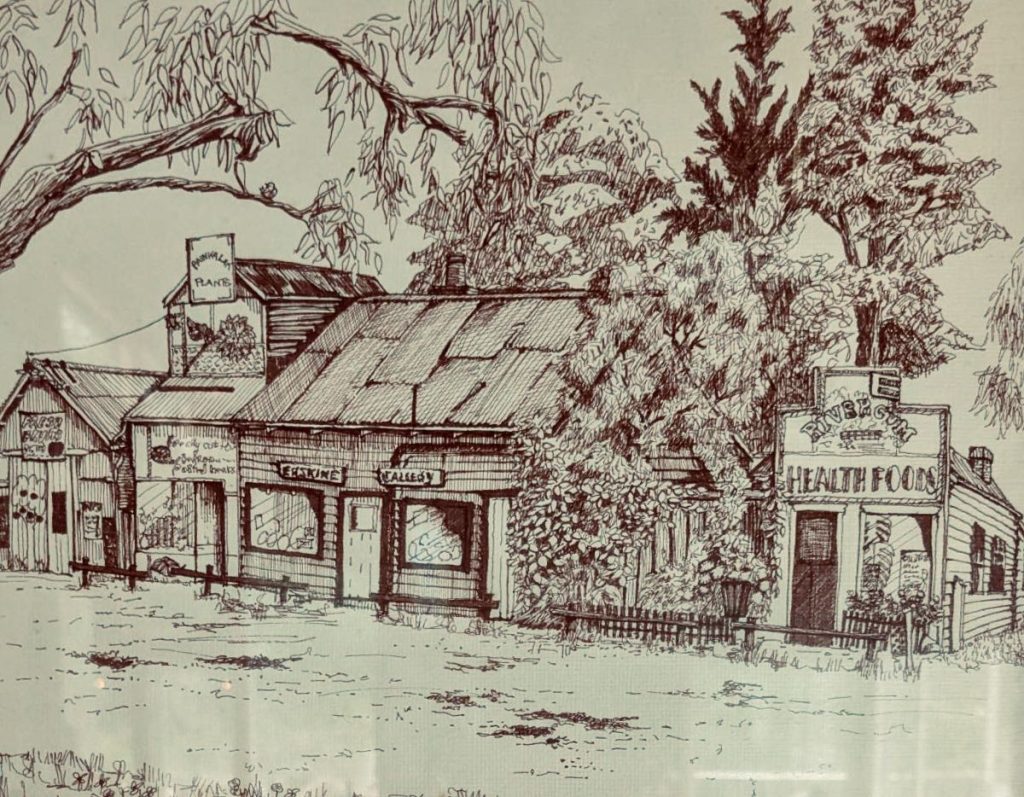
c1989, sketch of Erskine River shops, L-R: Fruit Barn, Painkalac Plants, Erskine Gallery.
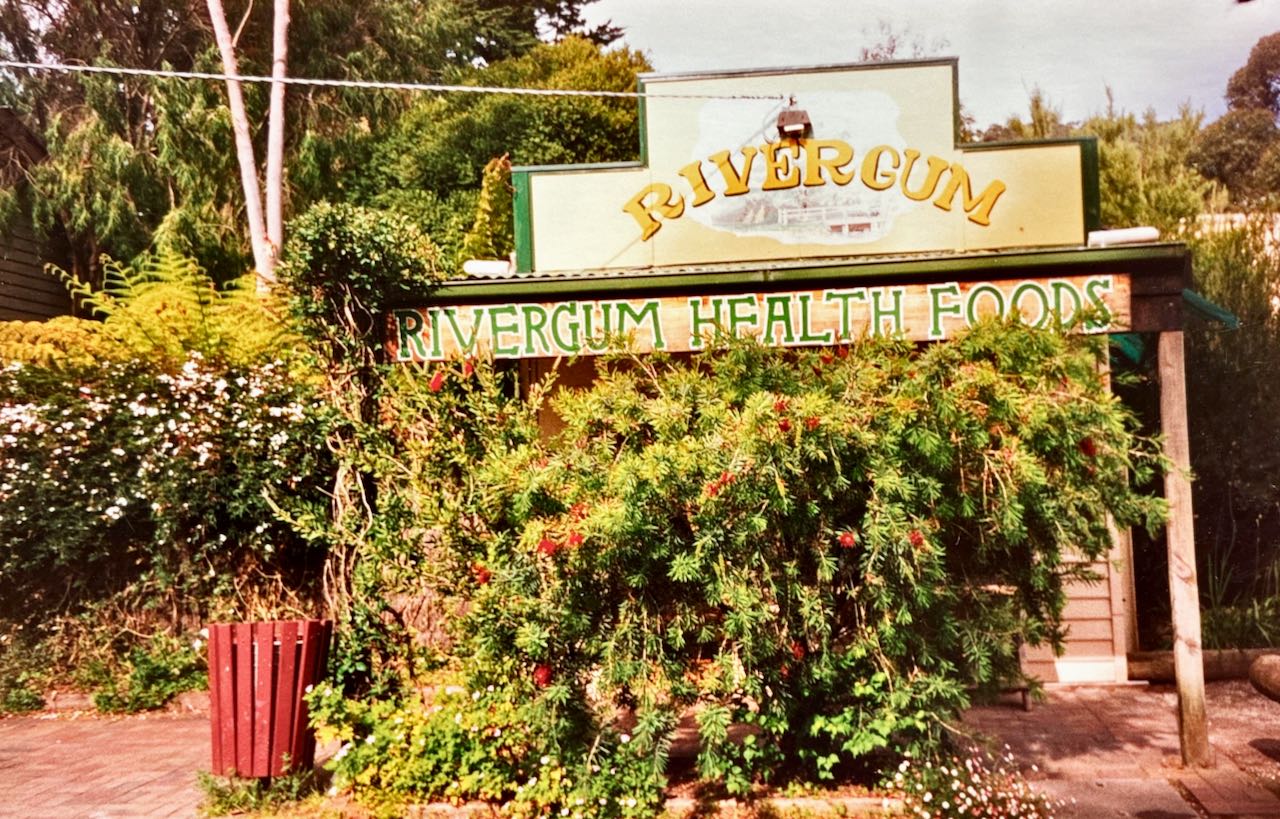
- Lorne Health Foods
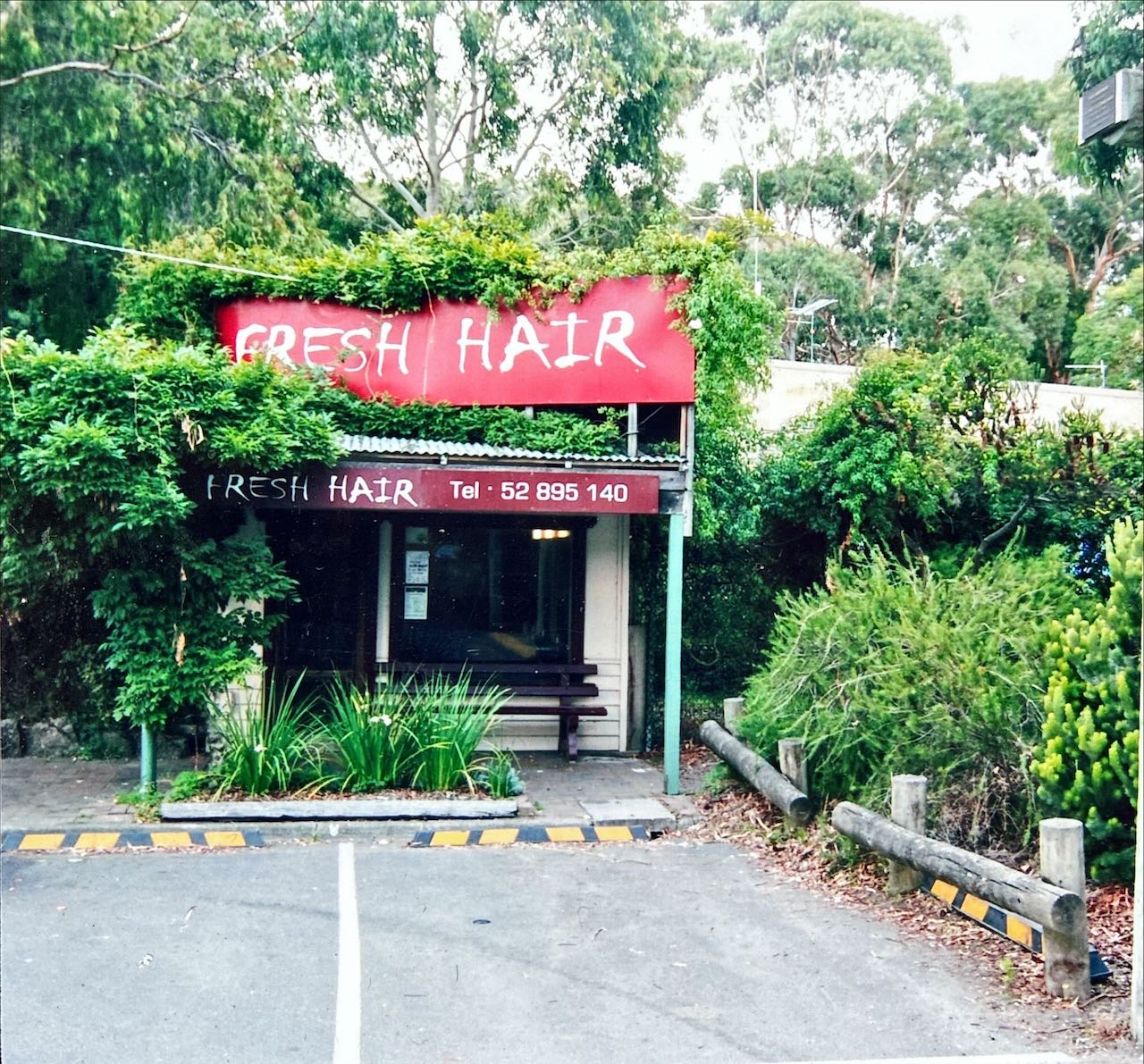
- Fresh Hair
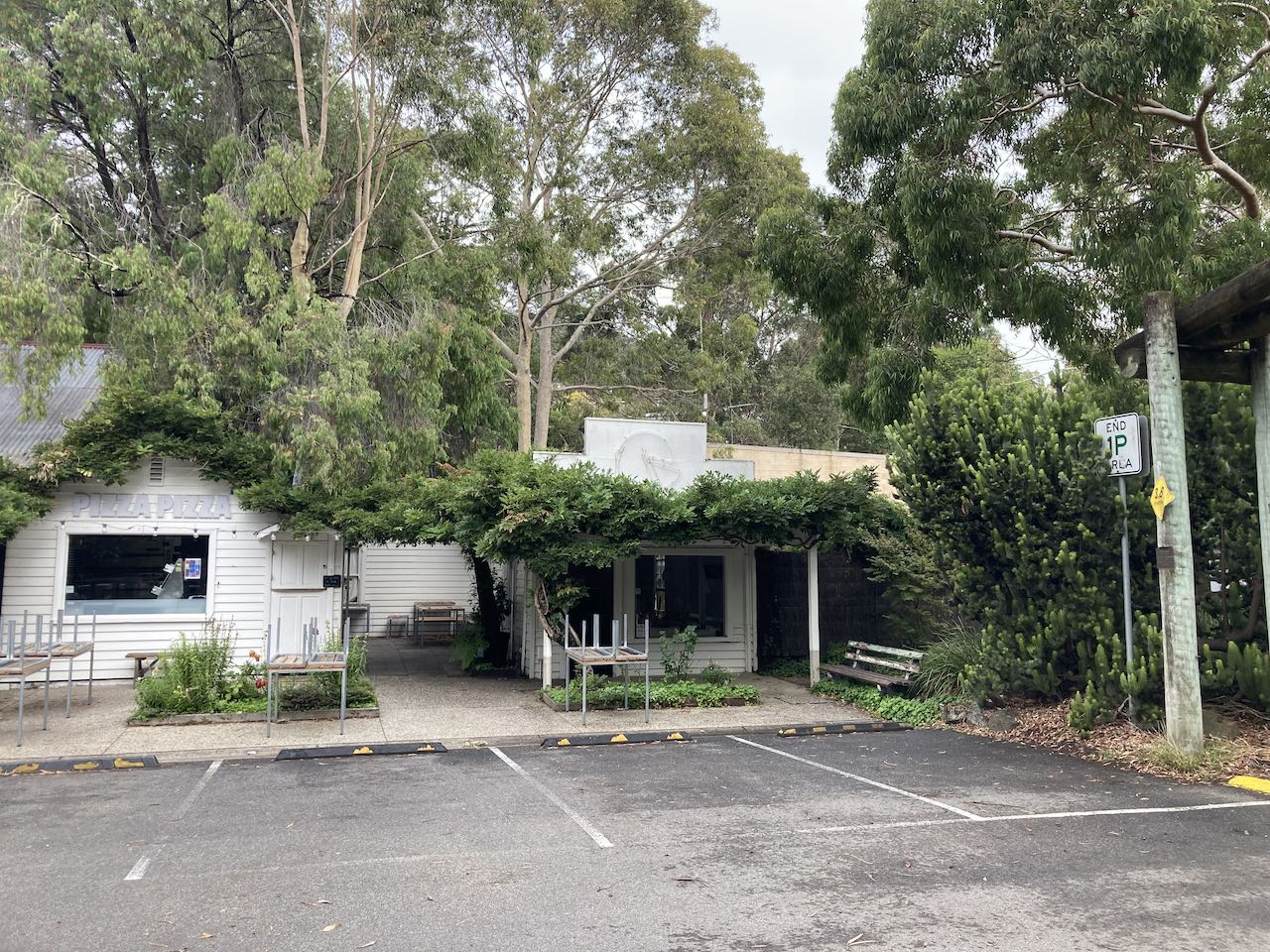
- Pizza Pizza
-
- 1994, Rivergum
-
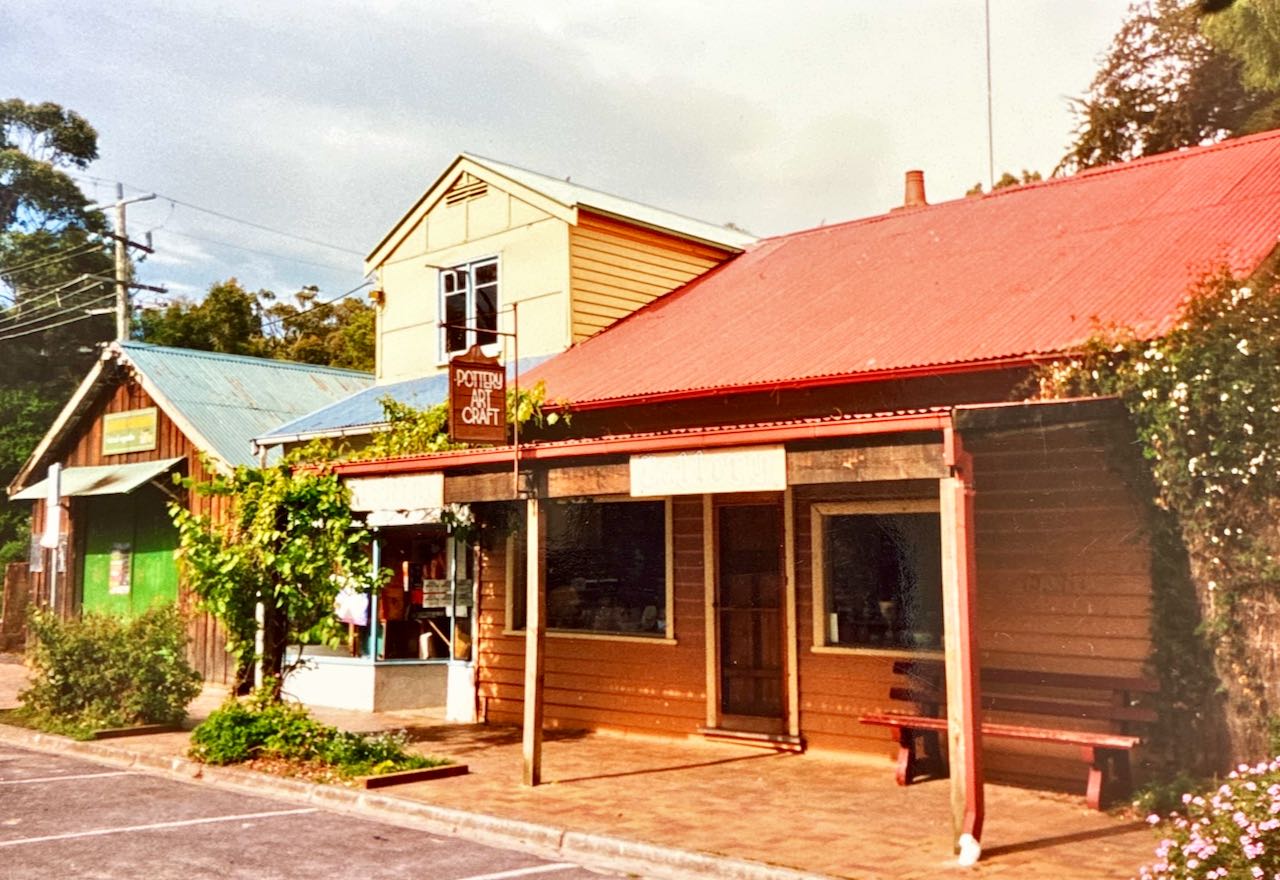
- 1994, Pottery shop
-
- 2009, Fresh Hair
-
- Pizza Pizza, 2 Mountjoy Parade, photo 2025.
Erskine Gallery was opened by Mrs Roma Pitt in 1976 when she rented the central shops from Vern Grose. At the time when Roma moved in there were many dusty and greasy bits of garage equipment. The gallery sold “art pottery” and original artworks. Painkalac Plants was part of the extended Erskine Gallery in 1982. About 1986 the business was sold to Pam Tanks.
[Source: Karen Pitt emails 2026]
4-6 Mountjoy Parade
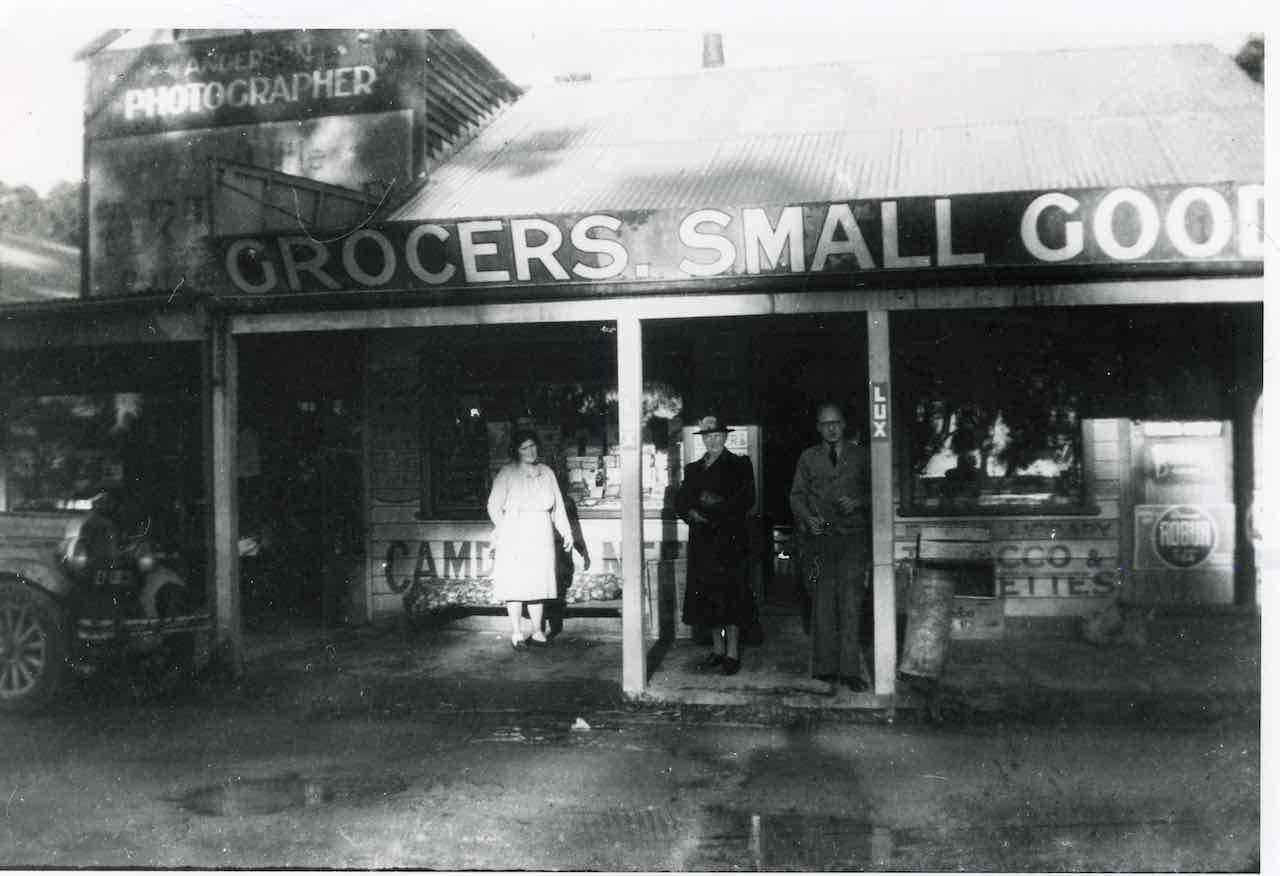
- Anderson Photographer
- Draper, Mrs Anthony
- Grocers
- Erskine Gallery
- Painkalac Plants
- The Tea House run by Cam Rust
- Erskine River Trading Company
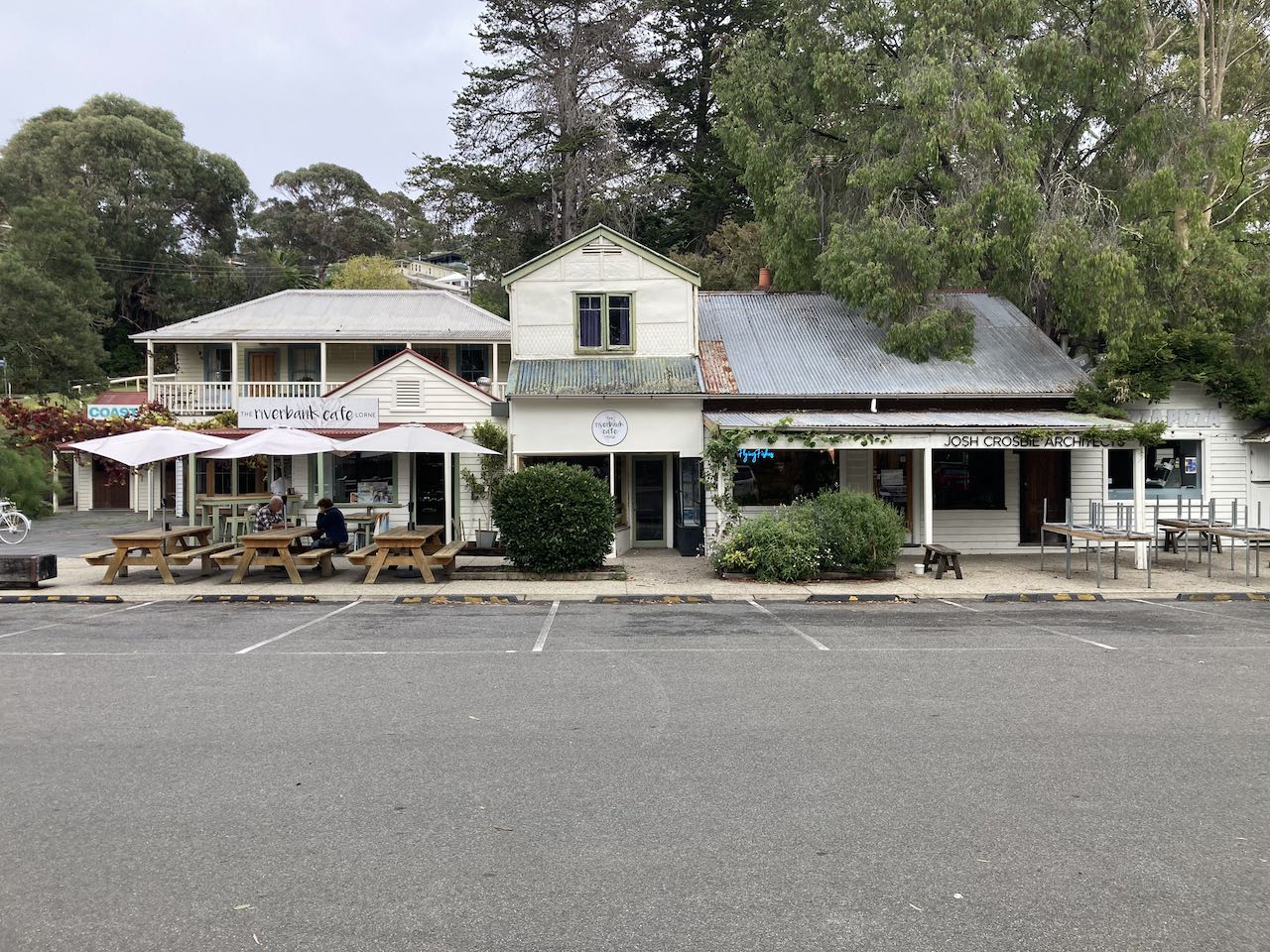
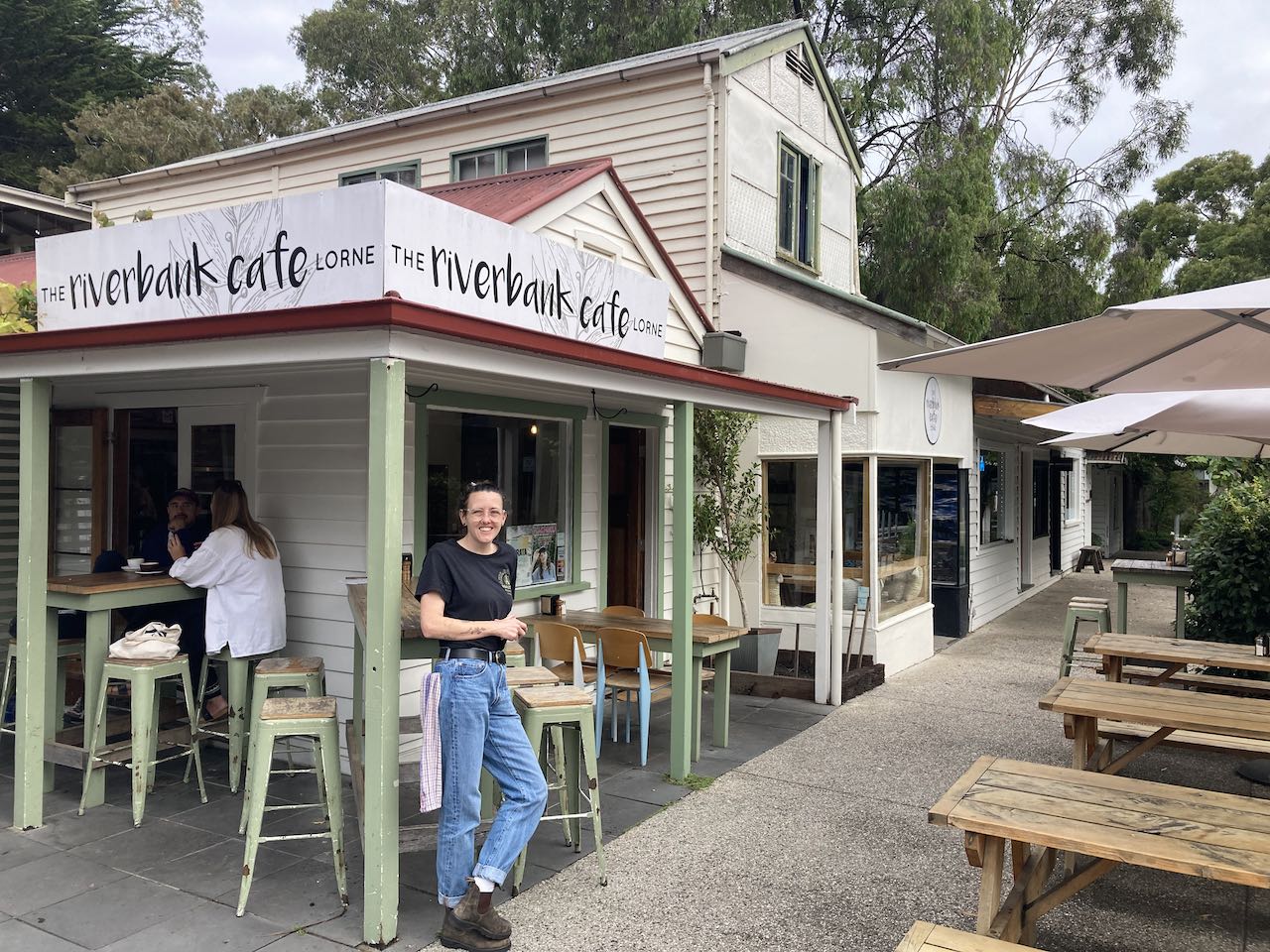
- Riverbank Cafe opened in 2016 by Tess Morrisey and Jo Hughes
- Riverbank Cafe operated by Becky McIntosh
- Flying Fishes
- Josh Crosbie Architect
-
- Number 6 and 4 Mountjoy Parade (LHS photo 7004)
-
- Grocers near Erskine bridge
-
- Erskine River Trading Company
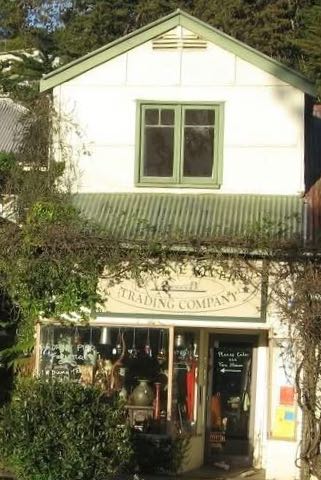
-
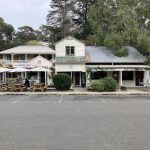
- Flying Fishes, 4 Mountjoy Parade, photo 2025
-
- Becky McItosh, Riverbank Cafe, 6 Mountjoy Parade, photo 2025.
8 Mountjoy Parade
- Erskine Cottage / Bridge Cottage
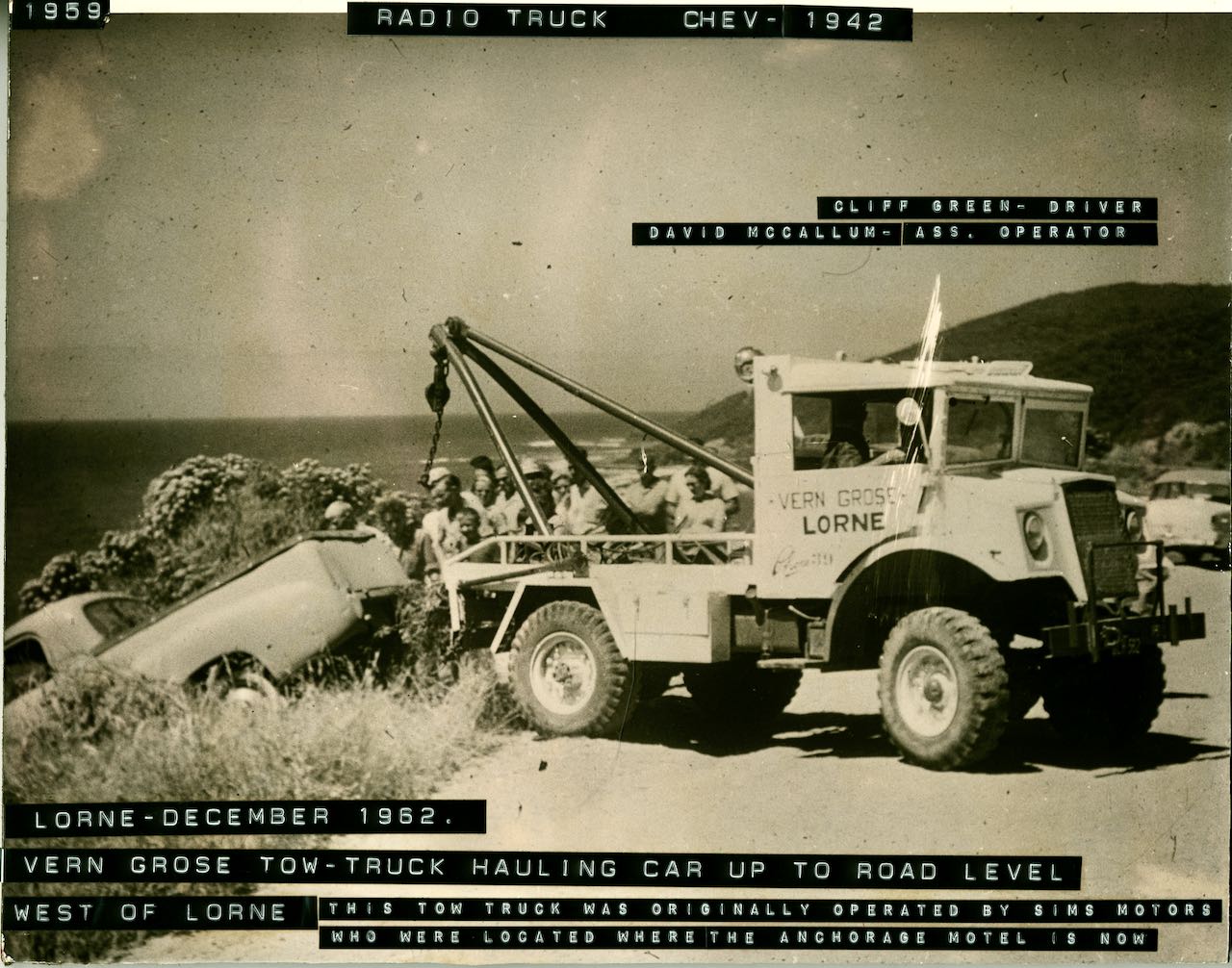
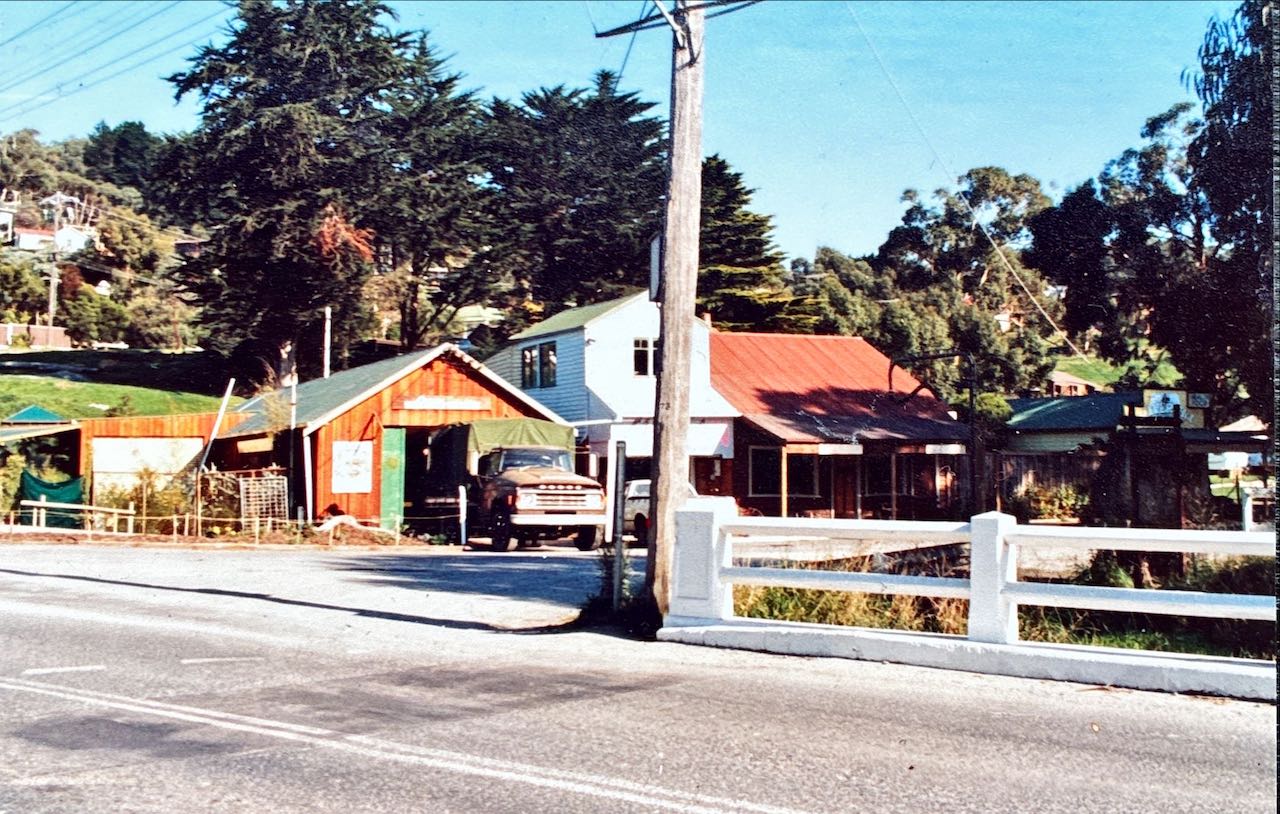
- Vern Grose Garage. In 1963, the old BP Service Station conducted by Vern Grose Motors Pty Ltd, adjacent to Erskine River Bridge, was maintained as a workshop, as kerbside petrol pumps were no longer permitted. In the late 60s Vern Gross Motors went broke and the garage was demolished. Cast iron plates from the garage era can still be seen in the paving in the open courtyard area adjacent to The Riverbank Cafe.
- Nursery
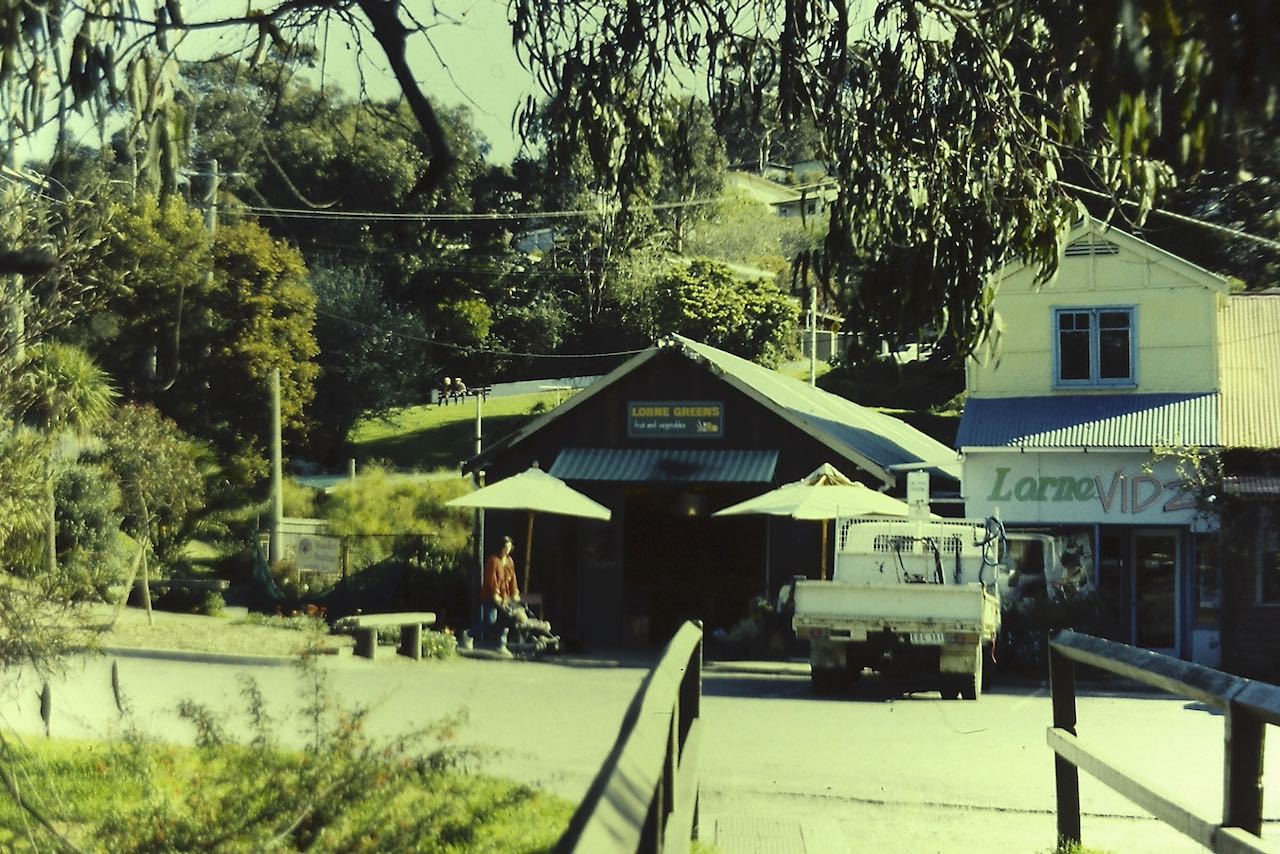
- Lorne Greens
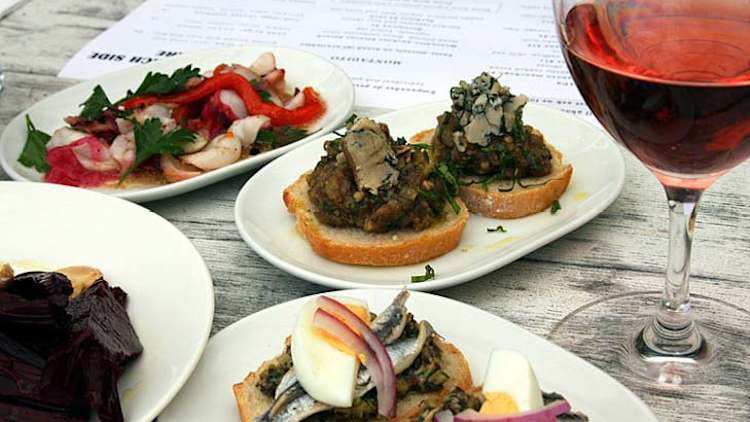
- Ba Ba Lu Bar (c2012, Sacha Meier)
- Ice cream Shop
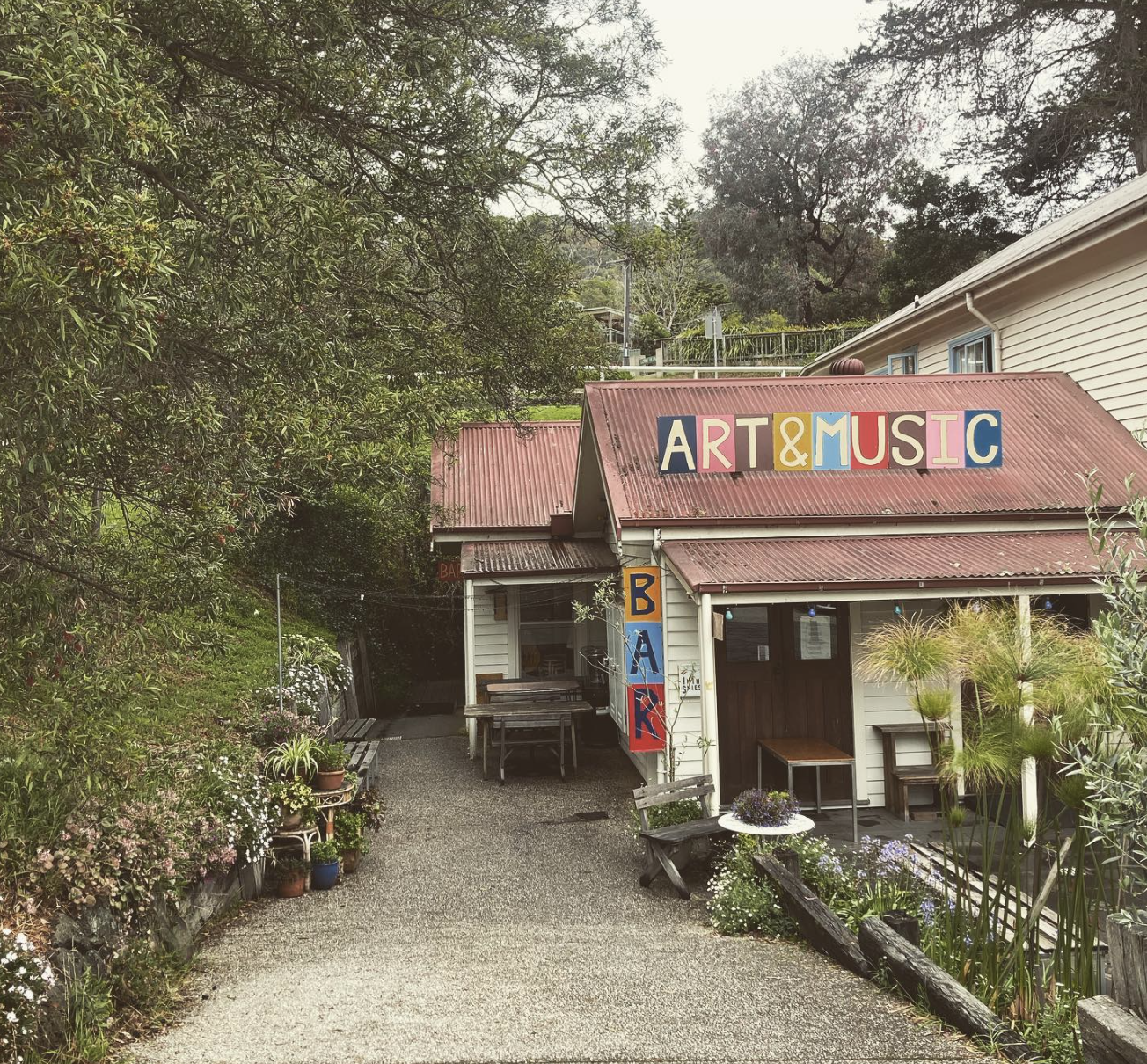
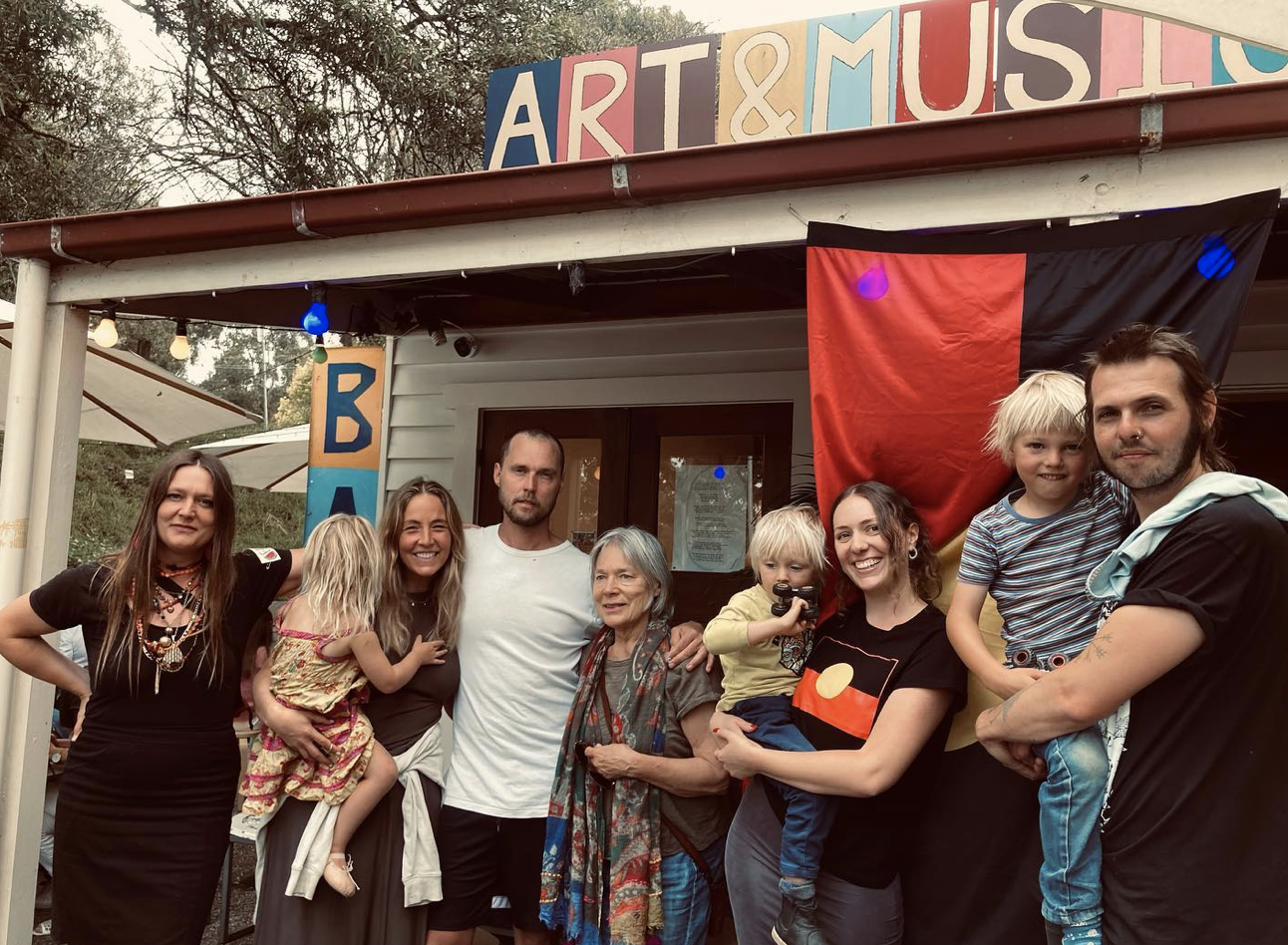
- In the Skies Gallery
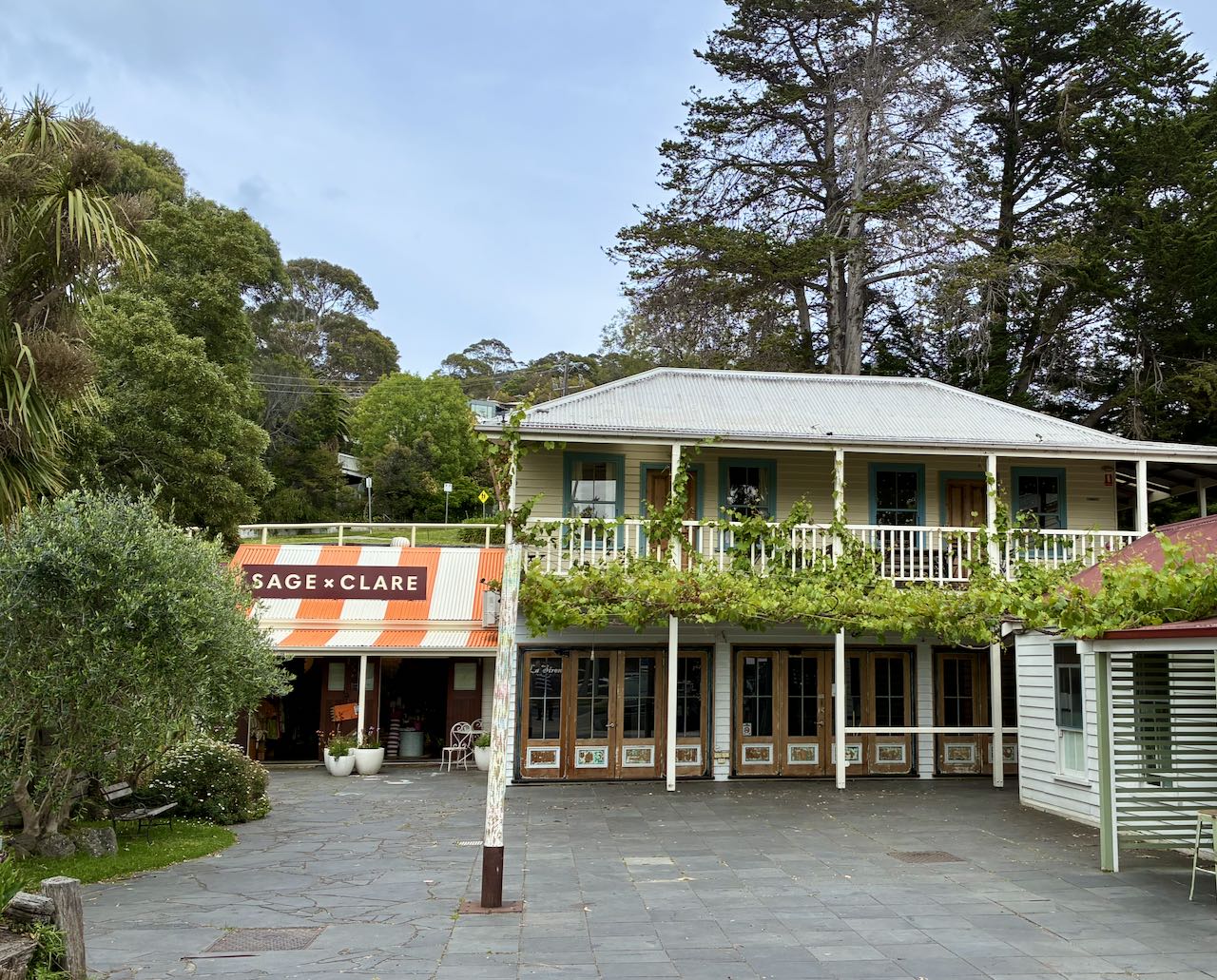
- Sage x Clare
-
- Lorne December 1962 (Photo LHS 1959)
-
- Lorne Greens Erskine River bank 1985. (LHS photo B 382)
-
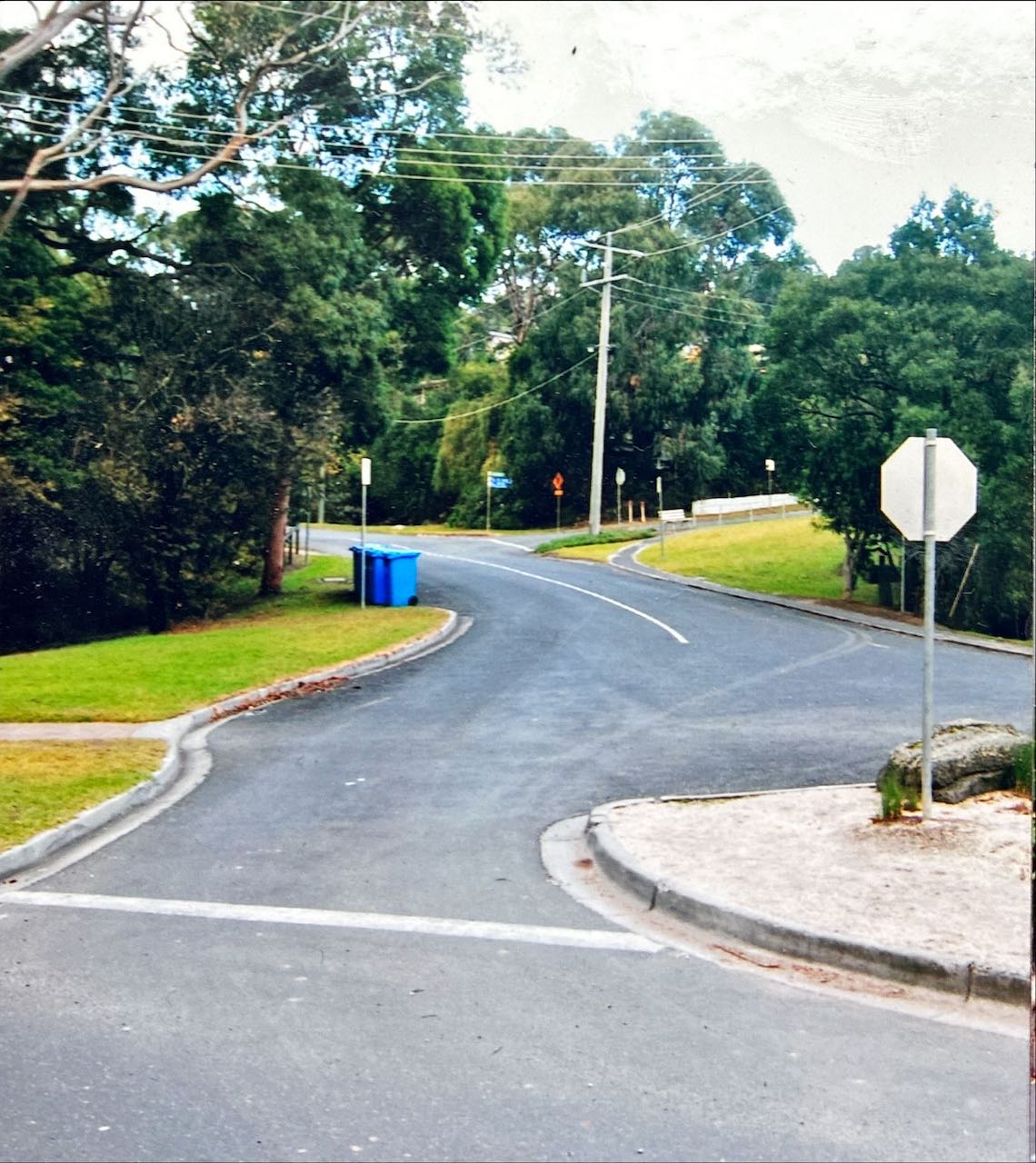
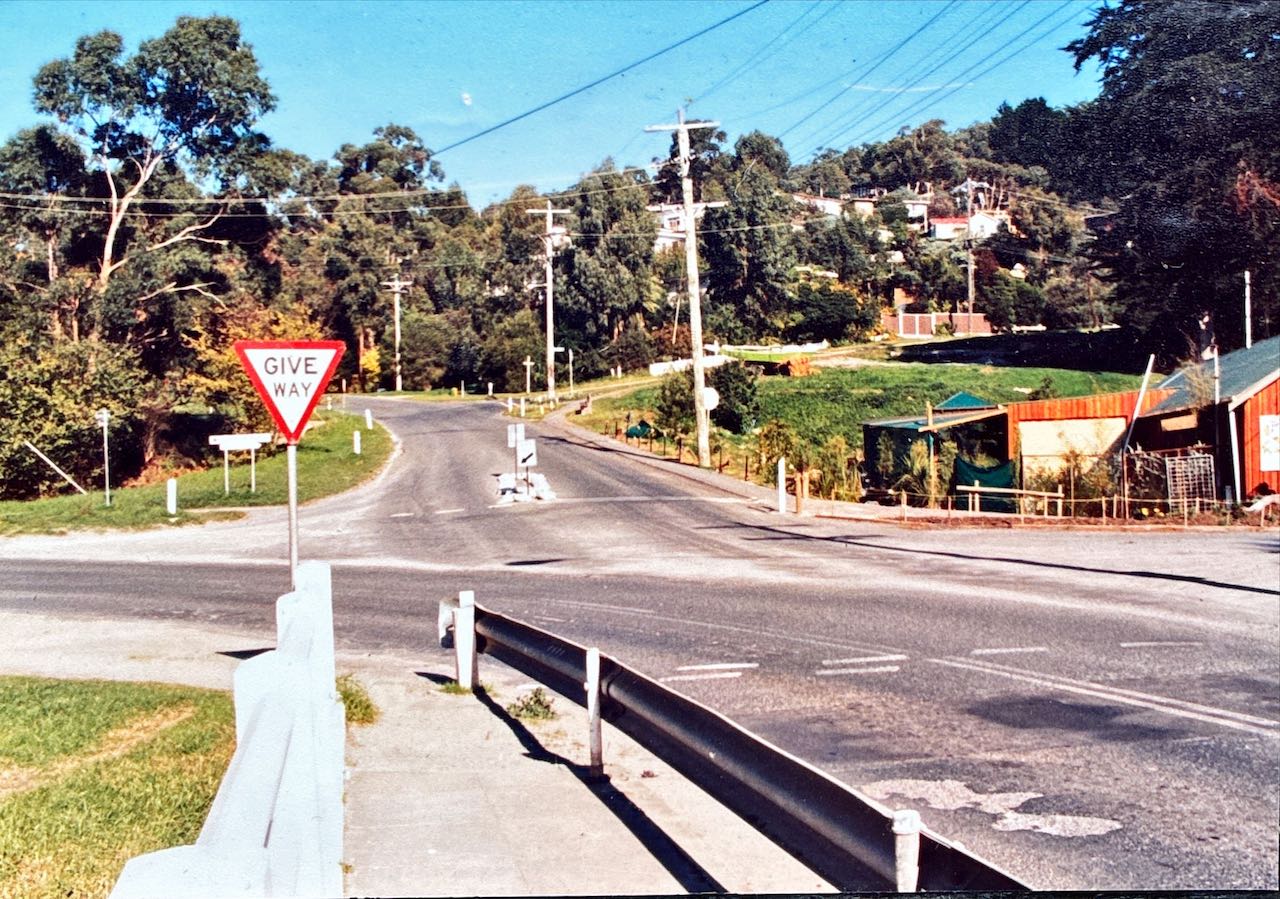
- 2009, Lower Otway Street
-
- Nursery
-
- 2009? Lorne Greens
-
- Facebook post, intheskieslorne
-
- Facebook post, intheskieslorne
-
- Sage x Clare (Photo Dec. 2025)
-
- c2012 Babalu Bar
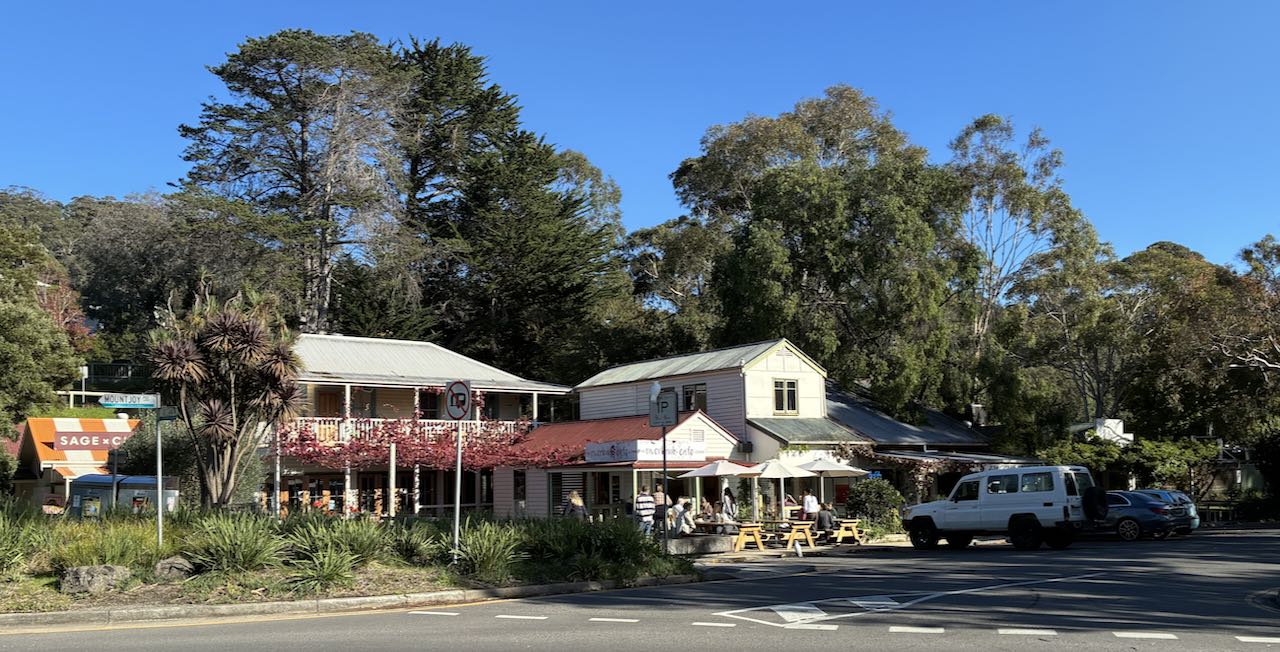
2026, Erskine River Shops Precinct
Sources:
- Lorne Historical Society Collections
- CfL page “Erskine driver Shops: by Linton Ferguson
- Erskine River Shops Heritage Assessment